Quick Info
At a glance
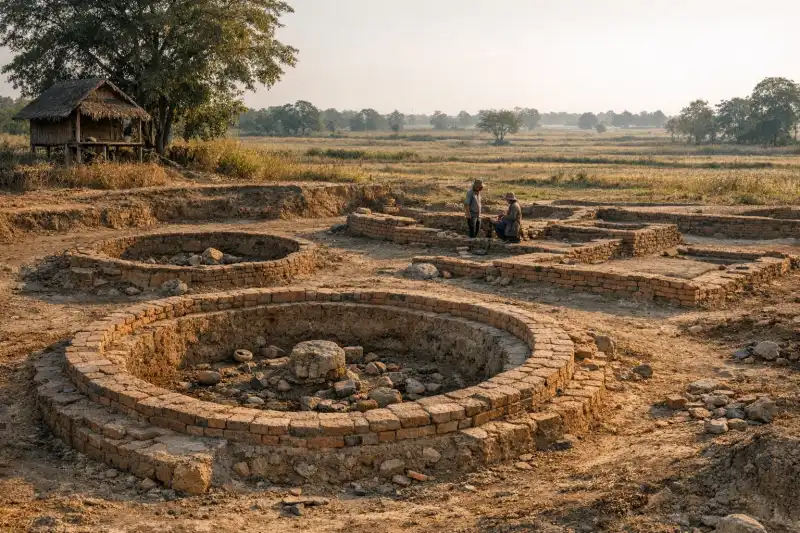
Noen-U-Loke in Thailand is not a grand stone temple or a skyline-defining ruin. Instead, it is the kind of place that reshapes a traveler’s idea of what an ancient destination can be. Set within the broad agricultural landscapes of northeastern Thailand, in the wider cultural region known as Isaan, this archaeological site appears quiet at first glance. Rice fields, village roads, and a low, unassuming mound do not immediately announce world-changing discoveries. Yet beneath this earth archaeologists uncovered one of the most informative prehistoric cemeteries in mainland Southeast Asia, a place that offers rare insight into how communities lived, buried their dead, used metal, and expressed status long before the rise of Thailand’s historic kingdoms.
For visitors willing to look past the absence of towering architecture, Noen-U-Loke is deeply rewarding. It belongs to a network of sites in the Khorat Plateau that has transformed scholarly understanding of Southeast Asian prehistory. Here, graves, pottery, ornaments, and metal artifacts reveal a society that was complex, regionally connected, and technically skilled. The site is especially important for understanding the transition into the Iron Age and the development of social differences expressed through burial customs. A visit to Noen-U-Loke is therefore less about spectacle and more about imagination: standing in a rural Thai landscape while contemplating lives lived more than two thousand years ago, and the patient archaeological work that brought their story back into view.
History
Early settlement in the Khorat Plateau
The story of Noen-U-Loke begins within the fertile but seasonally demanding environment of the Khorat Plateau in northeastern Thailand. For millennia, this region supported farming communities that balanced rice cultivation, animal husbandry, fishing, and the use of local woodland resources. By the late Bronze Age, communities in the area were already participating in long-term cultural developments that linked settlements across the Mun and Chi river systems. These prehistoric villages often occupied low mounds or slightly elevated ground that gave some protection from seasonal flooding while staying close to arable land.
Noen-U-Loke emerged in this context as a settlement and burial place used over a long period. Like several other sites in the region, it was not isolated. Its significance lies partly in how it fits into a broader pattern of communities that shared technologies, styles of pottery, and burial practices, while also showing local differences. Archaeologists studying these sites have found that northeastern Thailand was not a peripheral backwater in prehistory. Rather, it was home to dynamic communities adapting to changing environments and participating in broad networks of exchange.
From Bronze Age traditions to Iron Age change
The most important phase at Noen-U-Loke is associated with the transition from the late Bronze Age into the Iron Age, a period that roughly spans the first millennium BCE and extends into the early centuries CE. This was a transformative era in mainland Southeast Asia. New metallurgical techniques became more widespread, agricultural systems intensified, and signs of increasingly differentiated social status appeared in the archaeological record.
At Noen-U-Loke, burials form the heart of the historical narrative. Excavations revealed graves furnished with pottery, iron tools, ornaments, and other objects placed with the dead. These grave goods were not distributed evenly. Some individuals were interred with richer or more varied assemblages than others, suggesting social distinctions that may have been tied to age, gender, family lineage, craft specialization, or emerging hierarchy. Such evidence has made the site central to debates about when and how more complex social organization developed in this part of Southeast Asia.
Iron artifacts are especially important. Their presence indicates that local communities either mastered ironworking or had access to exchange systems through which iron objects circulated. This shift had practical consequences for agriculture, woodworking, and perhaps warfare or hunting. It also had social meaning, because metal objects could serve not just as tools but as indicators of prestige.
Mortuary customs and social identity
Noen-U-Loke is best understood through its cemetery. Archaeologists have paid close attention not just to the artifacts buried with individuals, but also to body positioning, burial depth, associated ceramics, and evidence for multiple phases of mortuary behavior. These details help reconstruct how prehistoric communities thought about kinship, memory, and the afterlife.
Some burials appear comparatively modest, while others include notable personal adornments such as beads or metal ornaments. This variation suggests that death became a stage on which social identity was expressed publicly. The cemetery may have been more than a place of disposal; it may have been a ritual landscape where communities reaffirmed social ties and status relationships across generations. Because burials accumulated over time, the site also preserves a long sequence that helps scholars trace cultural change rather than a single frozen moment.
The interpretation of these remains continues to evolve. Like many prehistoric sites, Noen-U-Loke does not come with inscriptions or written chronicles. Its history is built from material evidence, radiocarbon dating, comparison with nearby sites, and careful excavation. That makes it both more difficult and more exciting: each find contributes to a wider reconstruction of early life in Thailand.
Modern discovery and archaeological importance
Noen-U-Loke gained prominence through archaeological investigation in the late 20th century, when systematic excavation began to reveal the scale and importance of the cemetery. It is often discussed alongside Ban Prasat and Ban Chiang in broader conversations about prehistoric Thailand, although each site has its own chronology and character. Researchers used the evidence from Noen-U-Loke to study demography, diet, burial wealth, technological change, and social evolution.
Today, the site’s historical importance far exceeds its outward appearance. It has become a key reference point in Southeast Asian archaeology, especially for those studying the Iron Age in the Mun Valley and surrounding areas. For travelers, that means visiting a place whose true monument is knowledge: Noen-U-Loke helped rewrite the deep history of Thailand by showing how sophisticated and interconnected prehistoric communities already were long before the first famous kingdoms entered the historical record.
Key Features
The defining feature of Noen-U-Loke is its archaeological subtlety. This is not a destination where standing walls, carved lintels, or dramatic stairways dominate the experience. Instead, its power comes from the buried record and the landscape itself. Visitors encounter a rural setting that still reflects the environmental logic that attracted settlement in antiquity: open land suitable for cultivation, village-scale habitation, and a sense of continuity between ancient and modern lifeways. The low mound or settlement rise, typical of many prehistoric sites in the Khorat Plateau, reminds you that small variations in topography could shape human occupation for centuries.
The cemetery remains are the site’s most important feature, even if much of their significance is known through excavation reports rather than visible remains on the ground. Noen-U-Loke is celebrated because it preserved burial contexts in enough detail to let archaeologists examine social patterns over time. The arrangement of graves, the quantity and quality of grave goods, and the presence of iron objects all speak to a community undergoing transformation. Visitors interested in archaeology will appreciate that this is a site where interpretation matters as much as physical preservation. The real experience lies in understanding what the excavated evidence represents.
Pottery is one of the most evocative aspects of the site. Ceramic vessels buried with the dead reveal both everyday craftsmanship and ritual meaning. Their shapes, finishes, and associations with particular graves help archaeologists establish chronology and infer aspects of social practice. Even when original objects are housed elsewhere for study or conservation, knowing that such materials came from this ground adds depth to a visit. The same is true of beads, ornaments, and metal tools, which speak to exchange networks and technological skill.
Another key feature is Noen-U-Loke’s role within a wider archaeological landscape. It should not be thought of as a lone point on a map but as part of a cluster of prehistoric sites in northeastern Thailand. This regional context is essential. Sites such as Ban Prasat and Ban Chiang demonstrate that complex mortuary traditions and metallurgical developments were spread across a broad zone, though with local variation. Visiting Noen-U-Loke can therefore be especially meaningful if paired with museum collections or nearby archaeological stops that help make the wider prehistoric world visible.
The site also invites reflection on how archaeology works. At more monumental destinations, visitors can focus mainly on what survives above ground. At Noen-U-Loke, the visible landscape is only the surface of a much larger archive. This creates a different kind of travel experience, one rooted in patience, imagination, and context. The absence of spectacular ruins encourages careful attention to the ordinary-looking terrain that so often conceals the past. For many travelers, this can be surprisingly moving. Standing on a quiet patch of land and realizing it contains evidence of ancient social identities, family memory, ritual behavior, and technological change can feel more intimate than visiting a heavily monumentalized site.
Finally, Noen-U-Loke’s greatest feature may be its contribution to the story of Thailand before states and temples. It helps visitors understand that Thai history does not begin with Ayutthaya, Sukhothai, or Khmer-era sanctuaries. Long before those famous chapters, communities in the northeast were already farming, forging metal, burying their dead with care, and participating in social worlds complex enough to leave clear marks in the archaeological record. That deeper timescale is what makes Noen-U-Loke so valuable. It expands the historical imagination, turning an apparently modest destination into one of the region’s most intellectually important ancient sites.
Getting There
Noen-U-Loke is most practically reached from Nakhon Ratchasima, often called Korat, the main urban hub of the province. From Bangkok, trains to Nakhon Ratchasima typically take around 4 to 6 hours, with ordinary and rapid services often costing roughly THB 70 to THB 300 depending on class. Buses from Bangkok’s Mo Chit terminal are frequent and usually take 3.5 to 5 hours, with fares commonly in the THB 200 to THB 350 range. Driving from Bangkok via Highway 2 is another straightforward option and usually takes about 3.5 to 4.5 hours depending on traffic.
From Nakhon Ratchasima city, reaching Noen-U-Loke generally requires a hired car, taxi, rideshare arrangement, or local driver, since public transport to small archaeological locations can be limited and schedules may not be convenient for visitors. Expect a one-way private car or taxi fare in the range of THB 700 to THB 1,500 depending on distance, negotiation, and waiting time. Renting a car in Korat can cost around THB 1,000 to THB 1,800 per day, which is often the best option if you plan to combine Noen-U-Loke with Ban Prasat or other nearby heritage stops.
Because signage and visitor services may be minimal, it is wise to have the location pinned in an offline map and, if possible, ask a Thai-speaking guide or hotel staff to help confirm directions before departure. Bring water and cash, as rural stops may have few facilities. Many travelers find that Noen-U-Loke works best as part of a full-day cultural itinerary rather than a standalone destination.
When to Visit
The best time to visit Noen-U-Loke is generally the cool and dry season from November to February. During these months, temperatures in northeastern Thailand are usually more comfortable for walking around open-air sites, and the lower humidity makes rural travel much easier. Daytime temperatures are often pleasant by Thai standards, especially in the morning, and the clearer weather can make road travel smoother if you are combining several archaeological locations in one trip.
March to May is the hottest period. Visits are still possible, but midday heat can be intense, often pushing temperatures above 35°C. Since Noen-U-Loke is an exposed site without the shade or infrastructure of major tourist complexes, early morning is the most sensible time to go during these months. Bring plenty of water, sunscreen, a hat, and lightweight clothing.
The rainy season, usually from May or June through October, transforms the landscape into a greener and often beautiful version of rural Isaan. Rice fields can be especially atmospheric at this time, and photographers may appreciate the dramatic skies and lush vegetation. However, rain can make minor roads muddy or inconvenient, and site access may be less predictable. If you visit in the wet season, allow extra travel time and avoid tight schedules.
For travelers interested in archaeology rather than just photography, timing your visit around local museum hours or combining it with a trip to nearby heritage attractions is often more important than the exact season. Weekday visits can feel especially quiet. In all seasons, the best experience comes from arriving with realistic expectations: Noen-U-Loke is a place for thoughtful exploration, not crowds or spectacle. The calmer the weather and the more time you give yourself, the more rewarding it tends to be.
| Quick Facts | Details |
|---|---|
| Location | Nakhon Ratchasima Province, northeastern Thailand |
| Historical significance | Major prehistoric cemetery and settlement mound |
| Main period | Late Bronze Age to Iron Age |
| Best known for | Burials, grave goods, iron artifacts, and evidence of social differentiation |
| Best base | Nakhon Ratchasima (Korat) |
| Recommended visit length | 1-2 hours |
| Best season | November to February |
| Ideal for | Archaeology enthusiasts, history travelers, and those exploring Isaan heritage |
Noen-U-Loke rewards a different style of travel. It asks you to trade spectacle for evidence, monumentality for context, and instant visual impact for a deeper historical imagination. In return, it offers something rare: direct contact with a chapter of Thailand’s past that is older than the kingdom-centered narratives most visitors know. The site’s significance lies not in towering ruins but in the human stories recovered from the earth—stories of burial, belonging, craftsmanship, memory, and change. For anyone interested in how ancient societies formed and transformed in mainland Southeast Asia, Noen-U-Loke is far more than a quiet rural stop. It is one of the places where Thailand’s deep prehistory becomes vividly, and humbly, real.
Guided tours: worth it?
Most travelers can visit Noen-U-Loke independently. Compare a tour only if you want a tighter history-focused visit, easier logistics, or a guide who can answer questions on the spot.
Best for
- Short visits where a planned route saves time
When to go self-guided
Go independently if you prefer setting your own pace, reading as you go, and checking official hours or ticket rules directly before you arrive.
What I’d avoid
Skip paid tours that bundle unrelated stops you do not actually want. The best option should either save meaningful planning time or add historical context you would miss on your own.
Nakhon Ratchasima Historical and Cultural Day Tours
Useful when: you want to compare guided formats before deciding
Korat Archaeology and Isaan Heritage Tours
Useful when: you want to compare guided formats before deciding
Northeast Thailand Private Custom Tours
Useful when: you want flexible timing or a private guide
Some tour links are affiliate links, which may earn Ancient Travel a small commission at no extra cost to you. I try to surface options that make practical sense for the site—not just anything bookable.
Frequently Asked Questions
What is Noen-U-Loke known for?
Noen-U-Loke is known as an important prehistoric cemetery in northeastern Thailand, especially for Iron Age burials, grave goods, and evidence of early metallurgy and social change.
Where is Noen-U-Loke located?
Noen-U-Loke is in Nakhon Ratchasima Province in Thailand's Isaan region, not far from other important prehistoric sites such as Ban Prasat.
Can tourists freely walk around the archaeological site?
Access conditions can vary, and archaeological zones may be modestly presented compared with major tourist attractions. It is best to arrange a local guide or check with local cultural authorities before visiting.
How much time should I plan for a visit to Noen-U-Loke?
Most visitors should allow 1 to 2 hours at the site itself, with extra time for travel and for pairing the visit with nearby archaeological or cultural stops in Nakhon Ratchasima Province.
Is Noen-U-Loke suitable for families or casual travelers?
Yes, but it is most rewarding for travelers interested in archaeology, ancient history, and rural heritage rather than monumental ruins or large museums.
What should I bring when visiting Noen-U-Loke?
Bring water, sun protection, comfortable shoes, cash for local transport, and offline navigation, since facilities in rural archaeological areas can be limited.
Nearby Ancient Sites
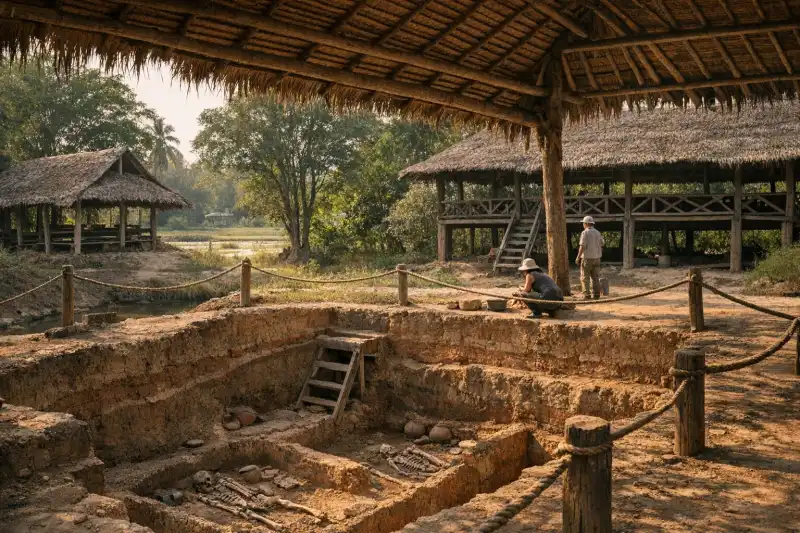
Ban Prasat Archaeological Site
Prehistoric communities of the Mun River basinExplore Ban Prasat Archaeological Site, a prehistoric burial and settlement site in Thailand’s Nakho...
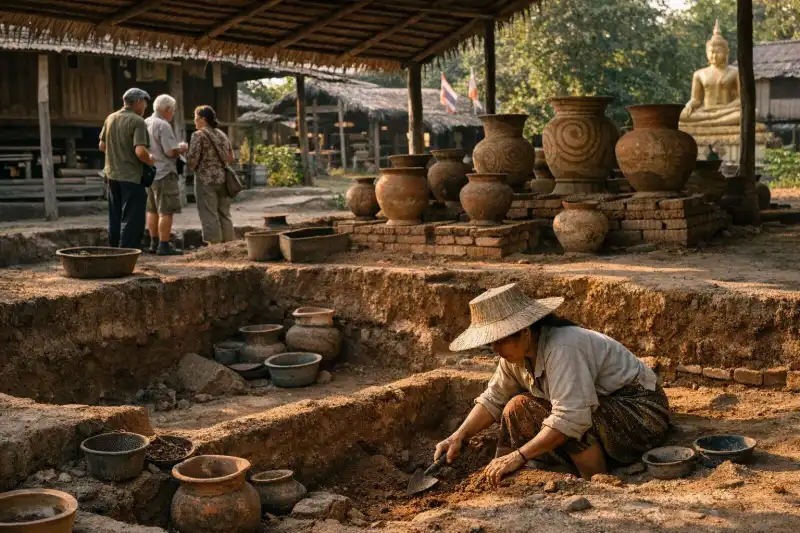
Ban Chiang
Prehistoric cultures of Northeast ThailandExplore Ban Chiang in Thailand, a remarkable prehistoric archaeological site known for early metallu...
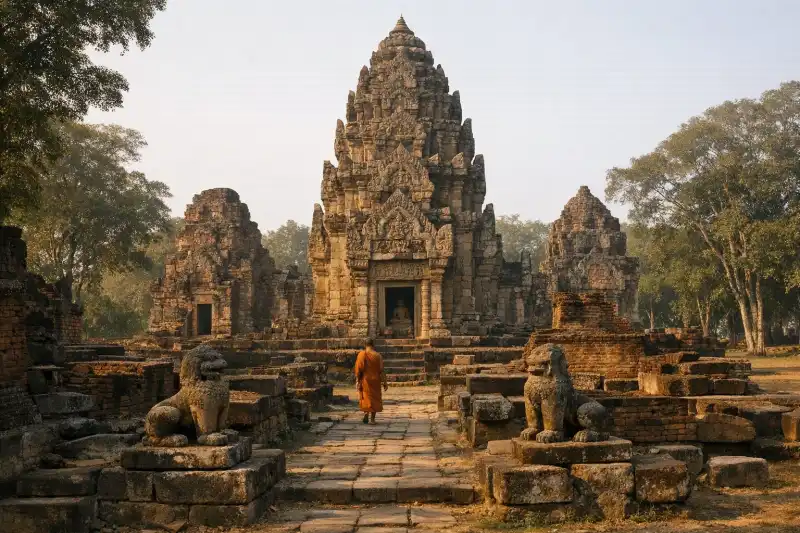
Ku Kaew Chaiyaram
KhmerExplore Ku Kaew Chaiyaram, a Khmer-era sanctuary in Thailand’s northeast known for laterite ruins an...
Ku Phra Kona
KhmerAn early Khmer sanctuary in northeastern Thailand, Ku Phra Kona preserves brick towers, carvings, an...