Quick Info
At a glance
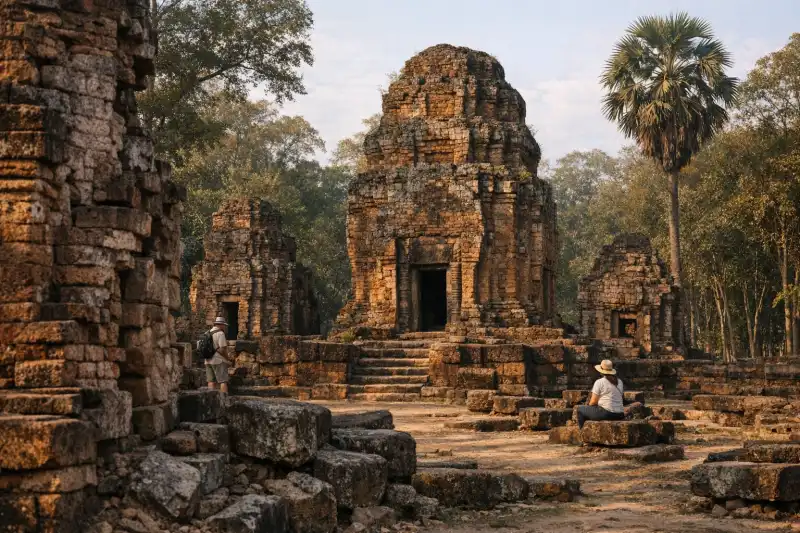
Prasat Ban Prasat in Thailand is the kind of ancient site that rewards travelers who are willing to slow down. Rather than presenting itself with monumental scale or crowds of tour groups, this Khmer-era ruin in northeastern Thailand offers something quieter: a sense of place. Set within the landscape of Nakhon Ratchasima Province, it stands as a reminder of the centuries when Khmer religious architecture spread across the Khorat Plateau, connecting villages, sacred routes, and regional centers through a shared visual language of laterite, sandstone, and ritual space.
For many visitors, the appeal of Prasat Ban Prasat lies in its modesty. You do not come here expecting a vast complex like Angkor, or even one of Thailand’s more famous Khmer sanctuaries. Instead, you arrive at a site that feels rooted in local memory. The surviving structure, fragmentary but evocative, hints at a once-active temple where religious devotion, political influence, and daily village life intersected. Trees, open sky, and the stillness of the grounds help emphasize that this was once a sacred place embedded in a living rural landscape, not an isolated monument.
That atmosphere makes Prasat Ban Prasat especially attractive to travelers interested in archaeology, regional history, and the cultural depth of Isan. It is also a useful stop for those tracing the footprint of the Khmer world beyond modern Cambodia. A visit here is less about spectacle and more about seeing how empire, belief, and local tradition left durable marks on Thailand’s northeastern countryside.
History
Early regional background
Long before the temple itself was built, the Khorat Plateau was already a landscape of farming communities, exchange routes, and evolving spiritual traditions. Northeastern Thailand occupied an important position between central mainland Southeast Asia and the areas that came under stronger Khmer political and cultural control. Over time, local settlements participated in broad networks of trade and belief that linked what are now Thailand, Laos, and Cambodia.
By the early second millennium CE, Khmer architectural and religious ideas had spread widely across the region. This did not always mean direct rule in a modern sense; rather, influence often came through administrative ties, patronage, ritual prestige, and the placement of temples along strategic routes. In this context, smaller shrines such as Prasat Ban Prasat were meaningful markers of authority and devotion. They show that Khmer-style sacred architecture was not confined to royal capitals but extended into provincial settings where local communities adapted these forms to their own environments.
Construction in the Khmer period
Prasat Ban Prasat is generally associated with the Khmer period, likely between the 11th and 13th centuries CE, when temple building flourished across much of the region. Although the site is relatively small, its design reflects the classic principles of Khmer sacred architecture. Such shrines were often dedicated to Hindu deities, especially Shiva, though over time some were used in Buddhist contexts as religious life shifted.
Temples like this typically functioned as more than places of worship. They could serve as focal points for local administration, sacred landholding, and ceremonial gathering. Their orientation, masonry, and symbolic planning followed cosmological ideas in which the temple represented a divine center. Even a compact sanctuary could embody a great deal of meaning through its doorway alignment, central chamber, and relationship to enclosing walls or surrounding landscape.
The building materials also tell part of the story. Khmer sites in northeastern Thailand commonly used laterite for core structural elements and sandstone for decorative or sacred details. This combination balanced durability with visual refinement. Though time has damaged many of the finer features at Prasat Ban Prasat, the surviving remains still suggest a carefully planned monument built within the artistic and religious conventions of the era.
Religious change and local continuity
As mainland Southeast Asia changed between the late Khmer period and the rise of new regional powers, many temples experienced shifts in use. Some were abandoned, some were repurposed, and others continued to hold local ritual significance even after their original political context had faded. In Thailand, a number of former Hindu shrines gradually became integrated into predominantly Buddhist landscapes.
Prasat Ban Prasat likely followed a version of this pattern. While its formal role as a Khmer temple declined, the site remained part of local geography and memory. This continuity matters. Ancient ruins in rural Thailand are often not simply “lost” monuments rediscovered by outsiders; they are places known to nearby communities, folded into stories, seasonal routines, and local identity. Even when architectural details disappear, the sense that a place is spiritually or historically important can endure.
Rediscovery, preservation, and present understanding
Modern archaeological attention has helped place Prasat Ban Prasat within the wider map of Khmer heritage in Thailand. Survey work, comparison with similar shrines, and provincial heritage efforts have all contributed to a clearer understanding of the temple’s age and function. As with many smaller sites, however, documentation is not always as extensive as it is for better-known monuments. That gives the place a certain interpretive openness: visitors can appreciate both what is known and what remains uncertain.
Today, Prasat Ban Prasat stands as a local heritage site rather than a heavily developed tourist destination. Its preservation reflects a broader recognition that Thailand’s ancient past is regionally diverse. The famous capitals of Thai history are only part of the story. In Isan, Khmer sanctuaries like this one reveal a different historical layer, one in which art, religion, and political culture crossed modern national boundaries.
For travelers, this historical depth is the site’s greatest value. Prasat Ban Prasat may appear modest at first glance, but it represents a long arc of regional transformation: from Khmer religious expansion to local adaptation, from partial ruin to protected cultural memory.
Key Features
The first thing many visitors notice about Prasat Ban Prasat is its scale. This is not a sprawling archaeological park but a compact monument, and that intimacy shapes the entire experience. Because the temple is relatively small, you can quickly take in its overall plan, then slow down to observe textures, masonry techniques, and the relationship between the ruin and its surroundings. The result is a visit that feels personal rather than overwhelming.
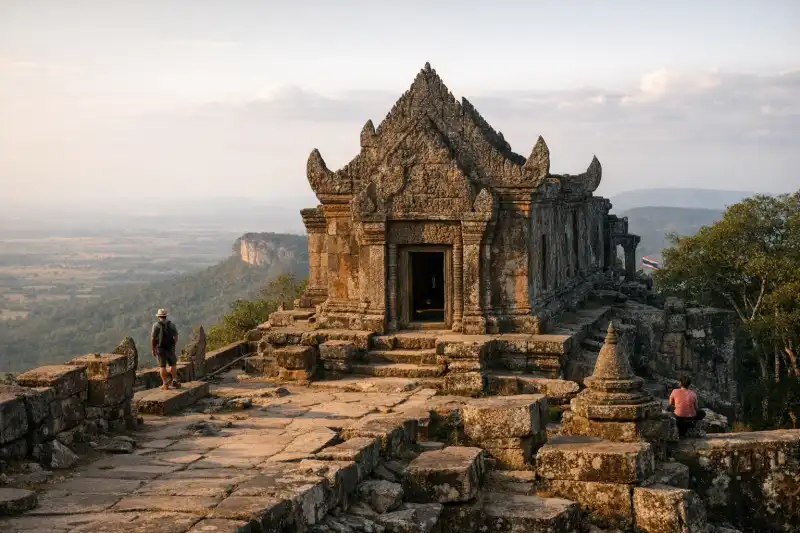
The central sanctuary is the heart of the site. Even in a damaged state, it preserves the essential character of Khmer sacred architecture: a tower-like shrine built as a spiritual axis, where the innermost chamber once held the focus of worship. Looking at the surviving stonework, you can still sense the original vertical ambition of the structure. Khmer temple builders designed even small sanctuaries to feel symbolically elevated, connecting earthly space to divine presence. That aspiration remains readable in the ruin’s profile.
Materials are another key feature. The contrast between laterite and sandstone, common at Khmer sites across northeastern Thailand, gives the monument both strength and visual variation. Laterite blocks, rougher and more porous in appearance, provide a sturdy structural base. Sandstone, smoother and better suited to carving, would have been used for doorframes, lintels, and other architecturally important elements. Where these details survive, they offer clues to the shrine’s former refinement. Even weathered surfaces can reveal the disciplined geometry typical of Khmer workmanship.
The doorway and entrance zone deserve special attention. In Khmer temple architecture, thresholds were symbolically charged spaces, marking the transition from ordinary ground into sacred interior. At Prasat Ban Prasat, the surviving arrangement of entrance elements helps visitors imagine how worshippers approached the sanctuary. The alignment of the structure, likely oriented according to ritual convention, reinforces the sense that every aspect of the building had spiritual purpose. This was not just stone assembled for shelter; it was stone organized to express cosmology.
Another striking feature is the site’s setting within the rural landscape of Nakhon Ratchasima Province. Unlike heavily urbanized monuments, Prasat Ban Prasat still feels connected to agricultural land, village rhythms, and open sky. Trees often soften the edges of the ruin, and the surrounding grounds can make the temple seem both exposed and protected at once. This environmental context matters because it helps modern visitors understand how such shrines originally functioned: not as isolated museum pieces, but as landmarks in inhabited countryside.
The atmosphere is perhaps the site’s most memorable feature. There is often a calm, almost reflective quiet here, especially outside weekends and holidays. Without large crowds or commercial distractions, details become more noticeable: the angle of sunlight on old stone, the sound of birds in the trees, the way fragments suggest vanished walls or decorative programs. The ruin encourages imagination. You begin to reconstruct not only the building’s original form but the human activity around it—priests, patrons, villagers, processions, and offerings.
Interpretive signage, where present, can help place the monument in its regional context, but much of the experience comes from direct observation. Prasat Ban Prasat rewards visitors who enjoy looking closely rather than moving quickly. It is especially appealing to those interested in how smaller temples express the same religious and artistic ideas found at grander Khmer monuments. The site shows that scale and significance are not always the same thing.
Finally, its connection to the wider network of Khmer ruins in Thailand is an essential feature in itself. Visiting Prasat Ban Prasat alongside other sites in Isan allows you to see patterns in temple planning, materials, and regional adaptation. It becomes part of a larger historical landscape, one in which sacred architecture spread through provincial centers and rural communities. Seen in that light, this modest ruin is not marginal at all. It is one piece of a broad civilizational map.
Getting There
Prasat Ban Prasat is most easily reached from Nakhon Ratchasima, commonly called Korat, which serves as the main transport hub for this part of northeastern Thailand. From Bangkok, the simplest option is to take a train or intercity bus to Korat. Trains from Bangkok’s Krung Thep Aphiwat area to Nakhon Ratchasima generally cost around 80 to 300 THB depending on class, while buses typically range from about 200 to 350 THB and take roughly 3.5 to 5 hours depending on traffic.
From Korat, hiring a car or taxi is the most practical way to reach the site. A one-way taxi ride to a rural heritage site in the province may cost roughly 500 to 1,200 THB depending on distance, waiting time, and negotiation. App-based rides can be available in urban areas, but they are less reliable for remote return journeys, so arranging a round trip is wise. Car rental in Korat often starts at about 900 to 1,500 THB per day, which can be excellent value if you plan to combine Prasat Ban Prasat with other nearby ruins.
Local buses or songthaews may connect parts of the province, but they are slower, less predictable for visitors unfamiliar with Thai routes, and may still require a motorcycle taxi or tuk-tuk for the final stretch. If using public transport, ask locally in Korat for the latest route information and be prepared for limited English signage.
Bring cash, water, and offline maps. Rural sites may have minimal visitor facilities, and transport back can be harder to arrange on short notice.
When to Visit
The best time to visit Prasat Ban Prasat is generally the cool and dry season, from November to February. During these months, northeastern Thailand is more comfortable for walking around open archaeological sites. Daytime temperatures are usually warm rather than punishing, the air is often clearer, and the softer light makes the stonework and surrounding greenery especially pleasant to photograph. Early morning and late afternoon are the ideal times of day, both for cooler conditions and better atmosphere.
From March to May, the hot season can make a visit more demanding. Temperatures in Isan often climb above 35°C, and smaller heritage sites like this one may offer limited shade and few services. If you travel during these months, go as early as possible, carry plenty of water, and wear a hat and sunscreen. Midday visits are best avoided unless you are comfortable with intense heat.
The rainy season, usually from May or June through October, transforms the countryside into a vivid green landscape. This can make the site beautiful and photogenic, but it also brings humid conditions, muddy paths, and occasional heavy downpours. Travel is still possible, especially if you have a car, but check forecasts and allow extra time.
If you prefer a quiet experience, weekdays are usually better than weekends or Thai public holidays. Because Prasat Ban Prasat is not a major mass-tourism stop, it is often peaceful year-round, but visiting in the morning during the cool season offers the best overall balance of comfort, scenery, and calm.
| Quick Facts | Details |
|---|---|
| Location | Nakhon Ratchasima Province, Thailand |
| Site Type | Khmer-era temple ruin |
| Historical Period | Approx. 11th-13th century CE |
| Cultural Affiliation | Khmer |
| Best Base | Nakhon Ratchasima (Korat) |
| Suggested Visit Length | 30 minutes to 1 hour |
| Best Season | November to February |
| Access | Best reached by car or taxi |
| Atmosphere | Quiet, rural, lightly visited |
| Ideal For | Archaeology enthusiasts, history travelers, regional heritage itineraries |
Prasat Ban Prasat is a rewarding destination precisely because it does not try to overwhelm. Its surviving stones speak in a quieter register than Thailand’s most famous monuments, but they still tell a compelling story—of Khmer influence, sacred architecture, and the long continuity of place in the Isan landscape. For travelers interested in seeing beyond the standard circuit, this small ruin offers a more intimate connection with the ancient past.
It is also a reminder that the cultural geography of Southeast Asia has always been more complex than modern borders suggest. In Prasat Ban Prasat, you can see how artistic forms and religious ideas moved across regions, taking root in local communities and leaving durable traces behind. The temple may be modest in scale, but it forms part of a much larger historical tapestry.
If you have time to explore northeastern Thailand slowly, Prasat Ban Prasat makes an excellent stop—especially in combination with nearby archaeological sites. Come with patience, a bit of curiosity, and a willingness to appreciate subtle details. What you will find is not just an old structure, but a place where landscape, memory, and architecture still meet.
Guided tours: worth it?
Self-guided works here, but a guide can add real value if you want the ruins explained as a living place rather than just a sequence of monuments.
Best for
- First-time visitors who want context, not just photos
- Short visits where a planned route saves time
When to go self-guided
Go independently if you prefer setting your own pace, reading as you go, and checking official hours or ticket rules directly before you arrive.
What I’d avoid
Skip paid tours that bundle unrelated stops you do not actually want. The best option should either save meaningful planning time or add historical context you would miss on your own.
Nakhon Ratchasima Cultural Sites Tours
Useful when: you want to compare guided formats before deciding
Korat Historical Day Trips
Useful when: transport or pickup logistics matter
Isan Temple Tours from Bangkok
Useful when: transport or pickup logistics matter
Some tour links are affiliate links, which may earn Ancient Travel a small commission at no extra cost to you. I try to surface options that make practical sense for the site—not just anything bookable.
Frequently Asked Questions
What is Prasat Ban Prasat?
Prasat Ban Prasat is a small Khmer-era temple ruin in northeastern Thailand, associated with the wider cultural influence of the Khmer Empire in the Isan region.
Where is Prasat Ban Prasat located?
The site is in Nakhon Ratchasima Province, Thailand, not far from the Korat area and within reach of other archaeological attractions in northeastern Thailand.
How much time should I spend at Prasat Ban Prasat?
Most visitors spend 30 minutes to 1 hour exploring the ruins, reading any onsite signage, and walking the surrounding grounds.
Is there an entrance fee at Prasat Ban Prasat?
Small local heritage sites in Thailand are often free or charge a very modest fee, but it is best to carry cash and confirm locally before visiting.
Can I visit Prasat Ban Prasat on a day trip?
Yes. Prasat Ban Prasat is well suited to a day trip from Nakhon Ratchasima or as part of a broader Isan heritage itinerary.
What should I wear when visiting Prasat Ban Prasat?
Wear light clothing, sun protection, and comfortable walking shoes. As with many temple-related heritage sites in Thailand, modest dress is advisable.
Nearby Ancient Sites
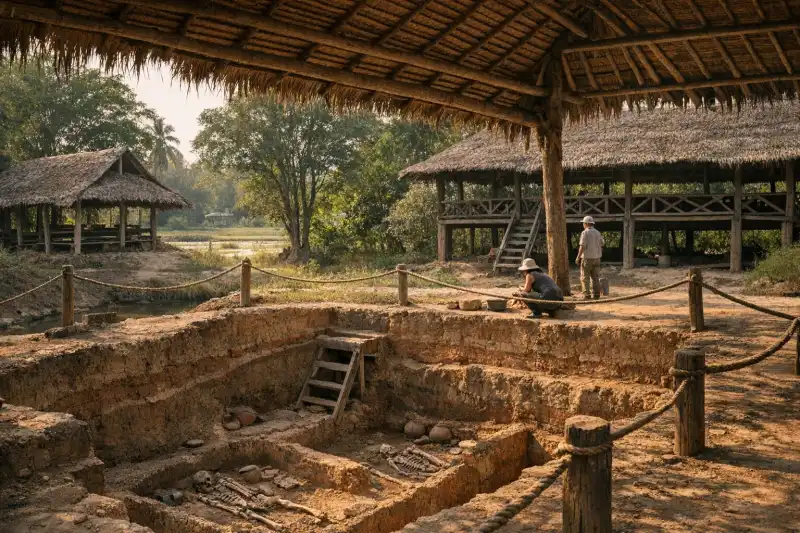
Ban Prasat Archaeological Site
Prehistoric communities of the Mun River basinExplore Ban Prasat Archaeological Site, a prehistoric burial and settlement site in Thailand’s Nakho...
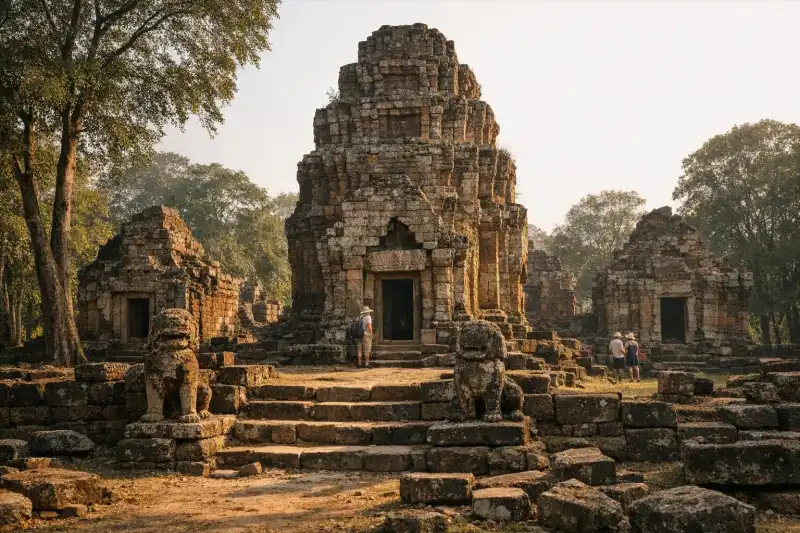
Ku Phra Kona
KhmerAn early Khmer sanctuary in northeastern Thailand, Ku Phra Kona preserves brick towers, carvings, an...
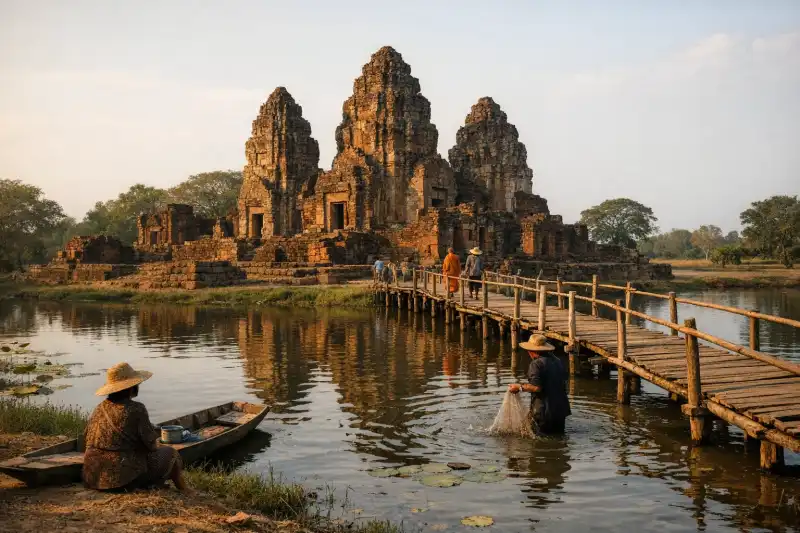
Ku Santarat
Khmer EmpireKu Santarat is a quiet Khmer-era temple ruin in northeastern Thailand, known for laterite towers, mo...
Khao Phra Viharn
Khmer EmpireA dramatic Khmer temple on Thailand’s frontier, Khao Phra Viharn crowns a cliff with sweeping views ...