Quick Info
Curated Experiences
Cusco City Tour Including Sacsayhuaman, Qenqo, Puka Pukara and Tambomachay
Private Cusco Inca Ruins Tour with Sacsayhuaman
Cusco Full-Day Highlights: Cathedral, Koricancha and Inca Ruins
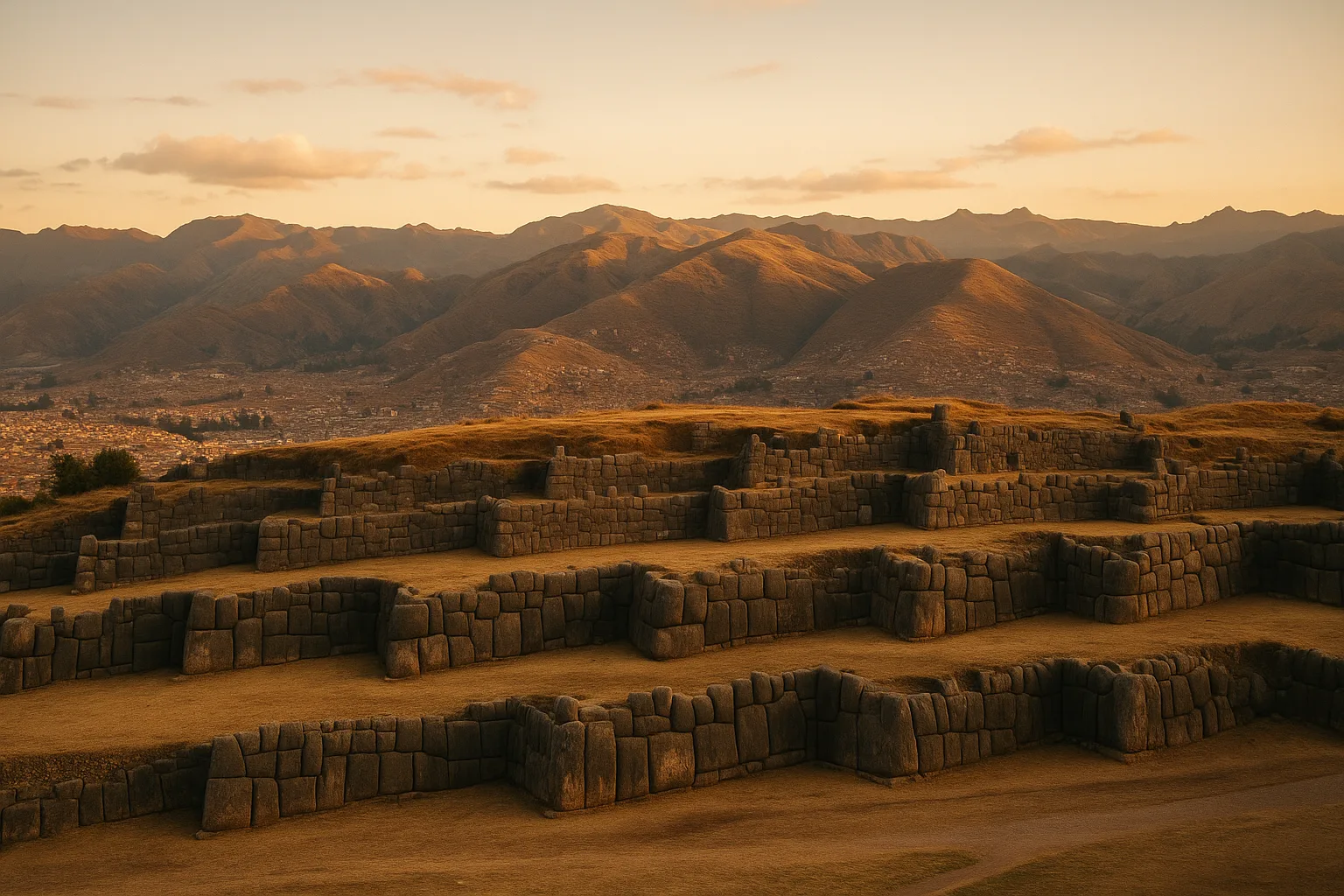
Perched on a limestone ridge 3,701 meters above sea level and less than two kilometers north of Cusco’s Plaza de Armas, Sacsayhuaman confronts visitors with a scale of stone construction that defies easy comprehension. Three zigzag terraces of cyclopean limestone blocks — the largest weighing an estimated 125 tons — run for more than 300 meters along the hillside, forming the ceremonial and military complex that the Inca army assembled here over roughly seven decades of continuous labor. This was not a remote outpost but the crown of the imperial capital itself, visible from the city below and oriented to stage the most important ceremonies of the Inca calendar.
The site is best known for the Inti Raymi winter solstice festival, celebrated here each June 24th, but Sacsayhuaman rewards visitors year-round. The massive joint-fitted masonry, the broad esplanade used for military reviews and ritual assemblies, the carved limestone outcrops of the Rodadero sector, and the sweeping panorama over the terracotta rooftops of modern Cusco all combine to make this a two-hour visit that ranks among Peru’s most affecting archaeological experiences.
Because Sacsayhuaman sits within walking distance of central Cusco and is included in the Boleto Turistico, it is also among the most accessible major Inca sites on the continent. This guide covers the site’s history, the key structures, how to reach it from the city center, and how to chain it with the three nearby ruins for a single efficient half-day circuit.
History: The Stones Above Cusco
Pachacuti and the Imperial Vision
Sacsayhuaman’s construction is inseparable from the reign of Sapa Inca Pachacuti (r. 1438–1471), the ruler who transformed a regional polity into the largest empire in pre-Columbian history. Around 1450, Pachacuti ordered work to begin on a monumental complex overlooking Cusco — a site that would serve simultaneously as a ceremonial center, a storehouse for the military apparatus of the empire, and a physical declaration of Inca dominance over the Andean world. Ancient chroniclers credited him with redesigning Cusco itself in the shape of a puma, with Sacsayhuaman forming the animal’s head and jagged teeth. Whether that plan was literal or symbolic, the project that followed consumed generations of labor.
A Century of Construction
Work at Sacsayhuaman continued long after Pachacuti’s death, carried forward under Tupac Inca Yupanqui and Huayna Capac. Spanish chronicler Garcilaso de la Vega, writing in the early seventeenth century and drawing on Inca oral tradition, estimated that twenty thousand workers labored on the complex at its peak under the mit’a system of rotational state labor. Stone was quarried from multiple sources: the distinctive andesite used in the great zigzag walls came from outcrops at Wacoto and Rumiqolqa, some quarried as far as 35 kilometers distant. The largest single stones in the lower terraces weigh an estimated 100 to 130 metric tons. Moving them into position required enormous timber sledges, earthen ramps, and sustained coordination across the full bureaucratic reach of Tawantinsuyu.
The Spanish Conquest and Its Aftermath
The Spanish arrived in Cusco in 1533 and rapidly recognized Sacsayhuaman as a military asset. In 1536, Manco Inca Yupanqui led a massive Inca siege of Cusco and briefly retook Sacsayhuaman before Spanish forces under Juan Pizarro — who died in the assault — recaptured the towers. After the rebellion, the Spanish demolished the site systematically. Its three great towers were torn down, and the dressed facing stones were carted away for decades to build colonial churches and mansions in Cusco below. What visitors see today is largely the massive lower terrace wall, the original structure stripped of much of its upper architecture.
Archaeological Legacy
Modern excavation at Sacsayhuaman has uncovered evidence of extensive subterranean passages, sacrificial deposits, and ceramic assemblages confirming the complex’s ceremonial role. UNESCO inscribed the site as part of the Historic Sanctuary of Cusco in 1983. Research continues to refine estimates of construction sequence and workforce organization, gradually filling in the documentary silences left by the conquest.
The Key Monuments: What to See at Sacsayhuaman
Sacsayhuaman is not a single building but a sprawling ceremonial and military complex stretching across the hillside north of Cusco. Plan your visit around four main areas, each revealing a different dimension of Inca ambition.
The Zigzag Walls
The three massive terraced ramparts running in a broad zigzag are what most visitors come to see, and they deliver. The lowest tier rises over nine meters and contains stones so large—some weighing an estimated 125 tonnes—that the logistics of their transport and placement remain a subject of genuine scholarly debate. The zigzag plan was not arbitrary: the angled layout created over two dozen defensive salient points, forcing any attacking force into a crossfire. Walk the full length of the lowest wall to appreciate the variation in block sizes and the extraordinary precision of the dry-stone joinery—beveled edges, slightly trapezoidal faces, and surfaces fitted to fractions of a centimeter. Look for the characteristic Inca technique of bonding large anchor stones into smaller fill, a system that helped the walls survive Cusco’s frequent earthquakes for more than five centuries.
The Three Towers and Central Esplanade
At the top of the terraces, three circular or D-shaped foundations mark where the main towers once stood. The largest, Muyuqmarka, held a cylindrical tower that Spanish chroniclers described as rising four stories with interior water channels—possibly a solar observatory or royal residence. The two flanking rectangular towers, Sallaqmarka and Paucarmarka, formed a defensive triangle around the broad upper esplanade. The esplanade itself, roughly 360 meters across, hosted the major Inti Raymi solar ceremonies and may have doubled as a parade ground for Inca armies before campaigns. Today the esplanade is where the reconstructed Inti Raymi festival takes place each June solstice, drawing tens of thousands of spectators.
The Rodadero and Carved Outcrops
Northeast of the main walls, a polished granite outcrop called the Rodadero (the Slide) shows evidence of heavy human wear on its sloping surfaces—centuries of use as a ceremonial slide, game, or simply a meeting point. Adjacent outcrops carry carved thrones, channels, niches, and geometric cuts whose exact purpose is debated: astronomical sighting lines, libation channels for chicha or water offerings, or simply markers of sacred geography. These carved rocks feel more intimate than the cyclopean walls and reward slow exploration. Bring water and take your time tracing the cuts; many are subtle and easy to miss if you’re moving quickly through the site.
The Outer Perimeter and Viewpoints
A broad path rings the complex and offers the best elevated views back over Cusco, particularly toward the southeast where the Cathedral and Santo Domingo (built over Koricancha) anchor the colonial skyline. Two large stones on the northern rim are commonly called the Inca’s Throne and offer a commanding panorama over the entire Sacred Valley approach. The perimeter walk also passes several less-visited carved outcrops and the remains of an outer defensive wall that once enclosed a much larger precinct—a reminder that what survives today is a fraction of what stood here when Sacsayhuaman was the head of the puma-shaped Inca capital.
Getting There: Transportation and Access
Sacsayhuaman sits roughly 2 km north of Cusco’s Plaza de Armas at an elevation of approximately 3,700 m (12,140 ft), making it one of the most accessible major Inca sites in the region.
On Foot
The most rewarding approach is the 30–45 minute uphill walk from central Cusco. Follow Calle Suecia or Calle Resbalosa north from the Plaza and pick up the signposted path through San Cristóbal. Altitude will slow you down — take it easy if you arrived within the last 24 hours.
By Taxi
Taxis from Plaza de Armas take 10–15 minutes and cost approximately S/ 10–15 (roughly USD $2.50–4.00). Agree on the fare before departing; most drivers will wait or return for an additional S/ 5–10 (USD $1.50–2.50).
Organized Tours
Half-day city circuit tours depart daily from central hotels and cover Sacsayhuaman, Qenqo, Puka Pukara, and Tambomachay in one loop. These typically run S/ 50–120 (USD $13–32) including guide and transport, depending on group size and operator. Booking through your hotel or a licensed agency on Avenida El Sol is reliable.
By Minibus (Combi)
Shared combis heading toward Pisac occasionally pass the Sacsayhuaman turnoff along Avenida Collasuyo, but service is irregular. Taxis are preferable for this short distance.
Entrance is via the Boleto Turistico checkpoint on-site; have your ticket or cash in soles ready.
Practical Information
Admission: Sacsayhuaman is included in the Boleto Turistico del Cusco (BTC), which covers most major archaeological sites in and around the city. The partial circuit ticket (Circuito I) costs around S/70 (≈ USD 19) and covers Sacsayhuaman, Qenqo, Puka Pukara, and Tambomachay. Buy tickets at the BTC office on Avenida El Sol or at site entrances. Carry cash in soles — card machines are unreliable.
Hours: Open daily approximately 07:00–18:00. The main terraces are accessible during these hours; some upper areas may close earlier.
What to Bring:
- Sun protection — the open esplanade offers little shade; sunscreen, sunglasses, and a hat are essential
- Layers — Cusco’s altitude (3,700 m / 12,100 ft) means temperatures shift quickly; afternoons can turn cold
- Water — dehydration accelerates at altitude; bring at least one liter
- Good footwear — uneven stone surfaces and grass slopes require sturdy, closed-toe shoes
- Small soles bills for entrance or snacks from vendors outside the gate
- Camera or phone fully charged — the panoramic views of Cusco from the upper terraces are outstanding
When to Visit: Seasonal Considerations
Dry Season (May–October): Prime Visiting Window
Peru’s dry season delivers the clearest skies over Cusco and the most reliable conditions for walking the open esplanade at Sacsayhuaman. Days are sunny and cool, nights drop sharply at 3,700 m, and morning light illuminates the zigzag walls in long horizontal shadows. June draws the largest crowds for Inti Raymi on 24 June—book accommodation early and expect the site to be busy on the surrounding days.
Shoulder Months (April and November): Quieter and Often Clear
April and November sit between seasons, offering fewer visitors than peak dry months while still delivering mostly clear mornings. Afternoon showers are possible but usually brief. These are strong choices for travelers who want good weather with noticeably thinner crowds.
Wet Season (December–March): Lush but Muddy
Afternoon and overnight rains are frequent from December through March, leaving the grassy esplanade soft and the unpaved paths muddy. Morning windows can be surprisingly clear before clouds build. January and February see the heaviest precipitation, but the surrounding hillsides turn a vivid green and the site rarely feels overcrowded.
Altitude and Temperature Year-Round
Regardless of season, temperatures at Sacsayhuaman range from roughly 5 °C at night to 18 °C at midday. Sunburn at altitude is intense year-round—sunscreen and a hat are essential every month. Allow at least two days in Cusco before visiting to acclimatize before any uphill walking.
How to Combine Sacsayhuaman with Nearby Sites
Sacsayhuaman sits at the top of a loose circuit of four Inca sites that most Cusco visitors cover in a single half-day. The route follows the road northeast from the fortress and requires no backtracking, making it one of the most efficient archaeological loops in the Andes.
From Sacsayhuaman, the first stop is Qenqo, about ten minutes on foot or two minutes by taxi. This carved limestone outcrop contains underground galleries, a ritual altar, and channels thought to have directed chicha or blood offerings — a sharp contrast to the military scale of the walls you just left. Budget 30–40 minutes here.
Continue another five minutes along the road to Puka Pukara, a compact reddish-stone complex that likely served as a tambo, or royal waystation, controlling movement between Cusco and the Sacred Valley. It’s smaller than the other sites but worth a 20-minute stop for the valley views alone.
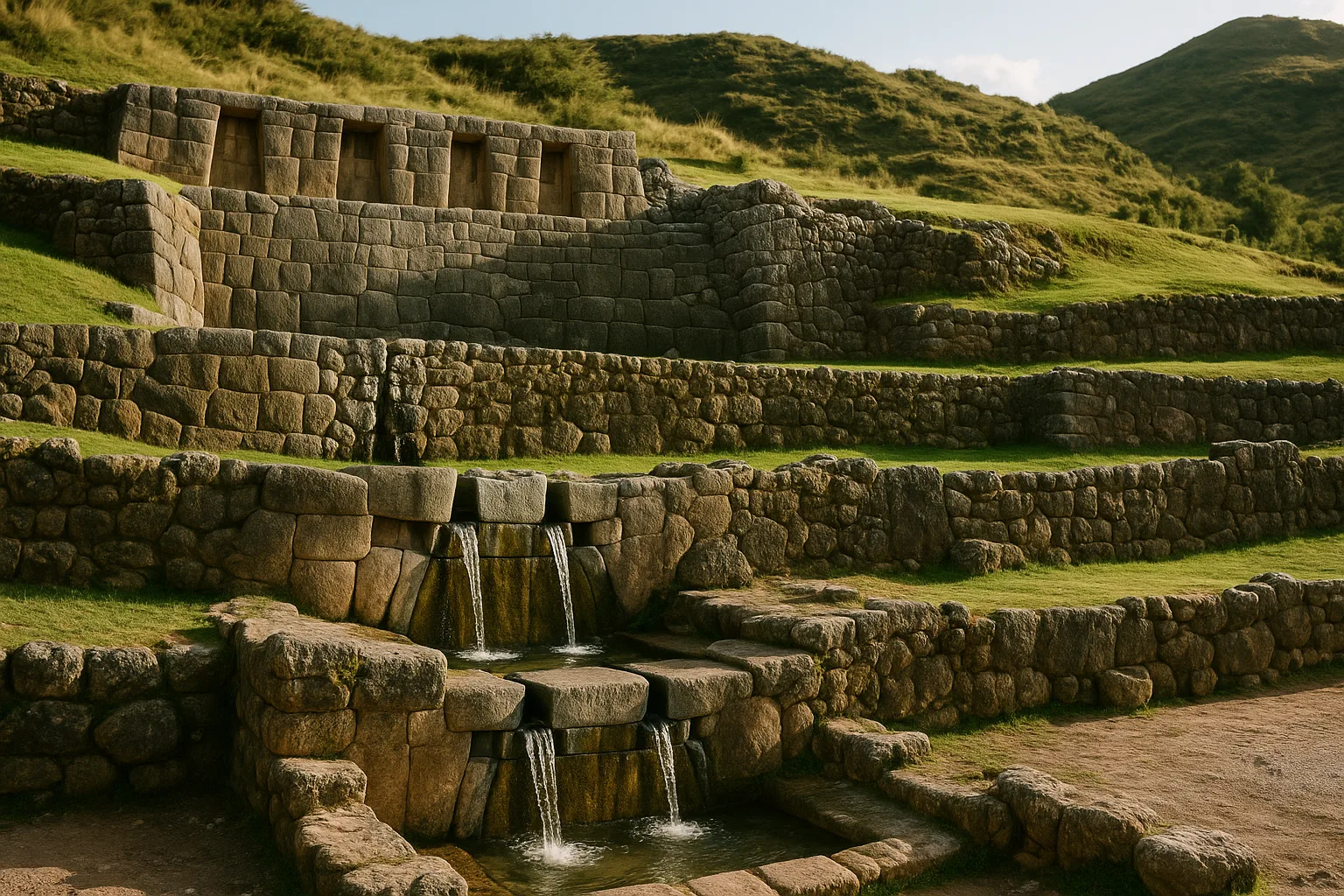
Just across the road sits Tambomachay, the “Bath of the Inca,” where stone channels still carry water in near-perfect flow nearly six centuries after construction. Archaeologists debate its exact function — royal bath, fertility shrine, or hydraulic demonstration — but the engineering is quietly extraordinary. Allow 20–30 minutes.
If you have the afternoon free, extend the day into the Sacred Valley and visit Ollantaytambo, roughly 70 km from Cusco by road. The terraced fortress there represents the pinnacle of Inca military and agricultural architecture and pairs naturally with everything you’ve seen above the capital.
One small tactical move makes this loop smoother: keep your Boleto Turístico and photo ID in an easy-access pocket, not buried in your daypack. Ticket checks at each stop are quick but constant, and avoiding repeated bag digs preserves time and momentum — especially helpful when afternoon weather starts shifting over the Cusco hills.
Quick Facts
| Field | Details |
|---|---|
| Civilization | Inca |
| Period | Late Horizon (c. 1438-1533 CE) |
| Established | c. 1450 CE as imperial ceremonial-fortified complex |
| UNESCO Status | Part of the Historic Sanctuary of Cusco (1983) |
| Typical Visit Time | 1.5-2.5 hours |
| Best Combined With | Qenqo, Puka Pukara, Tambomachay |
Explore More Ancient Sites in Peru
If Sacsayhuaman impressed you, continue through the Sacred Valley at Ollantaytambo and the ridge terraces of Pisac. For high-altitude Inca engineering at its most famous, plan onward to Machu Picchu.
Frequently Asked Questions
How long do you need at Sacsayhuaman?
Most visitors need 1.5 to 2.5 hours to walk the main zigzag walls, upper esplanade, and nearby viewpoints. Add another hour if you want a slower architectural visit or to continue on foot to Qenqo. If you're on a city tour, expect around 45-75 minutes on site.
Is Sacsayhuaman included in the Cusco tourist ticket?
Yes. Sacsayhuaman is included in the Boleto Turistico del Cusco, usually on the city and nearby ruins circuit. Tickets are sold in Cusco and at some checkpoints; carry cash in soles in case card machines are unavailable.
Can you walk to Sacsayhuaman from central Cusco?
Yes, and many travelers do. The uphill walk from Plaza de Armas takes about 30-45 minutes depending on altitude acclimatization and route choice. Taxis are inexpensive and usually take 10-15 minutes from the center.
What is the best time of day to visit Sacsayhuaman?
Early morning is best for cooler temperatures, softer light, and fewer tour groups. Late afternoon also photographs well, especially when side light emphasizes the stone joints. Midday can be harsh and crowded, particularly in dry season.
Is Sacsayhuaman worth visiting if you've already been to Machu Picchu?
Absolutely. Machu Picchu and Sacsayhuaman show different aspects of Inca planning: mountain sanctuary versus imperial military-ceremonial architecture tied directly to the capital. The stone scale at Sacsayhuaman is uniquely massive and complements the finer royal masonry at Machu Picchu.