Peru transport planning is about handoffs. A domestic flight may be easy while the next segment is not. A road map can hide winding mountain travel, a rail ticket can be tied to a specific station, and Machu Picchu admission can be tied to a specific time and route. Build the itinerary from the fixed commitments outward.
This page compares modes and overland logistics. For altitude and arrival-day health decisions, read Peru highlands travel planning. For a slower valley sequence, read Sacred Valley acclimatization.
Compare the mode, not just the map distance
| Mode | Best for | Watch for |
|---|---|---|
| Domestic flight | Long interregional jumps | Airport transfer time, disruption, checked luggage, and a missed onward connection. |
| Private road transfer | Small groups, site stops, fixed departure control | Driver credentials, pickup point, road conditions, and realistic time for each stop. |
| Shared vehicle or bus | Flexible budget travel on established corridors | Current departure point, baggage space, comfort, and what happens if the service is full or changed. |
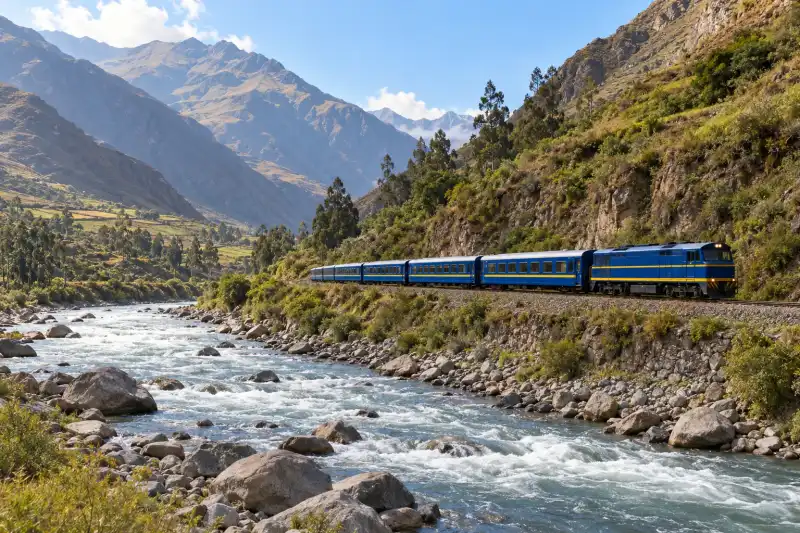
| Rail | Sacred Valley to Aguas Calientes logistics | Exact station, boarding requirements, luggage rules, and coordination with a route-specific entry time. |
| Guided transport | Travelers who need a defined day structure | Whether admission, return timing, and all named sites are actually included. |
Do not use a quoted fare, old schedule, or booking-platform label as live operational data. Ask the carrier or operator on the dates you intend to travel.
A robust southern Peru sequence
Arrive before the immovable booking
If a Machu Picchu route and entry time are the least flexible pieces, do not place an incoming flight immediately before them. Arrive in the Cusco region earlier, leave room for disruption, and confirm whether your rail service departs from Cusco-area or Ollantaytambo.
Use the Sacred Valley as a transfer corridor, not a dash
A private driver can make it easier to stop at Pisac or Moray, but adding two sites does not automatically make the day better. Put only one archaeological stop on a train-transfer day unless you have a generous margin and feel well at altitude.
Ollantaytambo works as a logical rail base because it combines the fortress, town, and station. It also produces a common mistake: travelers arrive from Cusco, climb the site, eat late, collect bags, and discover that the station logistics needed more time. Treat the rail departure as the day’s anchor.
Separate Aguas Calientes from the citadel entry
A rail arrival in Aguas Calientes is not arrival at the citadel. Confirm the current transfer arrangement, your official entry time, and how much time the operator expects before the gate. Your ticket should specify a date and route, not merely “Machu Picchu.”
Overland logistics that prevent stupid problems
- Save ticket confirmations and hotel addresses offline.
- Check pickup stations and meeting points directly with the provider.
- Pack an accessible day bag for documents, medication, water, layers, and rain protection.
- Keep arrival days lighter at elevation instead of adding a long road trip.
- Build a recovery night after a trek or before a major flight.
- Ask about strikes, weather, road works, and seasonal access locally, not from an old itinerary.
Peru rewards a plan with gaps in it. Those gaps absorb a delayed flight, a train change, a slow lunch, or the simple fact that an ancient site takes longer than a transfer spreadsheet expected.