Quick Info
Curated Experiences
Hill of Tara and Boyne Valley Heritage Day Tour
Private County Meath Sacred Sites Experience
Tara, Newgrange, and Trim Castle History Circuit
The Hill of Tara is one of Ireland’s most significant ceremonial landscapes: a broad limestone ridge in County Meath that served as the symbolic and political center of Irish kingship for over two thousand years. This is not a site you visit for a single impressive ruin. It is a layered archaeological complex where Neolithic passage tombs, Iron Age enclosures, and early medieval inauguration traditions overlap across a single hilltop, demanding that you read the land itself as the monument.
For travelers interested in how power, religion, and identity were expressed in pre-modern Ireland, Tara is irreplaceable. No other site carries the same density of mythic weight and archaeological evidence in one place.
Why the Hill of Tara Matters
Tara appears in virtually every major cycle of medieval Irish literature. It is named as the seat of the High Kings, the location of great assemblies (feis Temro), and a place where law, alliance, and succession were enacted in public ceremony. The hill’s importance was not merely political. It functioned as a cosmological anchor, a place where the terrestrial and the otherworldly were understood to overlap.
Archaeologically, the site contains at least thirty visible monuments spanning the Neolithic through the early medieval period. These include passage tombs older than the pyramids at Giza, ring-forts associated with Iron Age ritual, and linear earthworks whose purpose is still debated. The density of features across such a compact area is unusual even by European standards and suggests that Tara held continuous symbolic significance for roughly four millennia.
This combination of literary prominence and physical evidence makes Tara one of the most important heritage landscapes in western Europe, not just Ireland.
Historical Context
Neolithic Origins
The earliest known monument on Tara is the Mound of the Hostages (Dumha na nGiall), a passage tomb dating to approximately 3200 BCE. Its interior contains carved stones and cremation burials consistent with the same tradition that produced Newgrange and Knowth in the nearby Boyne Valley. The presence of a Neolithic tomb at the summit suggests Tara’s ritual significance predates any concept of Irish kingship by thousands of years.
Bronze and Iron Age Development
During the Bronze Age, Tara continued to attract burial and ceremonial activity. A notable Bronze Age burial with gold ornaments was found inside the Mound of the Hostages, indicating the site’s association with elite status persisted across cultural transitions. By the Iron Age, the hill’s character shifted toward large-scale enclosures and ditched features. The Rath of the Synods and the Royal Enclosure (Rath na Rig) belong broadly to this period, though precise dating remains complex.
Early Medieval Kingship
Tara’s peak political significance came in the early medieval centuries (roughly 400-1000 CE), when the title “King of Tara” carried enormous prestige among competing Irish dynasties. The great assembly (feis) held at Tara combined legal proceedings, alliance-making, and ritual feasting. By the eleventh and twelfth centuries, Tara’s practical political role had diminished, but its symbolic authority endured in literature and law texts for centuries afterward.
Modern Significance
In the nineteenth century, Daniel O’Connell chose Tara for a mass political rally in 1843, drawing on its associations with sovereignty and national identity. The hill remains a potent symbol in Irish cultural memory, and archaeological surveys continue to reveal previously unknown features beneath its grass surface.
What to Prioritize on a First Visit
The Mound of the Hostages
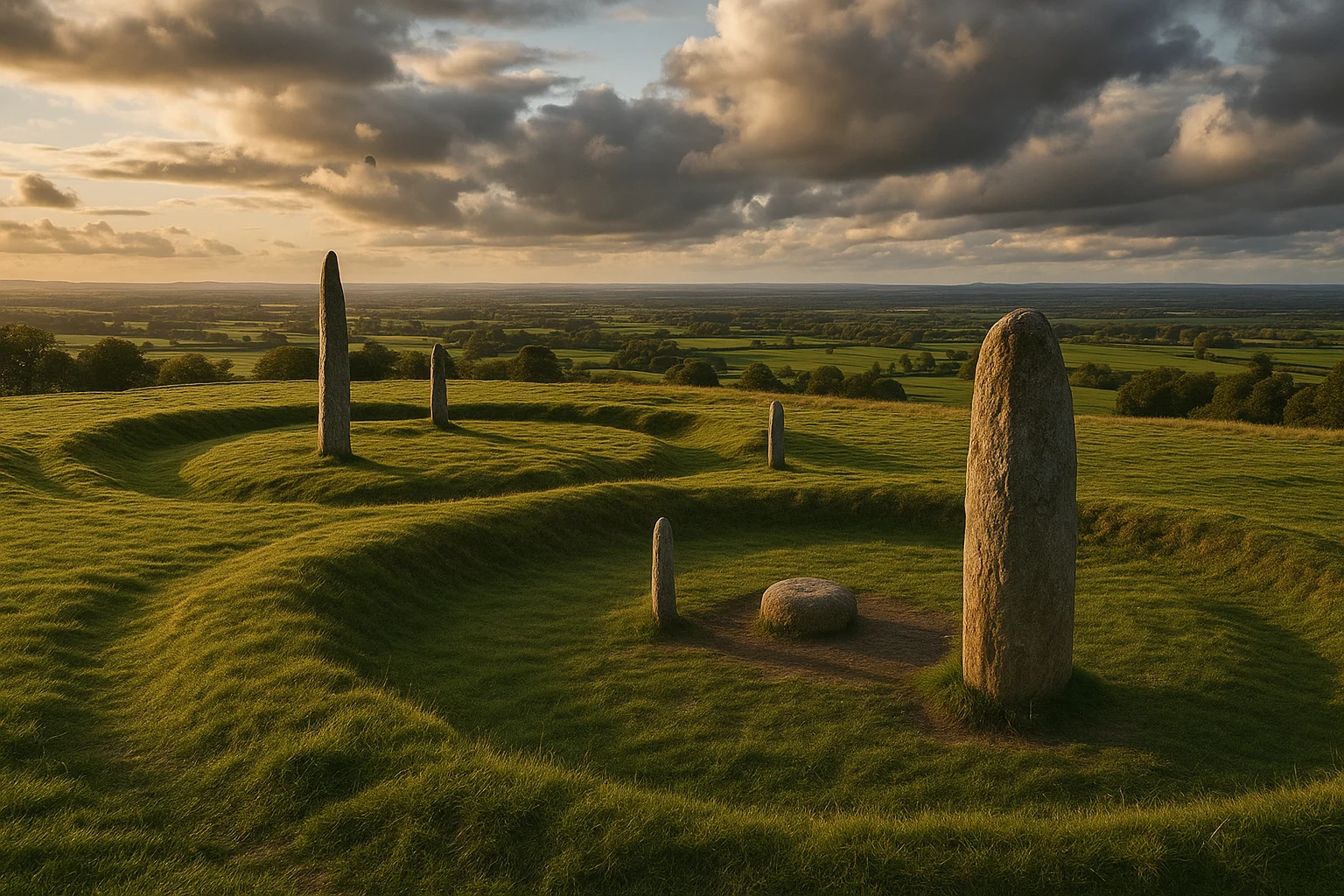
Begin here. This small passage tomb is the oldest structure on the hill and anchors Tara’s story in deep prehistory. The entrance stone carries Neolithic carvings, and the interior (visible through a gate) holds cremation deposits spanning several centuries.
The Royal Enclosure and Cormac’s House
The large oval enclosure known as Rath na Rig contains two internal ring-forts. Walk the perimeter to appreciate the scale of the engineered space. This is where inauguration ceremonies are traditionally placed, though the archaeology is more complex than the legends suggest.
The Lia Fail
The standing stone known as the Lia Fail (Stone of Destiny) sits prominently within the Royal Enclosure. Legend holds that it cried out when touched by the rightful king. Its current position may not be original, but it remains the most recognizable single object at Tara and a useful orientation point.
The Panoramic Views
Do not skip the views. Tara’s elevation (roughly 155 meters) gives unobstructed sightlines across the Meath midlands, and on clear days you can see features in multiple counties. The hill’s dominance over the surrounding plain is inseparable from its political logic: whoever held Tara could symbolically survey and claim the land.
The Rath of the Synods
North of the main enclosure, this multi-vallate earthwork was partially excavated (and damaged) by British Israelites in 1899 searching for the Ark of the Covenant. Despite that disruption, it remains an important feature and illustrates the site’s layered use across periods.
Practical Visit Strategy
When to Go
The best months are April through June and September through October, when weather is manageable and summer coach traffic has not yet peaked. Midweek visits are noticeably quieter than weekends. Arrive early morning or after 3 PM to avoid the midday cluster of tour buses.
Getting There
Tara is located about 45 minutes northwest of Dublin by car, near the village of Navan. Parking is available at the base of the hill. Public transport options are limited, so a rental car or organized day tour from Dublin is the most practical approach.
The Visitor Centre
A small visitor centre (housed in a former church adjacent to the site) provides interpretive panels and a short introductory film. It operates seasonally, typically late May through mid-September. Even when the centre is closed, the hill itself is freely accessible year-round.
What to Bring
Wear sturdy, waterproof footwear. The ground is uneven grass over archaeological features and stays damp much of the year. Bring a windproof layer regardless of the forecast. Carry water and a printed or downloaded site map, as on-site signage is minimal for some of the outlying features. Budget 90 minutes to two hours for a thorough visit.
Route Pairing and Nearby Sites
The Hill of Tara sits within one of the richest heritage corridors in Ireland. The most natural pairing is with Newgrange, roughly 25 minutes north, where you can walk inside a 5,200-year-old passage tomb and see the famous winter solstice light box. Together, Tara and Newgrange create a powerful sequence from Neolithic ceremony to Iron Age and medieval kingship.
Add Boyne Valley Passage Tombs (Knowth, Dowth) for a full day exploring the prehistoric Boyne complex. For medieval contrast, Trim Castle is roughly 20 minutes west and offers the largest Anglo-Norman castle in Ireland, a useful counterpoint to Tara’s pre-Norman authority.
If continuing south toward Dublin, Glendalough in County Wicklow adds an early Christian monastic dimension and is reachable in about 90 minutes. A two-day Meath-Wicklow loop covering Tara, Newgrange, Trim, and Glendalough is one of the strongest heritage itineraries available outside Dublin.
Final Take
The Hill of Tara rewards visitors who arrive prepared to read a landscape rather than admire a building. There is no grand facade here, no ornamental stonework, no reconstructed interior. What there is, instead, is one of the most historically charged hilltops in Europe: a place where political authority, mythic tradition, and deep archaeological layering converge in open grassland. Walk it slowly, use the views, understand what the enclosures meant, and Tara becomes one of the most genuinely significant heritage stops in Ireland.
Quick Facts
| Attribute | Details |
|---|---|
| Location | Near Navan, County Meath, Ireland |
| Country | Ireland |
| Region | County Meath |
| Associated Culture | Celtic Ireland / pre-Celtic Neolithic |
| Historical Period | Neolithic through early medieval (c. 3200 BCE - 1000 CE) |
| Earliest Monument | Mound of the Hostages, c. 3200 BCE |
| Elevation | ~155 meters |
| Admission | Hill is free and open year-round; visitor centre seasonal |
| Coordinates | 53.5804, -6.6111 |
Frequently Asked Questions
Is the Hill of Tara worth visiting?
Yes. It is one of Ireland's most symbolically important landscapes, linked to kingship traditions and layered archaeology rather than a single standing monument.
How long do you need at the Hill of Tara?
Most travelers should plan 1.5 to 2.5 hours for the main earthworks, viewpoints, and interpretive context.
Can you visit the Hill of Tara and Newgrange on the same day?
Yes. They pair well as a day itinerary in County Meath, with Tara providing ceremonial and mythic context and Newgrange providing Neolithic architectural depth.
Nearby Ancient Sites
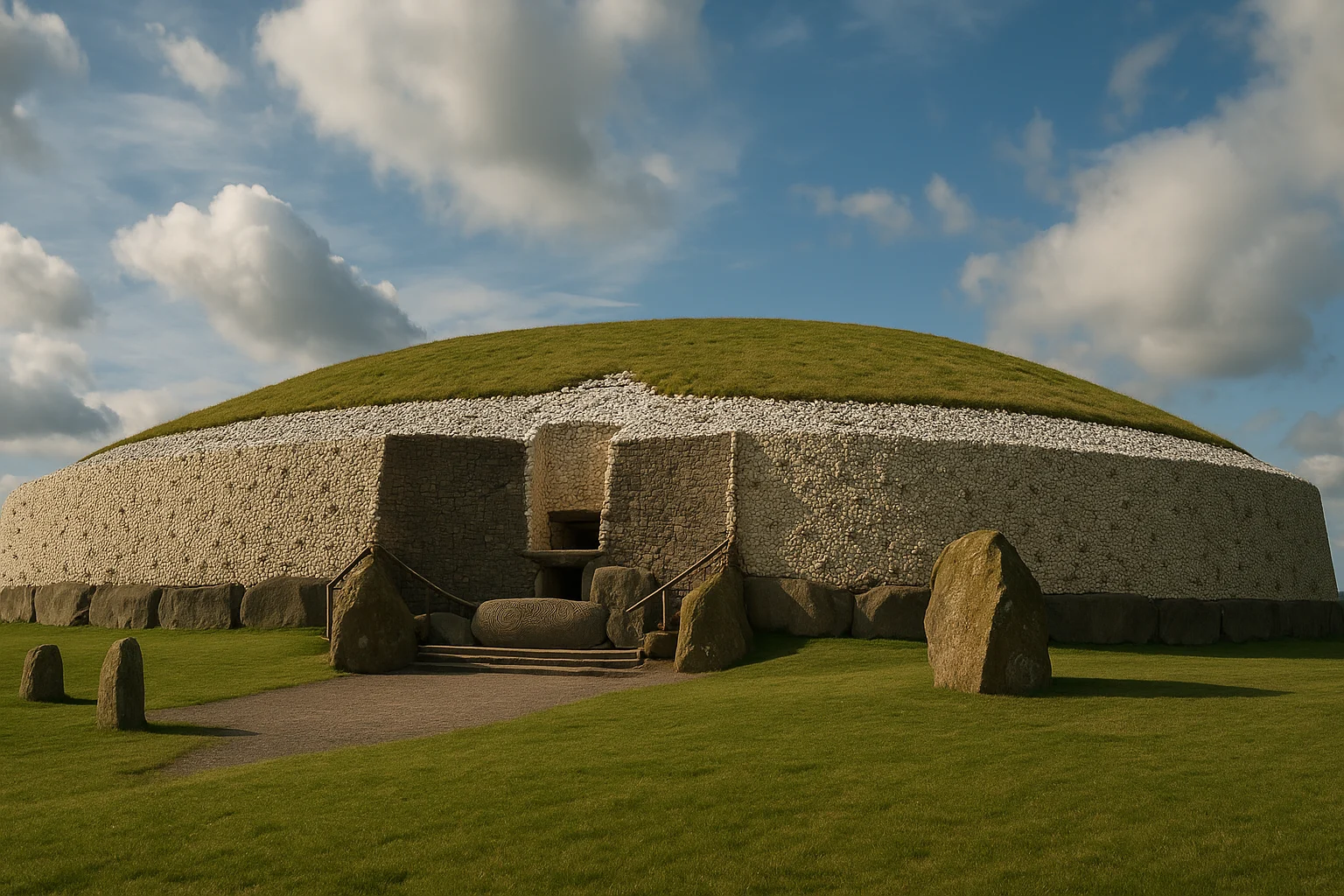
Newgrange Travel Guide 2026: Passage Tomb Access, Solstice Context, and Boyne Valley Planning
Neolithic IrelandPlan a first visit to Newgrange with practical access logistics, what to expect inside the passage t...
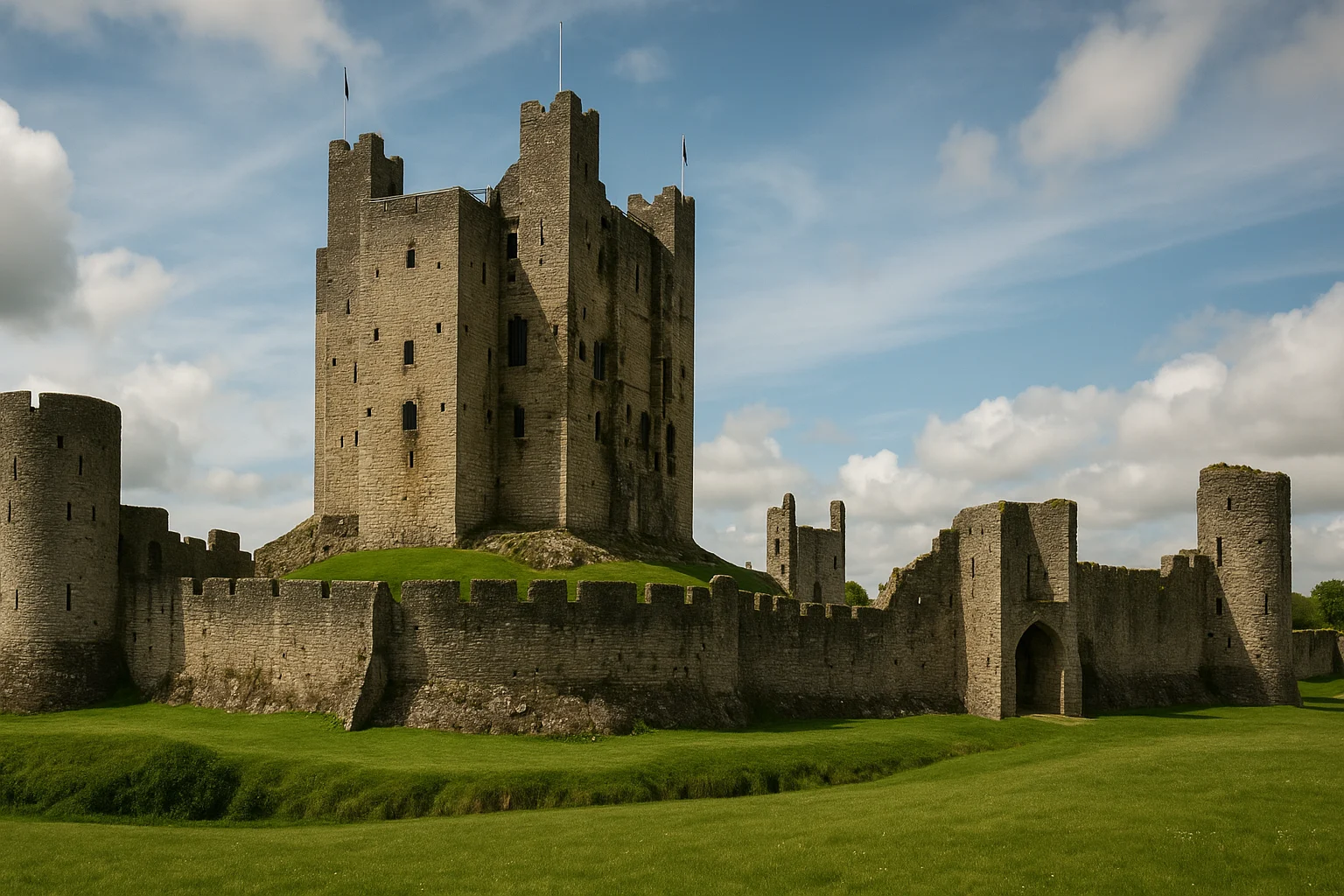
Trim Castle Travel Guide 2026: Norman Keep, Curtain Walls, and County Meath Plan
Anglo-Norman IrelandPlan a first visit to Trim Castle with practical timing, keep-tour logistics, and clear context for ...
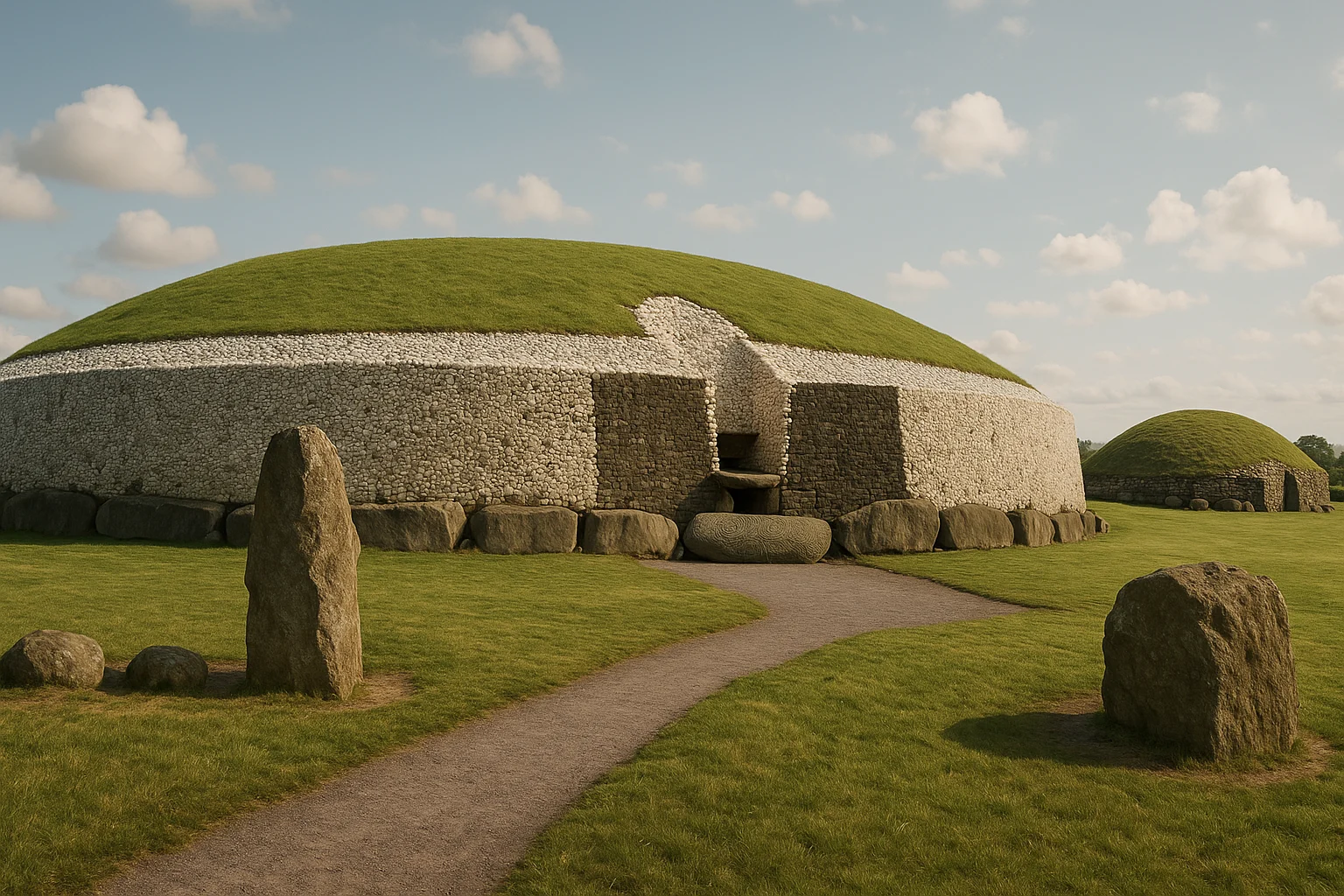
Boyne Valley Passage Tombs Travel Guide 2026: Newgrange, Knowth, and Dowth Visit Strategy
Neolithic IrelandPlan your first Boyne Valley passage tombs visit with practical timing, Brú na Bóinne access flow, a...