Quick Info
Curated Experiences
Boyne Valley and Newgrange Small-Group Day Tour
Private Brú na Bóinne Archaeology Excursion
Ancient East Ireland: Boyne Valley and Hill of Tara Tour
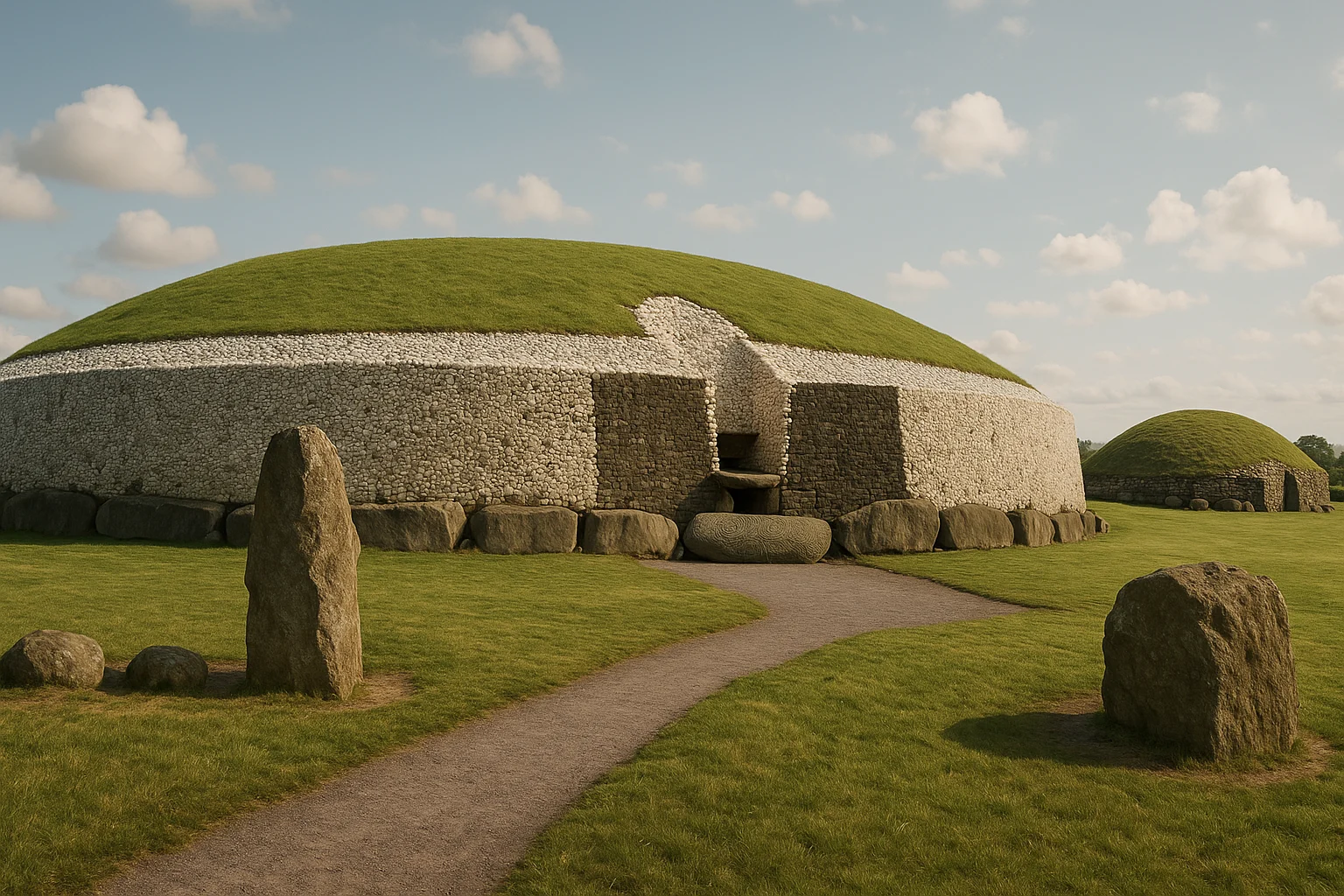
The Boyne Valley passage tombs are among the most powerful prehistoric sites in Europe - not because they are the oldest or the largest, but because they still function as a coherent ritual landscape five thousand years after construction. Three monumental mounds line the north bank of the River Boyne in County Meath, each oriented with precision that modern surveyors respect, each carved with symbols no one has fully decoded.
If this is your first visit, structure your day around the Brú na Bóinne Visitor Centre and treat Newgrange and Knowth as complementary halves of the same story rather than competing alternatives. Done right, a half-day here delivers one of the most intellectually satisfying heritage experiences anywhere in Ireland.
Why the Boyne Valley Passage Tombs Matter
The Boyne Valley contains one of the densest concentrations of Neolithic ceremonial architecture in Western Europe. The three major mounds - Newgrange, Knowth, and Dowth - were built around 3200 BCE, making them older than the Egyptian pyramids and roughly contemporary with the earliest construction phases at Stonehenge.
What separates this complex from other megalithic sites is legibility. Newgrange’s passage alignment with the winter solstice sunrise still works, demonstrated each December when a shaft of light penetrates the roof box and illuminates the inner chamber for seventeen minutes. Knowth’s kerbstones carry some of the richest megalithic art ever recorded - over a quarter of all known Western European passage tomb art is concentrated at this single site. And the spatial relationship between the three mounds across the river valley reveals a culture that thought in landscape-scale terms about death, astronomical cycles, and seasonal renewal.
For travelers accustomed to seeing Neolithic sites reduced to scattered stones in a field, Boyne Valley offers something rare: scale, preservation, and interpretive infrastructure that lets you actually grasp what these builders achieved.
Historical Context
Construction at the Boyne Valley complex began around 3200 BCE, during a period when farming communities across Atlantic Europe were investing enormous collective labor into monumental tombs. The builders quarried stone from sources up to 70 kilometers away, moved boulders weighing several tonnes each, and engineered drainage systems sophisticated enough to keep inner chambers dry for five millennia.
Newgrange alone required an estimated 200,000 tonnes of material. The workforce needed for that scale of construction implies a society with surplus food production, organized leadership, and shared cosmological purpose - though whether that purpose was strictly funerary, ceremonial, or astronomical remains debated.
After roughly seven centuries of active use, the passage tomb tradition faded. The mounds were gradually absorbed into the agricultural landscape, reused in the Bronze and Iron Ages, woven into Irish mythology as the dwelling places of the Tuatha Dé Danann, and largely forgotten as engineered structures until antiquarian investigations began in the 17th century. Systematic archaeological excavation from the 1960s onward, particularly Michael O’Kelly’s work at Newgrange, restored the sites to international prominence.
The complex was designated a UNESCO World Heritage Site in 1993.
What to Prioritize on a First Visit
Brú na Bóinne Visitor Centre
Start here. The orientation exhibits map chronology, construction methods, and ritual context before you reach the monuments. The centre also controls access to Newgrange and Knowth - you cannot drive to either site independently. Skipping the exhibits is like arriving at the second act: you will follow the action, but miss the setup that gives it weight.
Newgrange
Newgrange is the anchor for most visitors, and rightly so. The cruciform chamber, corbelled roof, and solstice-aligned roof box are extraordinary feats of Neolithic engineering. The guided tour takes you inside the passage, where a simulated solstice light effect demonstrates the alignment. Focus on structural logic and ritual function rather than fixating on the reconstructed white quartz facade, which remains archaeologically controversial.
Knowth
Knowth adds depth that Newgrange alone cannot provide. Its two passage tombs (east and west) and eighteen surrounding satellite mounds represent a more complex site layout. Interior access is not currently available, but the exterior walkway puts you within arm’s reach of kerbstones whose spiral, lozenge, and serpentiform carvings are unmatched anywhere in Europe for density and variety. If your schedule allows both stops, the Boyne Valley system clicks into place in a way a single-site visit never achieves.
Dowth
Dowth sits outside the visitor centre shuttle system and receives far fewer visitors. It is freely accessible and unguided, which gives it a quieter, more atmospheric quality. The mound was damaged by 19th-century amateur excavation, but two passage tombs survive, and the solstice alignment here (sunset rather than sunrise) complements Newgrange’s dawn orientation. Worth the short detour if you have time.
Practical Visit Strategy
When to Go
The best months are April through June and September through October, when weather is manageable and peak-season crowds have not yet arrived or have thinned. Summer midday slots (roughly 11:00 to 14:00) are the busiest. If you are visiting specifically for the winter solstice light event at Newgrange, enter the annual lottery through the visitor centre - demand far exceeds the roughly fifty places available each year.
Timing and Logistics
Book official timed access well in advance during peak periods. Slots can sell out days ahead in July and August. Arrive at the visitor centre fifteen minutes before your check-in window. The shuttle bus to Newgrange takes about ten minutes; Knowth slightly longer. Plan three to four hours minimum for both sites including the centre exhibits.
The visitor centre is located off the L21 road south of Donore. Parking is free. From Dublin, the drive takes roughly an hour via the M1 motorway. Public transport options are limited - a car or organized day tour is the practical choice.
What to Bring
Wear weather-ready layers; the valley is open and riverine, and it can feel noticeably colder than forecast. Sturdy shoes with grip matter on the mound walkways, which can be slippery after rain. Bring a small flashlight if visiting Dowth independently. Photography is permitted outside but restricted inside the Newgrange chamber.
Route Pairing and Nearby Sites
The Boyne Valley anchors one of Ireland’s strongest heritage corridors. Pair it with the Hill of Tara, just twenty minutes south, to trace the arc from Neolithic ceremonial landscape to Iron Age and early-medieval seat of kingship. For the detailed single-monument deep dive, the dedicated Newgrange page covers chamber specifics and solstice logistics in greater detail.
Further afield, Glendalough provides early-medieval monastic contrast - a shift from prehistoric cosmology to Christian asceticism set in a glacial valley. To bridge prehistoric ceremonial space with medieval ecclesiastical power on a multi-day trip, add the Rock of Cashel and you have one of the most compelling heritage arcs on the island.
Within the immediate area, the Battle of the Boyne site (1690) sits just downstream, offering an unexpected historical layer for visitors interested in Ireland’s more recent past.
Final Take
Boyne Valley is not a quick photo stop. It is a landscape that rewards patience, sequence, and a willingness to sit with uncertainty - we still do not fully understand what these builders believed or why they carved what they carved. Give it at least half a day, follow the interpretive path from visitor centre to monuments, and resist the urge to rush. You will come away with one of the most rewarding prehistoric experiences available anywhere in Europe, and a genuine sense of how much Neolithic societies were capable of achieving.
Quick Facts
| Attribute | Details |
|---|---|
| Location | Donore, County Meath, Ireland |
| Country | Ireland |
| Region | County Meath |
| UNESCO Status | World Heritage Site (1993) |
| Civilization | Neolithic Ireland |
| Historical Period | c. 3200 BCE - 2500 BCE |
| Established | c. 3200 BCE |
| Key Sites | Newgrange, Knowth, Dowth |
| Access | Via Brú na Bóinne Visitor Centre only (Newgrange/Knowth) |
| Coordinates | 53.6947, -6.4756 |
Frequently Asked Questions
How much time do you need for the Boyne Valley passage tombs?
Most first-time visitors should allow at least half a day for Brú na Bóinne. A full day gives better pacing for Newgrange, Knowth, and optional Dowth viewpoints.
Can you visit Newgrange without the visitor centre?
No. Standard access is managed through the Brú na Bóinne Visitor Centre, where tours are timed and transport to monuments is coordinated.
Which is better, Newgrange or Knowth?
They complement each other. Newgrange is iconic for architecture and winter-solstice orientation, while Knowth is exceptional for megalithic art and broader mound complexity.
Nearby Ancient Sites
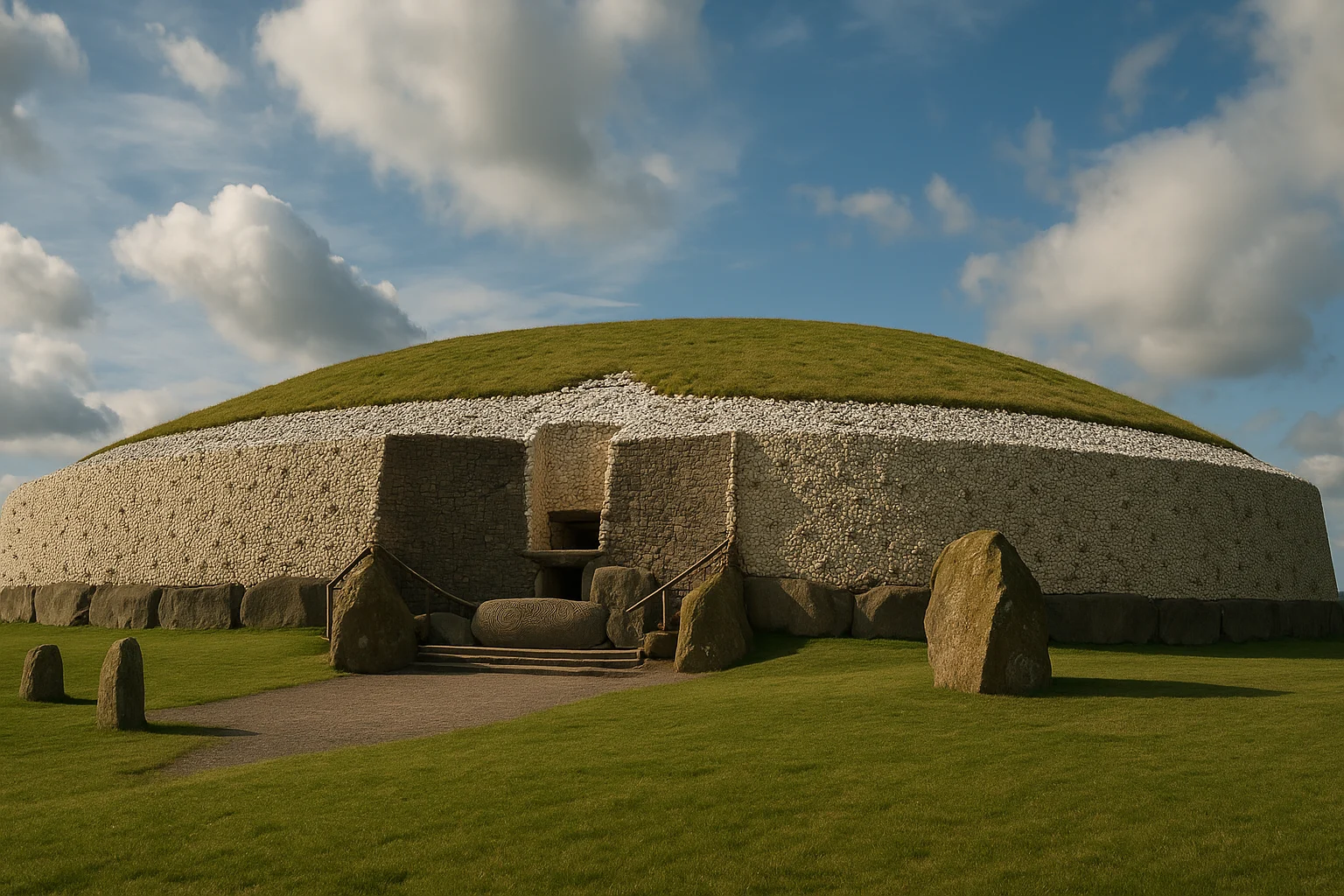
Newgrange Travel Guide 2026: Passage Tomb Access, Solstice Context, and Boyne Valley Planning
Neolithic IrelandPlan a first visit to Newgrange with practical access logistics, what to expect inside the passage t...
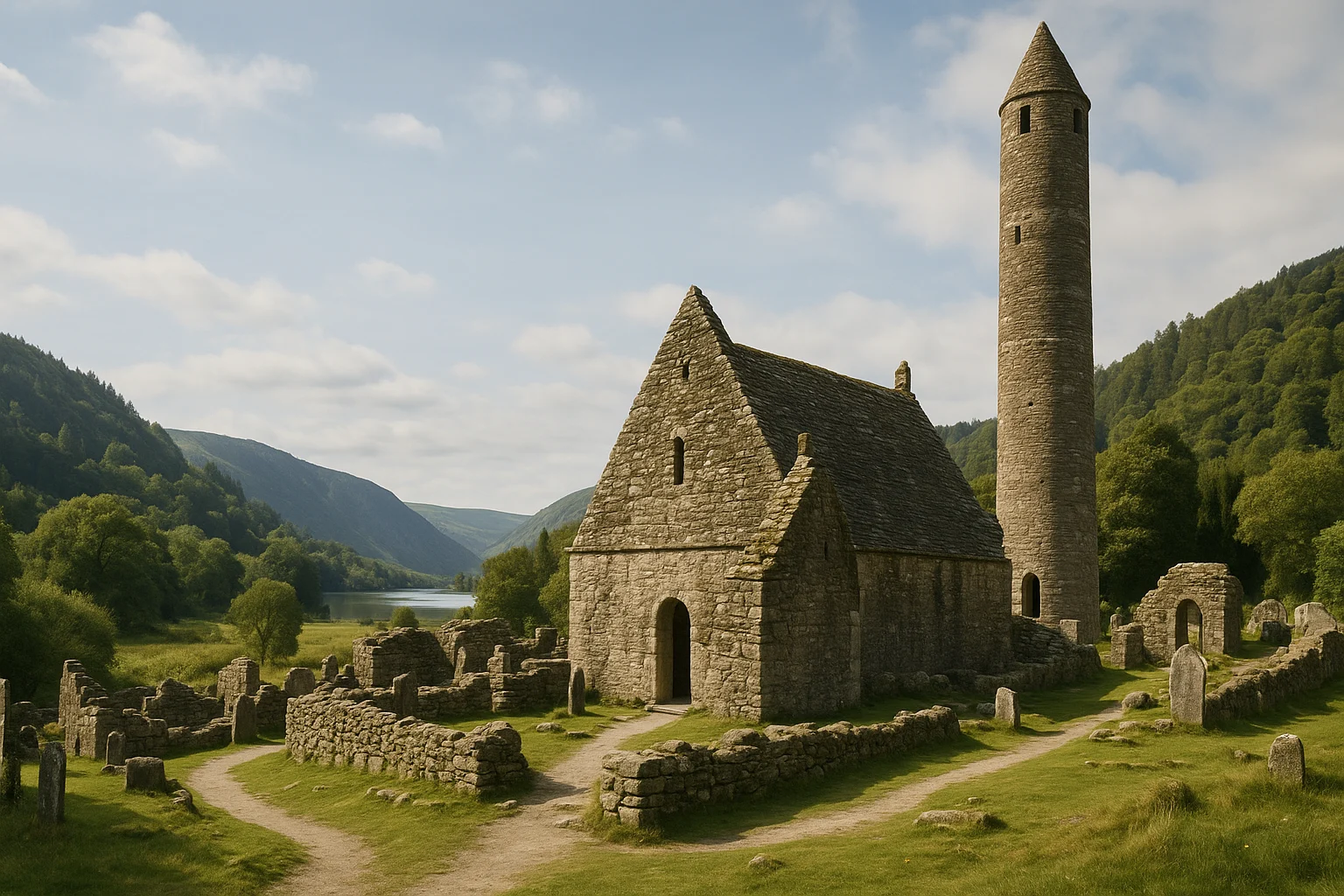
Glendalough Travel Guide 2026: Monastic Ruins, Lakes, and Wicklow Day-Trip Plan
Early Medieval IrelandPlan a clear first visit to Glendalough with route advice, monastic-site context, and practical timi...
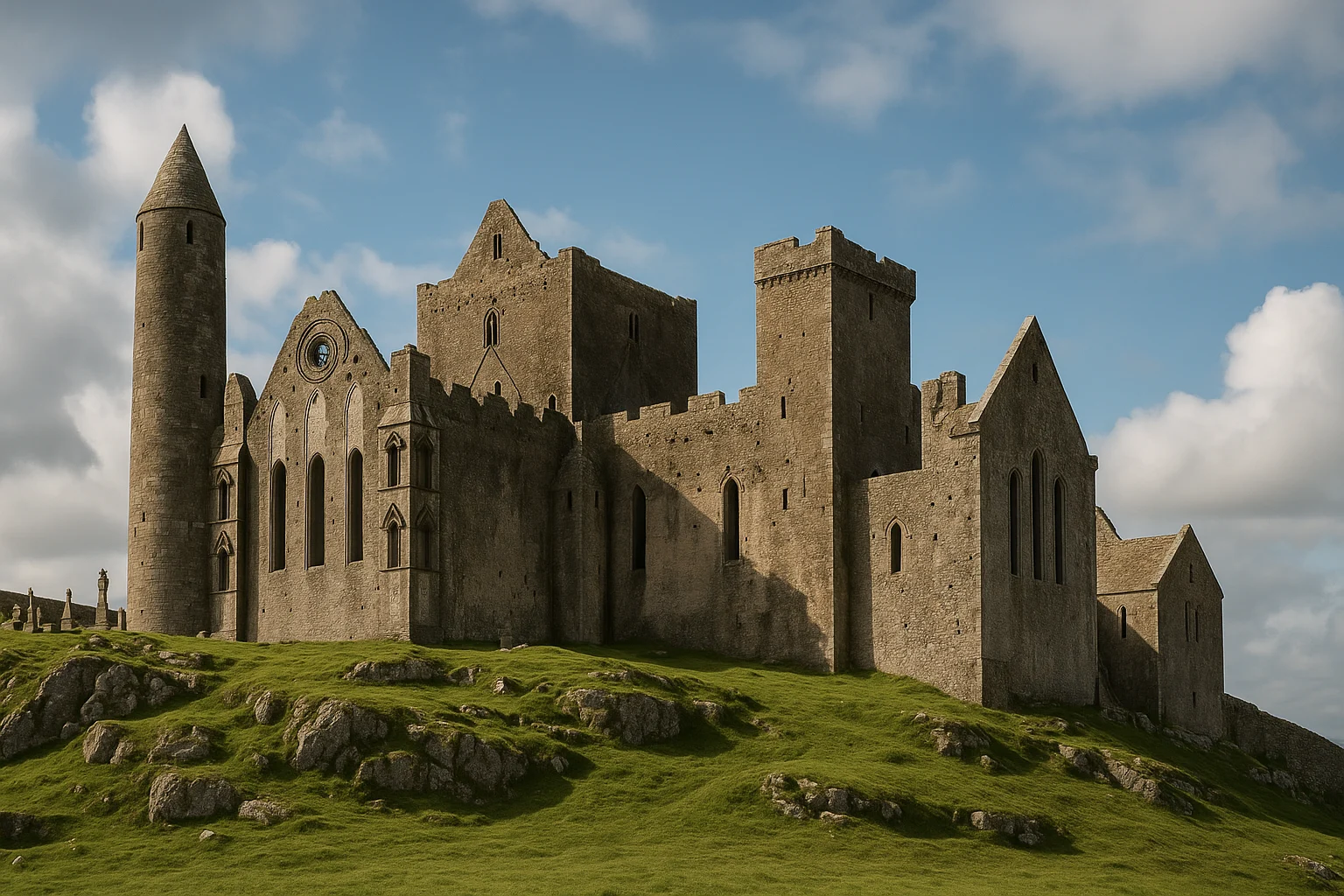
Rock of Cashel Travel Guide 2026: Cathedral Hill Timing, Access, and County Tipperary Plan
Medieval IrelandPlan your first visit to the Rock of Cashel with practical timing, hilltop route priorities, and eas...