Quick route summary
This 7-day route starts in Kyoto and ends in Osaka, with Nara as the practical middle base. It is built for travelers who want the ancient and early medieval spine of Kansai: Buddhist temple culture in Kyoto, the court and temple world of Nara, the older Asuka-Fujiwara heartland, and the burial mounds that came before Japan’s first permanent capitals.
The main stops are Kiyomizudera Temple, Kinkakuji Temple, Byodoin Temple, Todaiji Temple, Heijo Palace Site, Asuka Historical Sites, the Fujiwara Palace Ruins, the Mozu-Furuichi Tumulus Clusters, and Osaka Castle.
The pace is full, but not ridiculous. It intentionally skips far-flung Japan sites such as Hokkaido Jomon settlements, Okinawa castles, Nikko, and Kyushu government ruins. Those are worth separate trips. Trying to bolt them onto this week would turn a strong Kansai itinerary into a train schedule with temples attached.
Who this itinerary is for
Use this itinerary if you want a history-heavy first route through ancient Japan and are comfortable with trains, local buses, early starts, and a few days with a lot of walking. It is especially good if you want to understand how Kyoto, Nara, Asuka, and Osaka fit together rather than treating them as isolated sightseeing stops.
It is not ideal if you want a slow Kyoto-only trip, a food-first Osaka vacation, or a first Japan itinerary that includes Tokyo and Mount Fuji. It also asks for patience. Some of the most important places here, especially Heijo Palace, Fujiwara Palace, and the kofun tombs, are archaeological landscapes rather than ornate surviving buildings. The stones and earthworks are quiet now, but the political ambition was not subtle.
Route at a glance
- Day 1: Overnight in Kyoto. Arrive and focus on Kiyomizudera and Higashiyama, using buses, taxis, and walking rather than trying to cross the whole city.
- Day 2: Overnight in Kyoto. Visit Kinkakuji, Ginkakuji, and Nijo Castle, with a realistic warning that Kyoto’s famous sites are spread across slow urban transit.
- Day 3: Overnight in Nara. Take the train to Uji for Byodoin, then continue to Nara and settle in before the temple-heavy days.
- Day 4: Overnight in Nara. Walk Nara Park for Todaiji, Kofukuji, and Kasuga Taisha, with short bus or taxi hops if your feet are done.
- Day 5: Overnight in Nara. Visit Heijo Palace Site and Yakushiji, a day that makes Nara’s planned-capital story much clearer.
- Day 6: Overnight in Nara. Make a full-day trip to Asuka and Fujiwara Palace, using Kintetsu rail plus taxi, bike, bus, or a guide.
- Day 7: Overnight in Osaka. Move toward Osaka for the Mozu-Furuichi kofun landscape and Osaka Castle, then finish in the city.
Practical logistics before you go
Kyoto, Nara, and Osaka are close by Japanese rail standards, but do not let that tempt you into one base for the whole week. Kyoto is the best base for Days 1 to 3. Nara is the best base for Days 4 to 6. Osaka is useful at the end, especially if you fly onward from Kansai International Airport or want an easier final evening.
Trains handle the big moves. Local logistics are the harder part. Kyoto buses can be slow and crowded, so use taxis strategically if crossing the city would eat half the day. Nara Park is walkable, but the west-side Nara sites are not all next door to the deer and temple precincts. Asuka is the one day where a guided tour, taxi hire, rental bike, or rental car can genuinely improve the trip.
Book major temple visits with time buffers rather than stacking every famous name into one day. Kyoto rewards selectivity. Nara rewards starting early. Asuka rewards accepting that the sites are scattered because you are moving through an old political landscape, not a compact museum district.
A guided tour is most useful on Day 4 or Day 6. A good Nara ancient temples tour can help connect Buddhism, court patronage, and Shinto shrine space without turning the day into a checklist. For Day 6, an Asuka and Fujiwara Palace history tour is mainly valuable because the geography is awkward and the interpretation matters.
Day 1: Kiyomizudera and eastern Kyoto
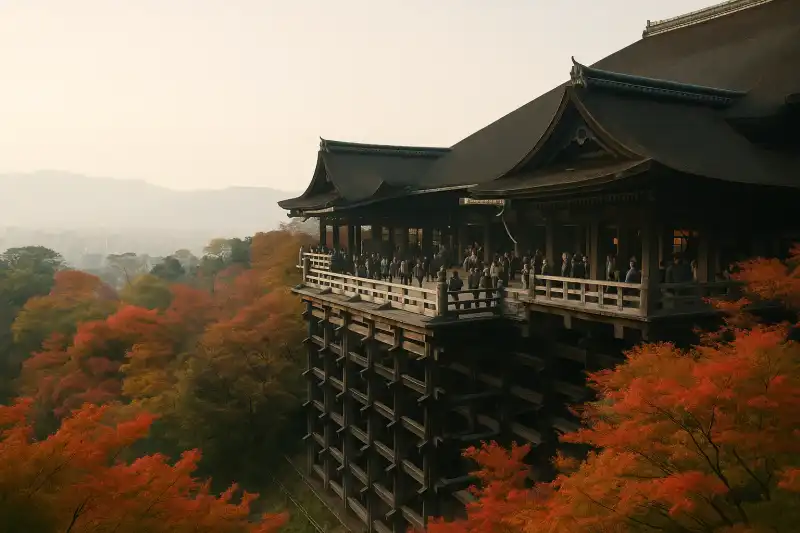
Start in eastern Kyoto with Kiyomizudera Temple. If you arrive in Japan this morning or transfer from another city, do not pretend this is a full sightseeing day. Drop bags, eat something, and go late morning or afternoon unless you have the energy for an early start.
Kiyomizudera’s famous wooden stage is the obvious draw, but the construction is the better detail to slow down for. The stage projects from the hillside on a lattice of timber supports, built without nails in the traditional style. That engineering choice makes the temple feel less like an object on a hill and more like a negotiation with the slope.
Spend time in the surrounding Higashiyama lanes, but keep the ancient-sites focus. This district can get packed, and fatigue sneaks up fast after a travel day. If the crowd is heavy, do not fight every shop-lined lane. Step away, take the quieter side streets when you can, and save your energy for the next two temple days.
Transit today is simple but slow. Use a bus or taxi from Kyoto Station or your hotel, then walk the final approach. If you are staying across town, a taxi back can be worth the cost. Kyoto looks compact on a map and then teaches you patience one traffic light at a time.
Day 2: Kinkakuji, Ginkakuji, and Nijo Castle
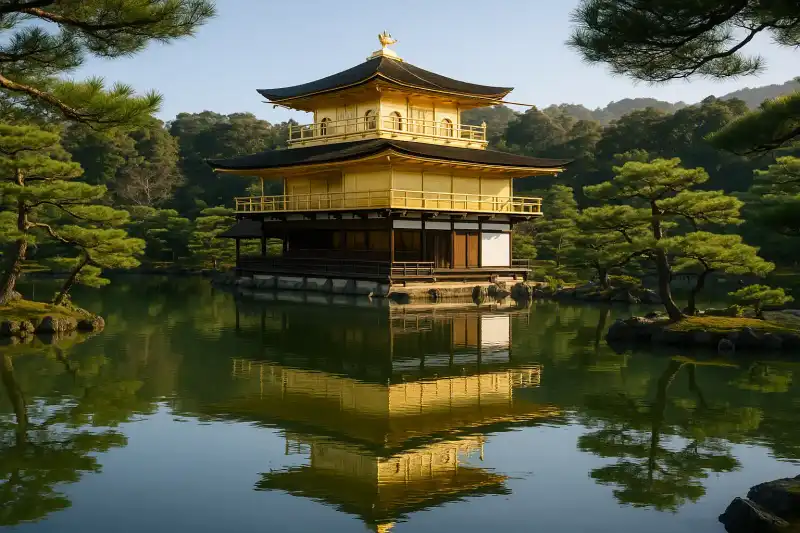
This is the big Kyoto day, but keep it disciplined. Start with Kinkakuji Temple before the heaviest crowds if you can. The gold-leaf pavilion is a Muromachi-period showpiece, later rebuilt after a 1950 fire, and it works partly because it is so staged: pond, reflection, garden path, and controlled views.
Then cross the city for Ginkakuji Temple, which is quieter in tone even when the visitor numbers are not quiet at all. The Silver Pavilion was never covered in silver. That disappointment is useful. It points you toward Ashikaga Yoshimasa’s late 15th-century world of restrained taste, sand forms, moss, and the kind of beauty that asks you to notice weathering.
Add Nijo Castle if you have enough stamina. It is later than most of this itinerary, but it sharpens the political story. The Tokugawa shogunate used architecture, reception rooms, painted panels, and those famous nightingale floors to choreograph authority. After two Zen temple stops, Nijo reminds you that elite culture was never separate from power.
This is a day where a private guide or carefully planned taxi route can help. A Kyoto private history tour makes sense if you want context without losing time to bus transfers. If traveling independently, accept that three scattered sites may be enough. Do not add every famous Kyoto temple just because it is nearby in search results.
Day 3: Byodoin Temple in Uji and the move toward Nara
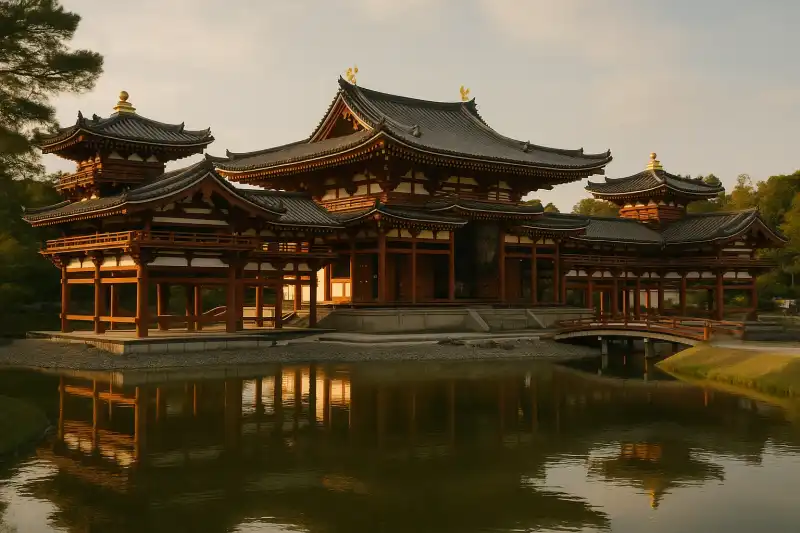
Leave Kyoto by train for Uji and spend the main part of the day at Byodoin Temple. The Phoenix Hall dates to the Heian period and gives this itinerary a different kind of courtly imagination. It is not fortress power or capital planning. It is Pure Land Buddhism translated into architecture, water, symmetry, and carefully arranged approach.
Look closely at the pond setting. The hall was designed to be seen across water, with its reflection turning the building into an image of paradise. This is the kind of site where rushing is a mistake. The plan is not complicated, but the effect depends on taking your time.
After Uji, continue by rail to Nara and check in. Resist the urge to squeeze in Todaiji at the end of the day. Nara deserves a clean start, and tomorrow will be dense enough. If you want a light evening, walk near Nara Park or around the old merchant districts, but keep it low-pressure.
The logistics are friendly today: Kyoto to Uji by train, then Uji to Nara by rail with a transfer depending on route. Luggage forwarding from Kyoto to Nara or Osaka can make the day smoother. Japan’s luggage systems are one of the rare travel conveniences that actually feel as useful as people claim.
Day 4: Todaiji, Kofukuji, and Kasuga Taisha
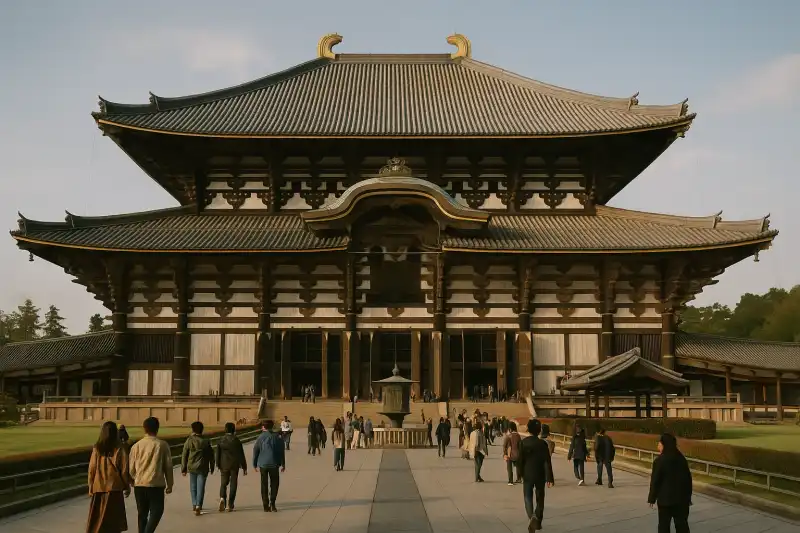
Start early at Todaiji Temple. The Great Buddha Hall has been rebuilt, resized, damaged, and restored over the centuries, but the scale still lands. The bronze Vairocana Buddha was first consecrated in 752, when Nara was the imperial capital and Buddhism had become a state-level project.
This is the day when ancient Japan stops feeling abstract. Todaiji was not just a religious monument. It was tied to court authority, taxation, metal resources, labor, ritual protection, and the desire to make a capital feel cosmically ordered. Give it more time than the map suggests.
Walk or take a short hop to Kofukuji Temple. Its five-story pagoda is one of Nara’s great skyline markers, and the temple’s history is bound to the Fujiwara clan, whose political influence shaped court life for centuries. The site has lost and regained buildings repeatedly, which is a good reminder that Japanese temple history is often a story of fire, rebuilding, and patronage.
Continue to Kasuga Taisha Shrine through the forested edge of Nara Park. The lanterns are the detail to notice here: stone lanterns along the approaches and bronze lanterns around the shrine precinct create a different sacred rhythm from the monumental Buddhist halls. Buddhism and Shinto did not live in neat modern categories here. They shared landscapes, patrons, and ritual habits for long stretches of Japanese history.
Expect a lot of walking today. The deer are charming until they are in your way, the paths are uneven in places, and the temple precincts are larger than they look. If you are tired, cut museum add-ons before cutting the main three sites.
Day 5: Heijo Palace and Yakushiji
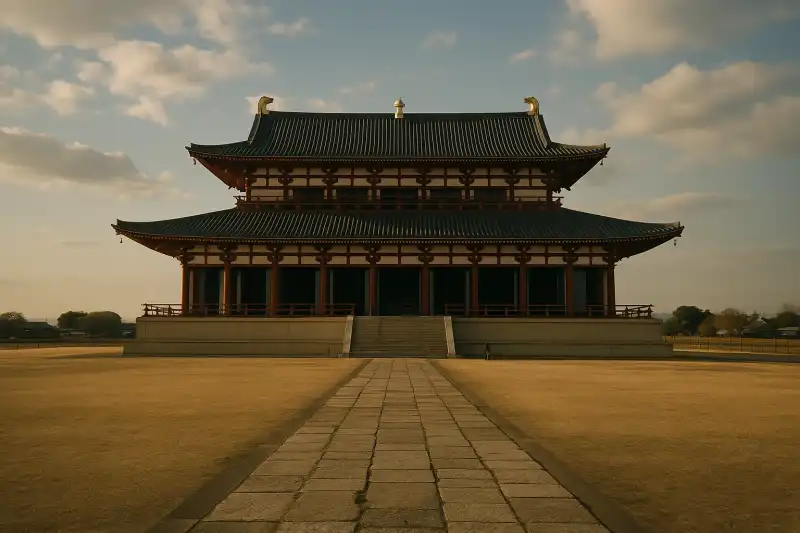
Use today to understand Nara as a capital, not just a park full of temples. Start at Heijo Palace Site, the administrative heart of the 8th-century capital. The open space can feel almost too empty at first, especially after Todaiji. Stay with it. The emptiness is part of the lesson.
Heijo-kyo was modeled in part on Chinese Tang capital planning, with a gridded city, palace compounds, gates, audience halls, and bureaucracy arranged at a scale meant to impress. The reconstructed buildings and archaeological displays help you imagine the court world that produced yesterday’s temple patronage.
In the afternoon, continue to Yakushiji Temple. Its East Pagoda is one of the great survivors of early Nara temple architecture, often dated to the 8th century. The layered roofs create a rhythm that looks delicate from a distance but is disciplined up close. This is a quieter day than Day 4, but historically it is just as important.
Logistics require attention. Heijo Palace and Yakushiji sit west of central Nara, so do not plan this as a casual extension of the deer park area. Use local rail, bus, or taxis, and check opening times before you go. If the weather is hot or rainy, taxis between stops are not a failure. They are a sensible way to keep the day from turning into a slog.
Day 6: Asuka and Fujiwara Palace
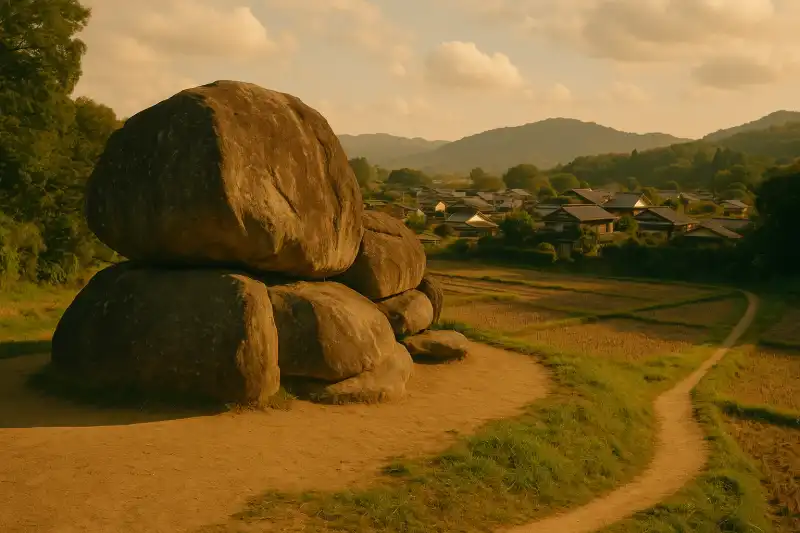
This is the most logistically awkward day of the itinerary, and also one of the best. Travel south from Nara into the Asuka-Fujiwara area, where early Japanese state formation feels closer to the ground. The Asuka Historical Sites include tombs, temple remains, carved stones, and rural traces of a period when Buddhism, continental influence, clan politics, and royal authority were all taking new forms.
Asuka rewards curiosity more than speed. Some places are modest at first glance: a mound, a stone, a foundation, a museum label, a view across fields. But this is Japan’s early capital landscape, where the 6th and 7th centuries start to feel less like a preface and more like the main story.
Add the Fujiwara Palace Ruins to see the next step in the sequence. Fujiwara-kyo, established in the late 7th century, was Japan’s first large planned imperial capital on a Chinese-style grid. Unlike Kyoto or Nara, it is now mostly an archaeological landscape, which means you need imagination. The payoff is seeing how quickly court ambition moved from scattered Asuka centers toward formal capital planning.
This is the day to consider a guide, taxi hire, rental bike, or rental car. Kintetsu trains get you into the area, but the sites are spread out. Local buses exist, yet they can make the route feel more fragile than it needs to be. If you bike, check weather and distances carefully. Summer heat can make this day rough.
Return to Nara for the night rather than pushing on to Osaka. You will be tired, and staying put keeps the day focused on early Japan instead of luggage.
Day 7: Mozu-Furuichi kofun and Osaka Castle
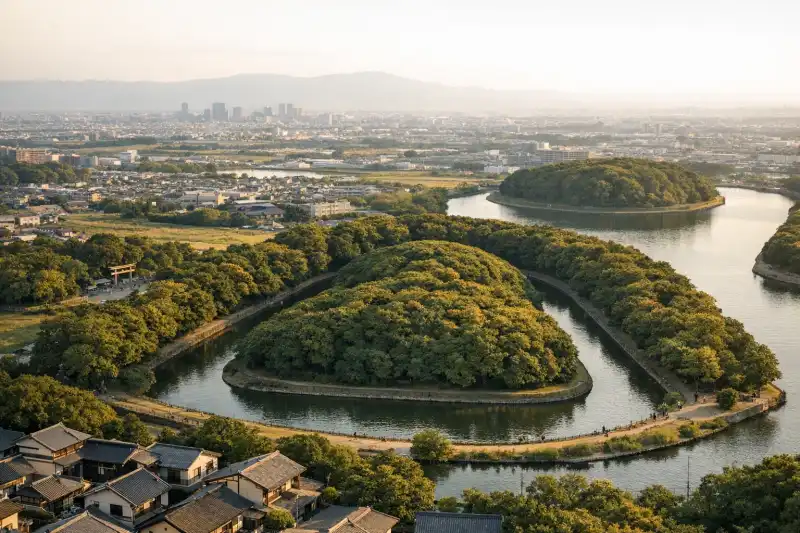
Move from Nara toward Osaka and spend the first part of the day with the Mozu-Furuichi Tumulus Clusters. These are Kofun-period burial mounds, including enormous keyhole-shaped tombs linked to elite power before the age of permanent capitals. They are not always easy to grasp from street level, which is exactly why you should read ahead and choose viewpoints carefully.
The scale matters. A kofun is not a temple you enter and admire from a single angle. It is an engineered burial landscape, with moats, mound shapes, restricted access, and a message about rank that was meant to be read across the plain. The route has now moved backward and forward through Japan’s state formation: tombs, Asuka courts, Fujiwara planning, Nara institutions, Kyoto culture.
Finish at Osaka Castle. It is much later than the kofun, but it gives the itinerary a useful final contrast. Toyotomi Hideyoshi’s castle project belonged to the age of unification, stone walls, military power, and urban control. After a week of temples, capitals, and tombs, Osaka Castle shows another version of authority built high and visible.
Do not overpack this final day. The kofun clusters require transit patience, and Osaka Castle has broad grounds. If you have an evening flight, cut the castle interior before cutting the tomb landscape. If you stay overnight in Osaka, enjoy the city without trying to turn the night into another history lesson.
The historical thread: tombs, temples, and the making of a Japanese state
This route works because it does not treat ancient Japan as a single era. It moves through layers of authority: Kofun-period elite burial landscapes, Asuka’s early court and Buddhist experiments, Fujiwara’s planned capital, Nara’s state temples and palace administration, Kyoto’s courtly and shogunal inheritances, and Osaka’s later military power.
The most useful shift is from monument to system. Todaiji is more interesting when you have seen Heijo Palace. Fujiwara Palace makes more sense after Asuka. The Mozu-Furuichi tombs feel less isolated once you understand that later capitals did not appear out of nowhere. They grew out of older ways of organizing rank, ritual, land, labor, and memory.
Kyoto adds a different texture. Its temples are not simply pretty survivors. They show how religious patronage, aristocratic taste, warrior rule, and urban pilgrimage kept remaking the landscape long after Nara and Asuka had lost political centrality. The week is not a straight line, but it does have a pulse: power keeps changing shape.
Transportation notes
Use trains for the main route: Kyoto to Uji, Uji to Nara, Nara to Asuka, and Nara to Osaka. A Japan Rail Pass is not automatically worth it for this Kansai-focused trip. Compare local rail costs before buying any pass.
Kyoto transit is the slowest urban piece. Buses reach many temples, but traffic and crowds can drain the day. Use taxis when a cross-city transfer would cost too much time. Nara Park is walkable, but Heijo Palace, Yakushiji, and Asuka need more planning.
Do not self-drive in central Kyoto or Osaka unless you have a strong reason. Parking, traffic, and one-way streets are not worth it for most travelers. If you want a car, use it only for the Asuka day or hire a local driver.
Asuka is the main compression warning. The sites are scattered, and the day loses meaning if you spend it anxiously chasing bus times. Build slack into the plan. If rain, heat, or fatigue hits, prioritize Asuka’s core sites and Fujiwara Palace rather than trying to collect every stone monument.
Overnight bases matter. Moving from Kyoto to Nara on Day 3 saves time on Days 4, 5, and 6. Ending in Osaka makes the final day easier and gives you better onward transport options.
Optional add-ons and swaps
If castles are a major interest, add Himeji Castle as an extra day from Osaka or Kyoto. Remove Day 2’s Nijo Castle if you want to avoid too much castle overlap, or add Himeji after this itinerary as Day 8. Himeji is later than ancient Japan, but as an original surviving castle complex it is worth the detour.
If you want more archaeology and less temple architecture, add Iseki-koen Archaeological Park as a Nara-area swap. Remove one Kyoto day or compress Day 5 if your interest leans toward settlement remains and material culture rather than famous temple precincts.
For a broader pre-capital Japan route, Toro Archaeological Site can be added on a separate Shizuoka leg. Do not treat it as a casual Kansai side trip. It works better before or after this itinerary if you are traveling between Tokyo and Kyoto and want a Yayoi-period farming settlement in the mix.
If you need to shorten the route, cut Day 3’s Uji stop or Day 7’s Osaka Castle interior. Do not cut Asuka if the phrase “ancient Japan” is the reason you chose this itinerary.
Shorter and longer itinerary options
For a tighter route, use the planned 3 Days in Ancient Nara and Kyoto version. It should focus on Kyoto highlights and the central Nara temple landscape without the Asuka and Osaka extensions.
For a more balanced regional trip, the planned 5 Days Kyoto, Nara, and Asuka Ancient Sites route is the better choice if you do not care about Osaka Castle or the Mozu-Furuichi kofun.
A much wider 10-day Japan route could add Hokkaido Jomon sites and Okinawa castles. Treat that as an ambitious thematic route, not a simple extension. Japan is larger than a map of rail lines makes it feel.
Related ancient sites
- Ginkakuji Temple
- Nijo Castle
- Kofukuji Temple
- Kasuga Taisha Shrine
- Yakushiji Temple
- Fujiwara Palace Ruins
- Iseki-koen Archaeological Park
- Himeji Castle
- Toro Archaeological Site
FAQ
The most common planning questions for this route are answered below.