Quick route summary
This 10-day route starts in Istanbul, moves down Turkey’s Aegean coast, crosses toward Antalya, then flies east to Sanliurfa for Göbekli Tepe. It uses Istanbul or Canakkale, Izmir, Selcuk, Antalya, and Sanliurfa as practical bases. The ancient-site arc links Troy, Pergamon, Ephesus, Aphrodisias, Perge, Aspendos, Side, and Göbekli Tepe.
The pace is ambitious, but it is not random. You move from Bronze Age settlement layers and Aegean kingdoms to Roman provincial cities, Lycian and Pamphylian landscapes, then a much older Neolithic world near Sanliurfa. The route needs discipline. Do not add Cappadocia, eastern Turkey, the Black Sea, and the full Lycian coast unless you have more time.
Who this itinerary is for
This itinerary is for travelers who want Turkey as an ancient-history route rather than a single Ephesus visit plus beach time. It suits people who can handle early starts, rental cars or drivers, internal flights, changing bases, and several large outdoor sites.
It is not the best plan if you want a slow Istanbul trip, a no-driving route, or a relaxed coastal holiday. Turkey is too large for casual overpacking. This route already asks a lot, so the reward comes from keeping the line clear: Aegean coast, Antalya region, then Sanliurfa.
Route at a glance
- Day 1: Overnight in Canakkale. Arrive in Istanbul and transfer toward Troy, using a driver or self-drive plan rather than starting the route exhausted.
- Day 2: Overnight in Izmir. Visit Troy, add Assos only if timing is comfortable, then continue south.
- Day 3: Overnight in Izmir. Visit Pergamon from Izmir, with time for the acropolis and the steep site logistics.
- Day 4: Overnight in Selcuk. Move south and give Ephesus the main day, including the Terrace Houses if open and practical.
- Day 5: Overnight in Selcuk. Use a driver, rental car, or tour for Priene, Miletus, and Didyma.
- Day 6: Overnight in Pamukkale or Denizli. Visit Aphrodisias, then continue inland, optionally pairing with Pamukkale and Hierapolis.
- Day 7: Overnight in Antalya. Transfer toward Antalya, using Sagalassos or Termessos only as a carefully chosen stop.
- Day 8: Overnight in Antalya. Visit Perge, Aspendos, and Side as a Pamphylian day from Antalya.
- Day 9: Overnight in Antalya. Choose a Lycian direction such as Myra and Kekova, or keep the day lighter before flying east.
- Day 10: Overnight in Sanliurfa. Fly to Sanliurfa and visit Göbekli Tepe, with Karahan Tepe if timing and transport work.
Practical logistics before you go
Plan this route around three transport modes: road, flight, and patience. The Aegean coast and Antalya region work best with a rental car or driver. Sanliurfa requires a flight unless you are extending the trip with several extra days. Long-distance buses exist, but they are not the right backbone for a 10-day ancient-sites route at this pace.
Do not base the whole trip in Istanbul, Izmir, or Antalya. The overnight stops are what keep the route humane. Canakkale or the Troy area saves the first northern leg. Izmir works for Pergamon. Selcuk is best for Ephesus. Antalya works for Perge, Aspendos, Side, and nearby Lycian options. Sanliurfa is the correct base for Göbekli Tepe.
Guides are most useful at Ephesus, Pergamon, the Perge and Aspendos day, and Göbekli Tepe. These are places where context changes the visit. Without it, Pergamon can become a dramatic hill, Ephesus a marble street, and Göbekli Tepe a set of stone circles with too little explanation.
This itinerary intentionally skips Cappadocia, Hattusa, Nemrut Dag, Ani, Bodrum, the full Lycian coast, and the deep southeast. Those are not minor sites. They are the reason Turkey needs multiple trips, not a heavier 10-day checklist.
Day 1: Istanbul arrival and the road toward Troy
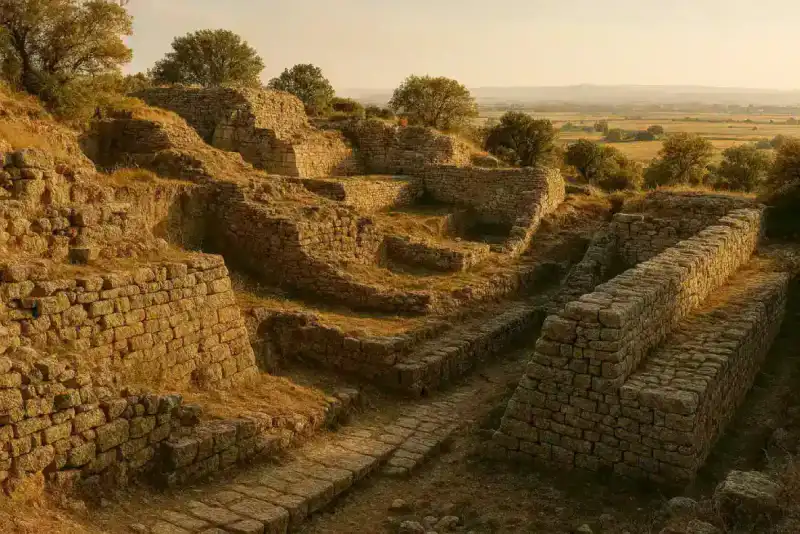
Use Day 1 as a positioning day rather than pretending you can land in Istanbul and absorb ancient Turkey immediately. The goal is to reach Canakkale or the Troy area in decent shape. If you arrive early, a Troy private transfer or day trip from Istanbul can solve the first logistics problem, but do not book a tight plan after a long flight.
If you have time and energy, start with a short first look at Troy. Otherwise, save the site for tomorrow morning. Troy is better when you can think clearly. It is not a single cinematic ruin but a layered mound, with multiple cities stacked across centuries.
The first practical decision matters: sleep near Canakkale or Troy. Returning to Istanbul after this leg makes the route harder for no good reason.
Day 2: Troy and Assos
Visit Troy early. The site asks for a different kind of attention from places like Ephesus or Aspendos. Much of the interest is in the layers: Bronze Age settlement, later Greek rebuilding, Roman honor of Trojan memory, excavation history, and the long argument between archaeology and epic tradition.
Do not come expecting the Iliad made literal in stone. Come expecting a place where myth and material evidence keep rubbing against each other. That is more interesting anyway. The walls, gates, settlement layers, and museum context help turn what can look modest at first into one of the most thought-provoking sites on the route.
If timing allows, add Assos. Its Temple of Athena sits above the Aegean with a strong sense of place, and it gives the northern route another kind of Greek city setting. But Assos is not free time. Add it only if your driver, rental-car plan, and stamina allow a longer day.
Continue south toward Izmir. This is a road day as much as a ruin day, so build in a buffer and keep dinner easy.
Day 3: Pergamon and the Aegean hill kingdoms
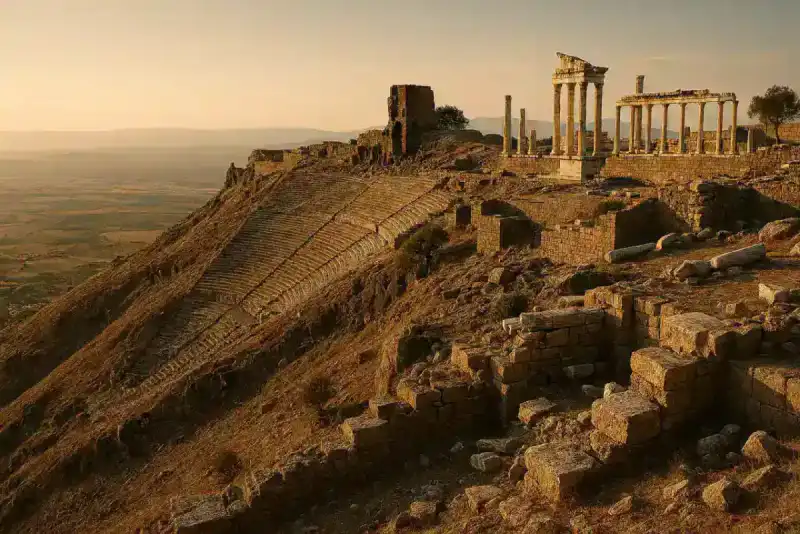
Base in Izmir and visit Pergamon. The acropolis is the main draw, but the hilltop setting is not just scenic. Pergamon used height as political theater. Its steep theater, sanctuary spaces, royal associations, and monumental terraces made the city visible as a statement of power.
Pergamon is associated with one of the great libraries of the ancient Mediterranean, a rival to Alexandria in later tradition. The material remains are fragmentary, but the idea matters: this was a city invested in culture, display, kingship, and intellectual prestige.
A guide or structured tour is useful here because the site is split between acropolis, lower-city zones, and museum context. Give yourself enough time to move between areas without turning the day into a photo stop.
Return to Izmir for the night. Tomorrow moves south to Ephesus, so do not stack another remote site today unless you are happy to lose depth.
Day 4: Ephesus with the Terrace Houses
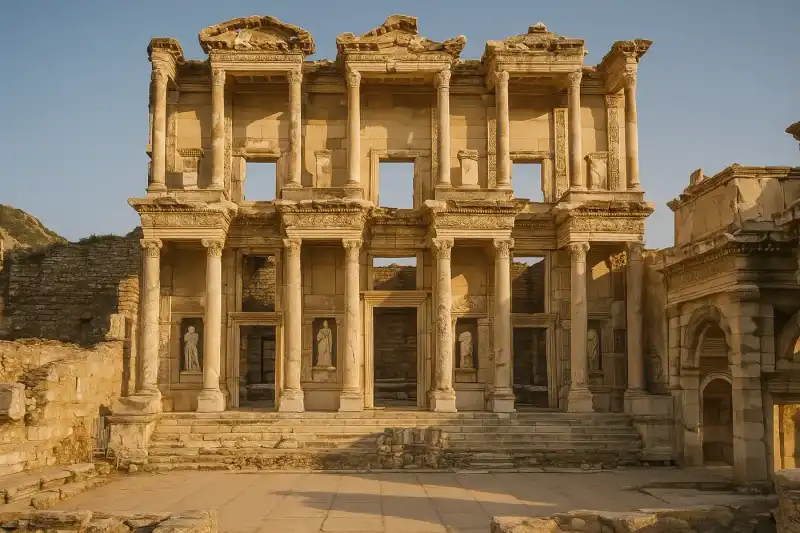
Move to Selcuk or Kusadasi and start early at Ephesus. The Library of Celsus will pull attention first, but Ephesus is strongest when you read it as a working Roman city in Asia Minor: theater, streets, fountains, gates, latrines, houses, shops, cult spaces, and civic display.
A guided Ephesus tour from Kusadasi or Selcuk is one of the better uses of a guide on this route. The site is famous enough to feel familiar, but the urban logic is easy to miss if you only follow the crowd downhill.
If the Terrace Houses are open, include them. They shift the day from public architecture to elite domestic life: mosaics, painted walls, interior rooms, and wealthy households built into the slope. Ephesus was a city of public benefaction, but status also worked behind doors.
Sleep in Selcuk if ancient-site access matters most. Sleep in Kusadasi if hotel choice and evening restaurants matter more.
Day 5: Priene, Miletus, and Didyma
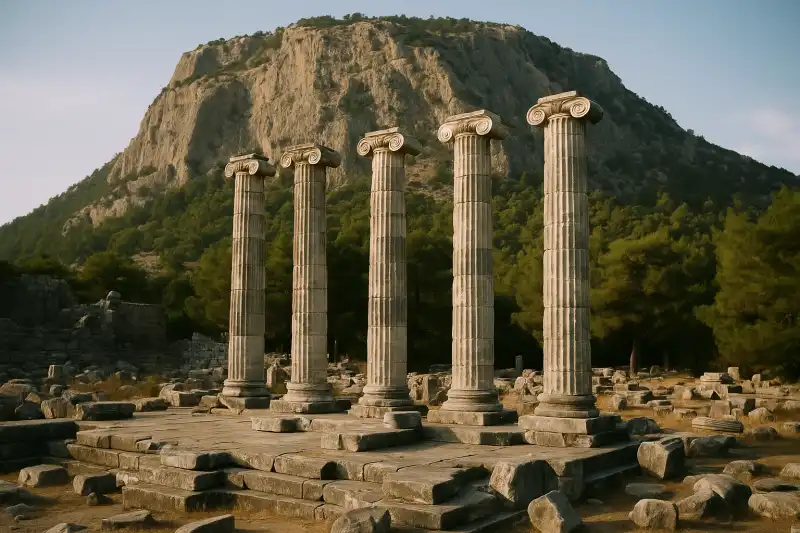
Use a driver, rental car, or focused tour for Priene, Miletus, and Didyma. These three sites belong together historically, but public transport makes the day awkward.
Start at Priene if possible. Its gridded plan and mountain setting make ancient urban design unusually readable. The coastline has changed dramatically since antiquity, so part of the visit is learning to imagine the vanished relationship between city, plain, and sea.
Continue to Miletus. The great theater is the anchor, but Miletus also carries intellectual weight through figures such as Thales, Anaximander, and Anaximenes. This was a city of harbors, colonies, planning, and arguments about how the world worked.
End at Didyma, where the Temple of Apollo shows sacred ambition at enormous scale. The sanctuary was linked to Miletus by a sacred road, and the unfinished surfaces are part of its fascination. The day is full, but it is one of the most coherent ancient-site circuits in western Turkey.
Day 6: Aphrodisias and the road inland
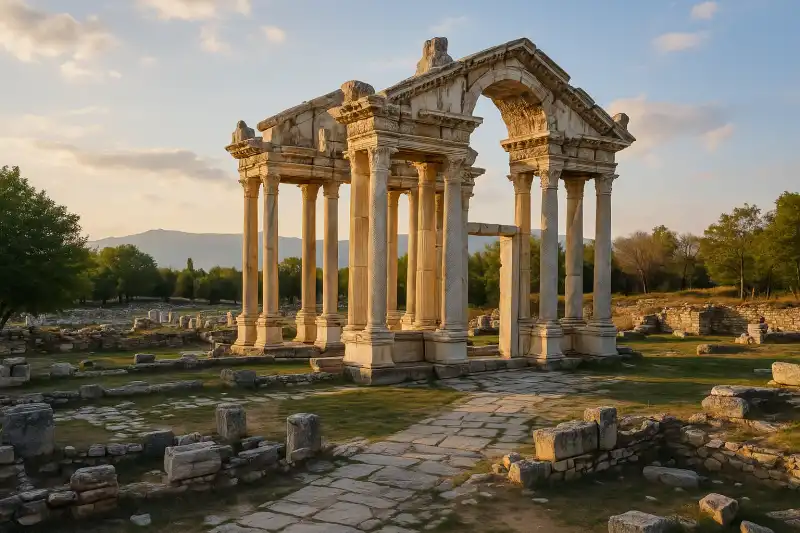
Leave the coast and head inland to Aphrodisias. This is a strong shift after Ephesus and the Ionian coast. Aphrodisias is tied to marble, sculpture, elite display, and the cult of Aphrodite, and its stadium is one of the great surviving ancient athletic spaces in Turkey.
Give the museum time. The sculptural material helps explain why the city matters. Aphrodisias was not just a place with pretty ruins. It was a city where local marble and skilled workshops shaped how status, religion, and civic identity were presented.
Continue toward Pamukkale or Denizli for the night. If timing allows, visit Hierapolis above the travertines, but do not force it if Aphrodisias ran long. Hierapolis works best when you can give the ancient spa city and the mineral landscape room to breathe.
This is a transfer day with real historical payoff. Treat it that way and avoid adding another distant stop.
Day 7: Antalya transfer and a lighter ancient-sites day
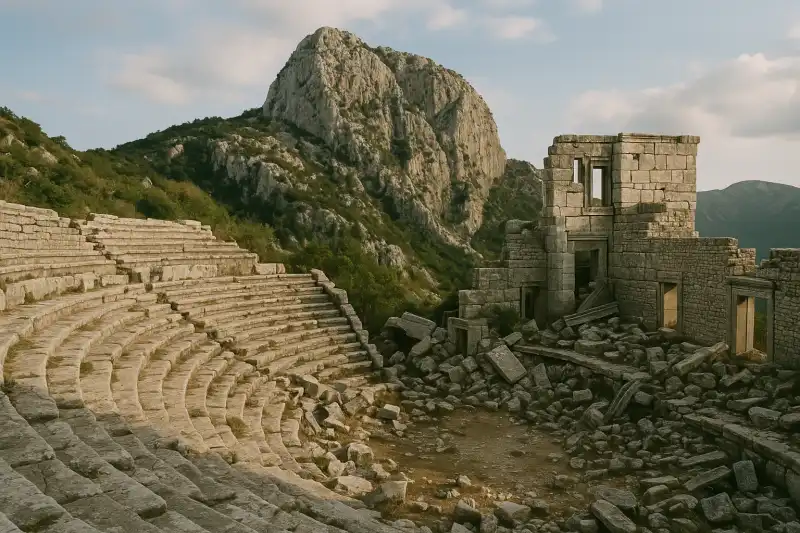
Move toward Antalya. This is where many Turkey itineraries break themselves by trying to do too much. You can add either Termessos or Sagalassos if you have a car, good weather, and an early start. Do not try to do both as casual add-ons.
Termessos is the more natural fit if you are already nearing Antalya. It is a mountain site, and the visit is physical: paths, elevation, ruins, and a theater with a setting that makes the city feel defended by terrain. Wear proper shoes and check conditions.
Sagalassos is farther and belongs to a different mountain rhythm. Its Antonine fountain and highland urban setting are rewarding, but the detour is serious. If you choose it, accept that Day 7 becomes another long road day.
Sleep in Antalya. This is also the route’s best place for a lighter evening and recovery before the Pamphylian sites.
Day 8: Perge, Aspendos, and Side
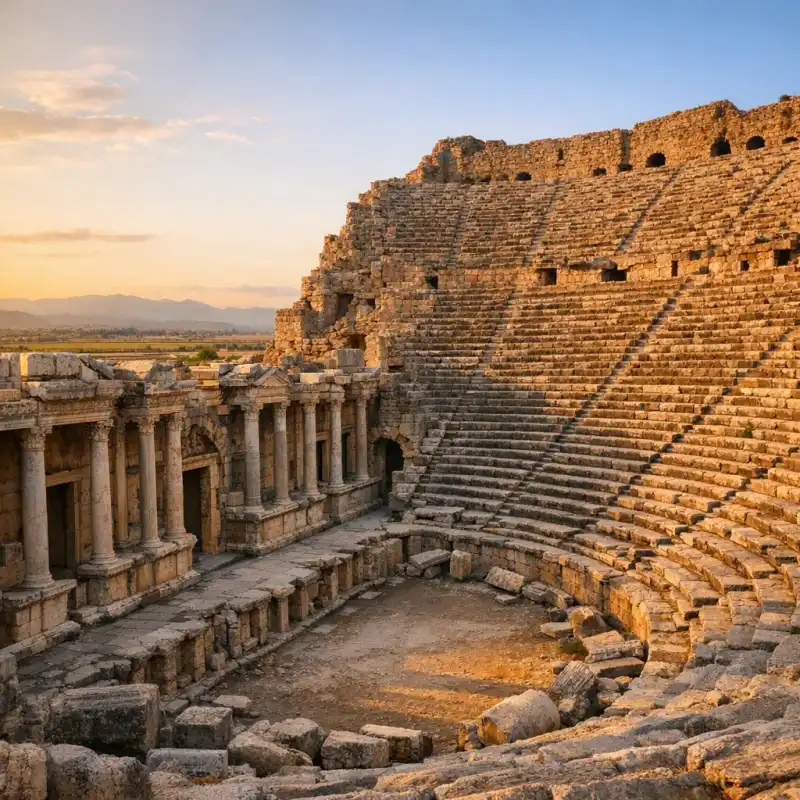
Use Antalya as a base for Perge, Aspendos, and Side. This is the most efficient ancient-sites day in the Antalya region if you have a car, driver, or guided tour.
Start at Perge, where the city’s streets, gates, baths, stadium area, and civic spaces make Roman Pamphylia easier to read. Perge was not just a stop near Antalya. It was a prosperous city with the kind of built environment that tells you how local elites participated in the Roman world.
Continue to Aspendos for the theater and aqueduct context. The theater is famous because it is so well preserved, but the broader site matters too. A Perge, Aspendos, and Side day trip from Antalya is useful because it keeps the transport clean and prevents the day from becoming a sequence of parking decisions.
End at Side if time and energy hold. Its harbor setting, theater, and temples put ancient urban life beside the sea. In summer, this day can be hot and crowded, so start early and keep expectations realistic.
Day 9: Lycia or a recovery day before Sanliurfa
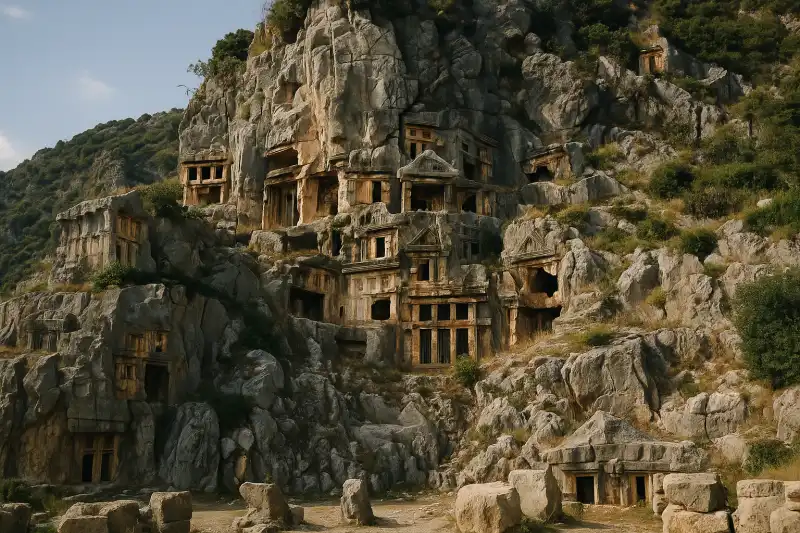
Day 9 should be deliberate, not greedy. If you want a Lycian day from Antalya, choose one direction. Myra and Kekova pair well as a long day with rock-cut tombs, a Roman theater, boat logistics, and the sunken-city coastline. This is rewarding, but it is not a rest day.
Another option is Xanthos and Letoon if you want Lycian political and sanctuary landscapes. It is a stronger archaeology choice than a casual beach stop, but the drive is longer and needs careful timing.
If you are tired, take the recovery day. That is not wasted time on a 10-day route. Antalya is a good place to slow down before flying east, and the final Sanliurfa section deserves a clear head.
Do not try to combine Myra, Kekova, Xanthos, Letoon, Patara, Phaselis, and Olympos in one day. The Lycian coast is a route family of its own.
Day 10: Göbekli Tepe and Karahan Tepe
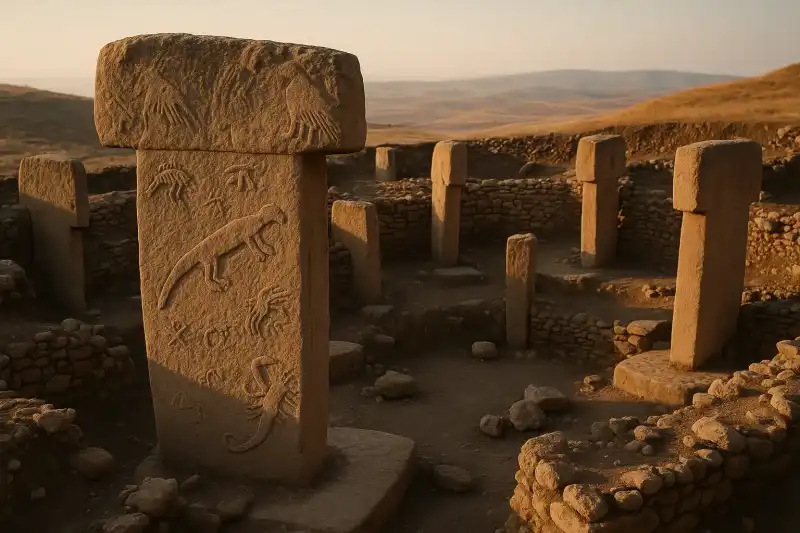
Fly to Sanliurfa and visit Göbekli Tepe. This is a major chronological jump. After days of Greek, Hellenistic, and Roman cities, Göbekli Tepe takes the route back to the Pre-Pottery Neolithic, with monumental enclosures and carved pillars dating roughly to the 10th millennium BCE.
A Göbekli Tepe and Karahan Tepe tour from Sanliurfa makes sense because the sites need transport and current archaeological context. The discoveries around the Taş Tepeler region are changing how travelers understand early ritual architecture, settlement, and communal building.
If timing allows, add Karahan Tepe. It should not be treated as a minor extra. Its pillars, carved forms, and setting make it part of the same broader conversation about early monumental activity in southeast Anatolia.
Sleep in Sanliurfa or fly onward only if your schedule has a generous buffer. Ending the route here is bold, but it works. You have moved from later city-states and empires into a much older human story.
The historical thread: cities, sanctuaries, and the deep time of Anatolia
This route is intentionally broad because Turkey’s ancient landscapes are broad. Troy begins with layered settlement and later epic memory. Pergamon shows Hellenistic kingship turned into architecture. Ephesus and Aphrodisias bring Roman Asia Minor into focus through streets, houses, sculpture, benefaction, and civic display. Priene, Miletus, and Didyma add Ionian planning, vanished harbors, philosophical memory, and sacred roads.
Antalya shifts the story south. Perge, Aspendos, and Side show Pamphylian cities under Roman power, with theaters, streets, aqueducts, baths, and harbor life. A Lycian day adds tombs, rugged landscapes, and local traditions that do not fit neatly into a simple Greek or Roman label.
Göbekli Tepe then breaks the timeline open. After a week of cities, roads, theaters, libraries, and temples, you end with communities building monumental ritual spaces thousands of years before Rome, Athens, or Troy became cultural shorthand. The route is tiring because Anatolia is not small. It is also fascinating for the same reason.
Transportation notes
Use flights for the big jumps and road transport for the regional clusters. Istanbul to Troy can be a long road transfer. Izmir works for Pergamon and the Aegean coast. Selcuk or Kusadasi works for Ephesus and the Ionian circuit. Antalya works for Pamphylia and a Lycian day. Sanliurfa is the right base for Göbekli Tepe.
A rental car is helpful from Troy through the Aegean and Antalya sections, but a driver may be better if you dislike long unfamiliar drives. Do not self-drive if you are tired, arriving after a long flight, or planning to cover too much in one day.
Public transport can handle some individual legs, especially around larger towns, but it does not make the full 10-day route efficient. The route is too spread out, and some of the best days require moving between ruins that buses do not connect cleanly.
Build rest and buffer time into the plan. Day 7 or Day 9 should stay lighter unless you know your stamina is good. Ancient-site fatigue is real: sun, uneven ground, long drives, tickets, parking, and dense history all add up.
Optional add-ons and swaps
If early Anatolian sites are your priority, add Catalhoyuk between the Aegean and Antalya sections. Remove the Lycian Day 9 or add at least one night. Catalhoyuk is not on the direct route unless you reshape the trip.
If Hittite history matters, add Hattusa as a separate Ankara or central Anatolia extension. Do not squeeze it between Antalya and Sanliurfa without extra time.
If you want a dramatic eastern finish, add Nemrut Dag after Sanliurfa. This needs careful sunrise or sunset logistics and usually another night. Remove Day 9 or extend the trip.
If the Aegean coast is your main interest, spend more time with Priene, Miletus, and Didyma and skip Sanliurfa. The shorter Aegean route will feel more coherent and less flight-heavy.
If the Lycian coast is calling, add Patara, Phaselis, or Olympos as a separate extension from Antalya. Remove Göbekli Tepe only if you want the trip to stay western.
Shorter and longer itinerary options
For a tighter Aegean version, use 5 Days on Turkey’s Aegean Ancient Sites Route. It keeps Troy, Pergamon, Ephesus, Priene, Miletus, and Didyma without the Antalya and Sanliurfa jumps.
For a compact southern Aegean route, use 5 Days on Turkey’s Aegean Ancient Sites. That is the better choice if Ephesus and the Ionian sanctuary circuit are your main goals.
For a 7-day country route, use 7 Days in Ancient Turkey: Istanbul, Troy, Pergamon, and Ephesus. It gives the western route more breathing room and skips the big eastward flight.
Related ancient sites
- Troy
- Assos
- Pergamon
- Ephesus
- Priene
- Miletus
- Didyma
- Aphrodisias
- Pamukkale
- Hierapolis
- Termessos
- Sagalassos
- Perge
- Aspendos
- Side
- Myra
- Kekova
- Xanthos Letoon
- Göbekli Tepe
- Karahan Tepe
FAQ
The most common planning questions for this route are answered below.