Quick route summary
This 5-day route starts in Rome, uses the city as a base for the Lazio Etruscan sites, then moves into Tuscany for hilltowns, tombs, museums, and a coastal finish. The main stops are Cerveteri, Tarquinia, Volterra, Chiusi, and the Etruscan Necropolis of Populonia.
The pace is active but sane. Do not try to add a major Roman ruins day in the middle unless you are comfortable with early starts and a lot of moving around. This itinerary works best when you let the Etruscan world stay at the center: tomb architecture, painted chambers, fortified hilltowns, museum fragments, and the coastal trade routes that made some of these cities wealthy.
Who this itinerary is for
This itinerary is for travelers who have already seen the obvious Rome headline sites, or who want a route that explains central Italy before Rome became the whole story. It is especially good for people who like archaeology with context: tomb plans, city walls, museum cases, and landscape.
It is not ideal if you want one relaxed base for five nights. The first two days work from Rome, but the Tuscany portion needs a move. It is also not the right route for travelers who dislike driving or transfer days. You can do pieces by train and taxi, but the full version is much cleaner with a car from Day 3.
Route at a glance
- Day 1: Overnight in Rome. Visit Cerveteri and walk the Banditaccia necropolis, with tomb streets that make the dead city feel planned rather than scattered.
- Day 2: Overnight in Rome. Travel to Tarquinia for the Monterozzi painted tombs and the museum, using train plus local transport or a car.
- Day 3: Overnight in Volterra. Transfer into Tuscany and spend the afternoon reading Volterra as an Etruscan, Roman, and medieval hilltown layered on one ridge.
- Day 4: Overnight in Chiusi. Move through southern Tuscany to Chiusi for tombs, museum collections, and a quieter Etruscan city with deep local roots.
- Day 5: Overnight near Populonia or Piombino. Finish on the coast at Populonia, where Etruscan funerary landscapes meet iron, sea routes, and a very different horizon.
Practical logistics before you go
Use Rome for Cerveteri and Tarquinia, then move north. That split matters. If you try to sleep in Rome all five nights, the map will look possible and the days will feel punishing.
A car is the simplest tool for this route after Day 2. Cerveteri and Tarquinia can be done with public transport from Rome, though you will need patience for buses, taxis, or walking between stations and archaeological zones. Volterra is awkward by train because the town sits high above the rail lines. Chiusi has better rail access, but its tomb visits and surrounding archaeology still benefit from local transport. Populonia is easiest by car.
Guided tours make the most sense on the Lazio days. A private Etruscan day trip from Rome can solve the awkward pairing of Cerveteri and Tarquinia if you want to compress them, but this itinerary gives them separate days because the sites ask for different kinds of attention.
Check opening days and tomb access before you commit. Etruscan sites are not always as forgiving as Rome’s major attractions. Some tombs are viewed on a rotation, some require timed access, and museum hours can be the difference between a satisfying day and a frustrating one. Build slack into the route, especially in Tuscany.
Day 1: Cerveteri and the city of the dead
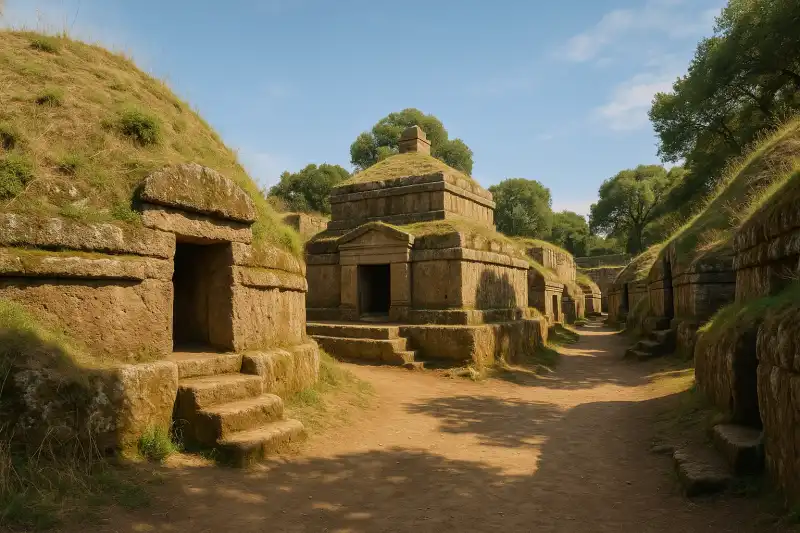
Start with Cerveteri, because it teaches the right visual language for the rest of the route. The Banditaccia necropolis is not just a field of tombs. Parts of it feel like a planned settlement for the dead, with roads, blocks, mound tombs, chamber tombs, and entrances cut into the volcanic tuff.
The best tombs at Cerveteri imitate domestic space. You see carved roof beams, beds, benches, door frames, and rooms arranged as if the deceased still needed a house. That is the detail that makes the site stick. The Etruscans were not copying Greek temples or Roman forums here. They were turning family status, memory, and household identity into architecture under the ground.
From Rome, the easiest visit is by car or driver. Public transport is possible, usually by train toward Cerveteri-Ladispoli and then bus or taxi onward, but it adds friction. If you are using public transport, start early and do not plan a second major site today.
Give the necropolis more time than the map suggests. It is tempting to treat tombs as repetitive, but Cerveteri changes as you walk: some tombs feel monumental, some intimate, some almost stubbornly practical. Return to Rome for the night, and keep dinner simple. This is a walking day, not a museum-and-wine-bar marathon.
Day 2: Tarquinia painted tombs and museum context
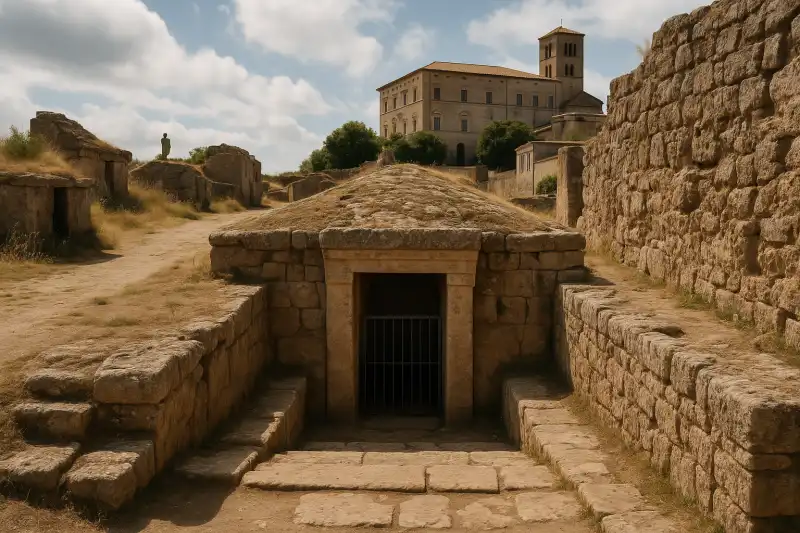
Day 2 goes north to Tarquinia, where the Etruscan world gets more colorful and more elusive. The Monterozzi necropolis is famous for painted tombs, but the visit is not like walking through a single decorated palace. You move between protected tomb entrances and look down or step into selected chambers, often one by one. The rhythm is slower and stranger than people expect.
The paintings are worth that rhythm. Banquets, dancers, musicians, athletes, animals, and demons appear across different tombs, giving you flashes of elite life and afterlife belief from the 6th to 3rd centuries BCE. The scenes can look cheerful at first glance, but they belong to funerary spaces. That tension is the point: celebration, status, family display, and death all sharing the same walls.
Pair the necropolis with Tarquinia’s archaeological museum if the hours work. The museum helps turn the tombs from pretty fragments into a city’s story. Sarcophagi, grave goods, painted slabs, and imported Greek pottery all point to a society plugged into Mediterranean exchange while keeping its own language, rituals, and political habits.
You can reach Tarquinia by train from Rome and then use local transport or taxis, but a car makes the day easier. Do not combine Tarquinia and Cerveteri unless you are short on time or using a private tour. Together they make historical sense, but each deserves a different pace. Cerveteri is spatial and architectural. Tarquinia is visual, ritual, and museum-heavy.
Day 3: Volterra and the Etruscan hilltown layer
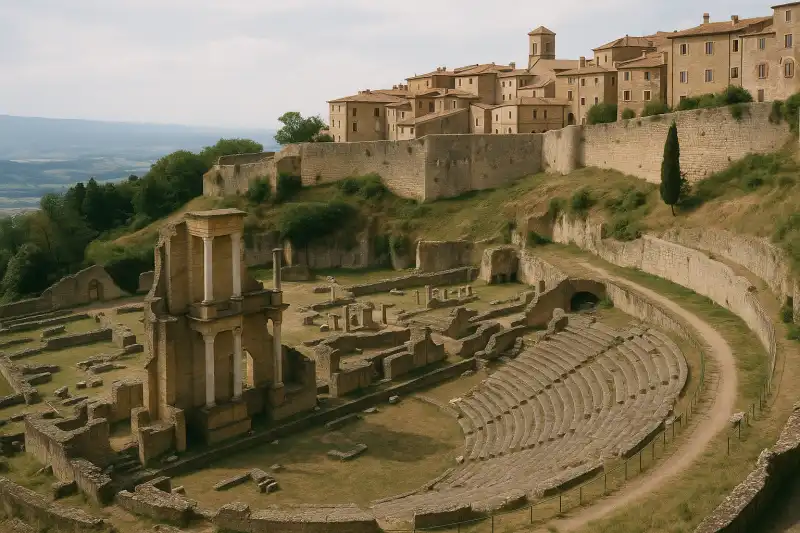
Leave Rome and move into Tuscany. Volterra is a good first Tuscan base because it still feels like a defended place. The hilltop position matters. Etruscan cities were not just tombs outside modern towns. They were living urban centers, often set on strong natural sites, connected to farmland, roads, craft production, and regional power.
Volterra’s ancient walls help make that visible. Look for the Etruscan gates and surviving stonework before you let the medieval town take over the day. The Roman theatre adds another layer, which is useful rather than distracting. It reminds you that Rome did not erase these places overnight. Etruscan cities were absorbed, adapted, refitted, and remembered unevenly.
This is a transfer day, so do not overload it. If driving from Rome, expect a long but manageable journey with breaks. If using trains, you will likely need a combination of rail and bus or taxi, and the logistics can eat into the afternoon. Arrive, check in, and treat Volterra as a half-day site unless you started very early.
The historical pleasure here is in the layering. You are not looking for one perfect monument. You are reading a town where Etruscan stone, Roman entertainment architecture, medieval streets, and alabaster craft traditions sit in a compact, walkable place. Stay overnight in Volterra if you can. The town is much easier to enjoy after the day-trip traffic fades.
Day 4: Chiusi tombs, museum pieces, and southern Tuscany
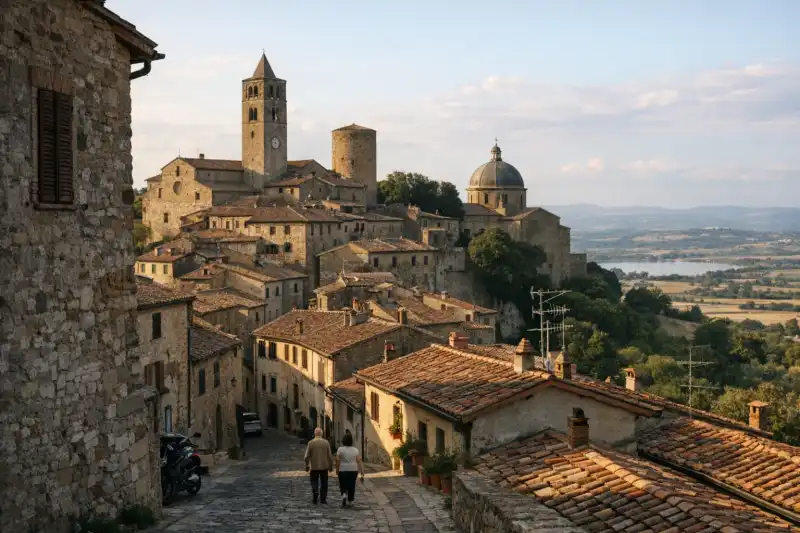
Travel to Chiusi, one of the quieter rewards of the route. Ancient Clusium was powerful enough to matter in the stories Rome told about its own early history. The legendary king Lars Porsena, linked with Clusium, sits somewhere between history, memory, and Roman political storytelling. That uncertainty is part of the appeal.
Chiusi is best approached through its museum and tomb landscape together. The museum collections help you notice the local character of Etruscan funerary art: canopic urns with human-like heads, inscribed objects, sarcophagi, and grave goods that do not feel identical to what you saw in Tarquinia or Cerveteri. Etruscan culture was connected, but it was not flat.
Logistics matter here. Some tomb access can depend on guided visits, opening schedules, or local arrangements. Check ahead rather than assuming you can simply wander from tomb to tomb. If you are driving from Volterra, keep the day focused on Chiusi and do not add every pretty hilltown nearby. Tuscany makes overpacking very easy.
Overnight in Chiusi or nearby southern Tuscany. This gives you a quieter evening and puts you in a better position for the coastal finish. If you are traveling by train, Chiusi is one of the more forgiving stops on this itinerary, but reaching specific tombs may still require taxis or a guided arrangement.
Day 5: Populonia and the Etruscan coast
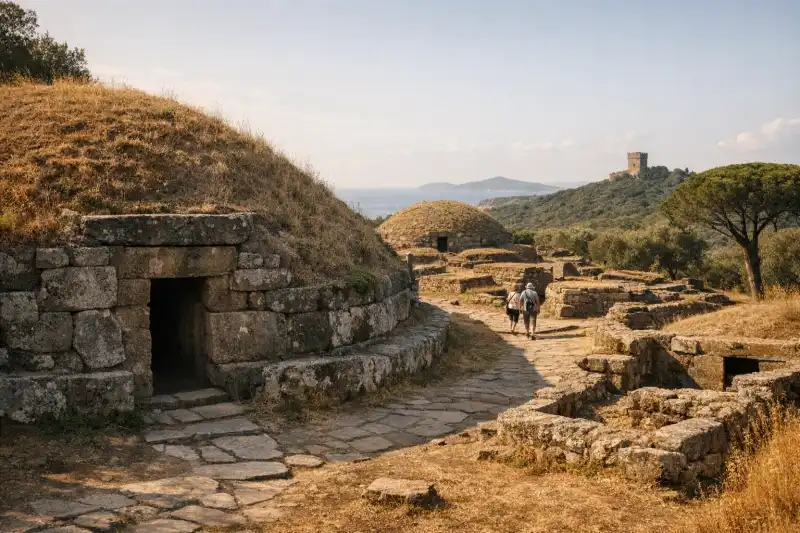
Finish at the Etruscan Necropolis of Populonia, which changes the mood of the whole trip. After inland tomb cities and hilltowns, Populonia brings the sea into the story. This was the only major Etruscan city directly on the coast, and its wealth was tied to metalworking, maritime exchange, and the iron resources of Elba.
That industrial side is easy to miss if you come only for tombs. Populonia’s funerary areas are powerful, but the bigger story includes furnaces, slag heaps, harbors, trade, and control of resources. The dead were buried near a landscape shaped by production. The stones are quiet now, but the economy behind them was not small.
Drive from Chiusi or another southern Tuscany base and give yourself time. This is not a quick roadside stop. The archaeological park involves walking, coastal exposure, and distances between zones. In hot weather, start early and carry water. If you want a lighter final day, sleep near Piombino or Populonia rather than trying to drive back to Rome afterward.
Populonia is a fitting end because it broadens the Etruscan story beyond tomb art and Roman prehistory. By this point, you have seen urban tomb streets, painted chambers, hilltop defenses, museum objects, and a coastal economy. The Etruscans feel less like Rome’s mysterious prologue and more like a set of cities with their own ambitions.
The historical thread: Etruscan cities before Rome took the room
This route works because it keeps Rome in the background at first, then gradually pushes it aside. Cerveteri and Tarquinia show elite funerary display in Lazio before Roman power dominated the region. Volterra and Chiusi show Etruscan cities as durable inland communities, not just tomb landscapes. Populonia adds the coast, iron, and Mediterranean exchange.
The Etruscans never formed a single unified state in the way modern travelers often want ancient peoples to do. They were city-based, competitive, outward-looking, and locally distinctive. Their writing still resists easy interpretation, which can make them feel more mysterious than they need to be. The material culture is not silent, though. Tomb plans, paintings, urns, walls, imported pottery, and industrial traces all speak if you give them time.
The Roman story is always nearby. Rome borrowed, fought, absorbed, and reworked Etruscan practices, from symbols of authority to religious habits and urban techniques. But this itinerary is better when you do not treat every stop as a footnote to Rome. For five days, let central Italy belong to someone else.
Transportation notes
For the smoothest version, use trains or a driver for the first two day trips from Rome, then rent a car for the Tuscany section. If you are comfortable driving in Italy, pick up the car when leaving Rome rather than using it inside the city. Driving in central Rome is more trouble than it is worth.
Cerveteri and Tarquinia can be reached by public transport, but neither is as simple as a metro ride to a museum. Expect train plus bus, taxi, or walking. Check the last return options before you go, especially outside peak season.
Volterra is the awkward rail stop. The town’s hilltop setting is historically excellent and logistically annoying. A car saves time here. Chiusi is better connected by train, but tomb access may still require local transport. Populonia is the most car-friendly day of the route and the least pleasant to force by public transport.
Do not compress all five sites into three days unless you are doing a specialist trip with a private driver. Cerveteri and Tarquinia can be paired in one long day, but you will lose texture. Volterra, Chiusi, and Populonia each sit in landscapes that need time to make sense.
Optional add-ons and swaps
If you want an Etruscan site closer to Rome, add Veii before leaving Lazio. It works best as a swap for one of the Rome-based days if you have already visited Cerveteri or Tarquinia. Veii is important for understanding Rome’s early rivalry with nearby Etruscan cities, but it is less visually straightforward than the great necropoleis.
For a wilder Lazio add-on, consider Vulci Archaeological Park. It pairs well with Tarquinia if you have a car and an extra day. Do not squeeze it into Day 2 unless you are happy turning Tarquinia into a rushed checklist.
If you want more Tuscany and less transfer pressure, add Fiesole near Florence and remove Populonia. That changes the ending from coastal Etruscan trade to an Etruscan-Roman hilltown above the Arno valley. It is easier if your wider trip continues to Florence.
If the coast is the part that interests you most, add the Elba Roman Villas after Populonia. That turns the route toward Roman maritime villas and island logistics, so treat it as a sixth or seventh day, not a same-day extra.
Shorter and longer itinerary options
For a shorter trip, make it a 3-day Lazio-focused route from Rome: Day 1 Cerveteri, Day 2 Tarquinia, Day 3 Veii or Vulci. That keeps the Etruscan theme tight and avoids the longer Tuscany transfers.
For a slower 7-day version, keep all five days here and add one buffer day in Volterra plus one coastal day near Populonia or Elba. The route becomes less efficient on paper, but much better on the ground.
For a broader ancient Italy trip, connect this route with Rome’s ancient sites before or after the Etruscan portion. The Appian Way and Ostia Antica make especially useful contrasts because they show Roman roads, burial customs, ports, and urban life after Rome had absorbed much of central Italy.
Related ancient sites
- Veii
- Vulci Archaeological Park
- Fiesole
- Elba Roman Villas
- Appian Way
- Ostia Antica
- Hadrian’s Villa
- Baths of Caracalla
FAQ
The most common planning questions for this Etruscan route are answered below.