Quick route summary
This 5-day ancient Ireland route starts and ends in Dublin, with two nights in the capital and two nights in County Meath before a final return through Wicklow. The main bases are Dublin and Trim, which keeps the route realistic without turning every day into a highway loop.
The route links Dublin Castle, Kilmainham Gaol, the Boyne Valley Passage Tombs, Newgrange, Knowth, Dowth, the Hill of Tara, Trim Castle, and Glendalough.
The pace is active, not punishing. You will need advance tickets for some sites, a car or tour for the rural days, and enough slack for weather. Ireland makes overpacked plans look foolish fast.
Who this itinerary is for
Use this route if you want a first ancient Ireland trip that combines prehistoric tombs, early medieval monastic ruins, medieval power, and the later political memory of Dublin. It is especially good if Newgrange is the anchor but you do not want the whole trip to be one long sequence of day tours from Dublin.
It is not ideal if you want to avoid driving completely unless you are comfortable booking guided day trips for both Meath and Wicklow. It is also not the right plan for someone who wants a slow pub-and-city break. This itinerary spends plenty of time outside Dublin, and the best days start early.
Route at a glance
- Day 1: Overnight in Dublin. Arrive, stay central, and visit Dublin Castle with a walk through the medieval core.
- Day 2: Overnight in Dublin. Visit Kilmainham Gaol, then keep the rest of the day flexible for city history rather than another distant site.
- Day 3: Overnight in Trim. Travel into the Boyne Valley for Newgrange and Knowth, with Brú na Bóinne access shaping the schedule.
- Day 4: Overnight in Trim. Make a Meath circuit through Dowth, the Hill of Tara, and Trim Castle by car or private driver.
- Day 5: Overnight in Dublin. Visit Glendalough in the Wicklow Mountains, then return to Dublin for departure logistics.
Practical logistics before you go
Dublin is the easiest arrival base, but it is not the best base for every night. Stay in Dublin for the first two nights, then move to Trim or another Meath base for the Boyne Valley portion. That simple hotel shift saves time on Days 3 and 4.
Book Kilmainham Gaol ahead. For Newgrange and Knowth, check the Brú na Bóinne access flow before locking the day, because entry depends on managed visitor arrangements rather than just showing up at the tomb. Dowth and Tara are looser visits, but they still need sensible weather gear and shoes that can handle wet grass.
A guided tour makes sense on Day 3 if you do not want to drive. A car or private driver makes more sense on Day 4, when you are linking smaller Meath sites with less forgiving public transport. For Glendalough, either drive early or use a day tour from Dublin. The site is easy to enjoy independently once you are there, but reaching it smoothly is the trick.
Do not try to add the west of Ireland, the Aran Islands, or Kerry to this 5-day plan. Those are wonderful routes, but they belong to a longer trip.
Day 1: Dublin Castle and the city’s medieval core
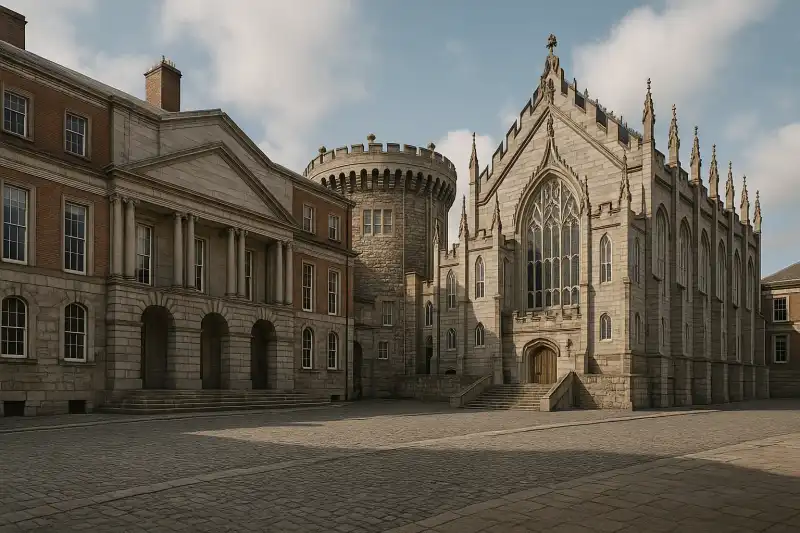
Start gently at Dublin Castle. It is central, easy to reach on foot from many hotels, and useful as a first layer of orientation. The site began as a medieval fortress after the Anglo-Norman arrival, then became the administrative center of English and later British rule in Ireland. That shift matters. The castle is not just a building with nice rooms. It is where power changed costume without leaving the stage.
Give the State Apartments and surviving medieval traces enough time, but do not force a heavy museum day after a flight. The better Day 1 rhythm is castle, old streets, food, and early sleep. Dublin rewards wandering, but this itinerary depends on energy later in the week.
If you have extra time, use it for the streets around Christ Church and the old city rather than crossing town for another major visit. The medieval core helps Dublin Castle make more sense, and it keeps the day walkable. That matters after arrival, especially if rain and jet lag are both trying to win.
Day 2: Kilmainham Gaol and Dublin’s political memory
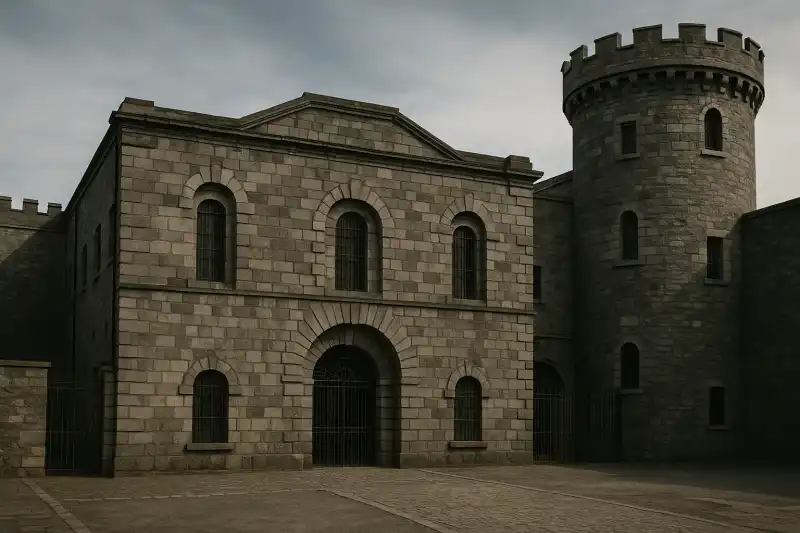
Book Kilmainham Gaol before you build the rest of the day. Timed tickets can sell out, and the guided visit is the point. The prison opened in the late 18th century, but most visitors come for its connection to the 1916 Rising and the executions that followed. It is heavy history, and it should not be treated as a quick box to tick.
The site also changes the tone of this itinerary in a useful way. The Boyne Valley days ahead reach back to the Neolithic and early kingship traditions. Kilmainham pulls you into the modern fight over sovereignty, memory, and statehood. Ancient travel does not have to pretend history stops in the medieval period.
Use public transport, a taxi, or a rideshare rather than renting a car in central Dublin today. Driving in the city adds more friction than value. After Kilmainham, keep the afternoon loose: a museum, a walk along the Liffey, or a quiet meal all make more sense than cramming in a rural site.
This is also the right evening to pick up a rental car if you want an early start for Meath tomorrow. If city driving makes you tense, collect it the next morning from a location that keeps the exit simple.
Day 3: Newgrange and Knowth in the Boyne Valley
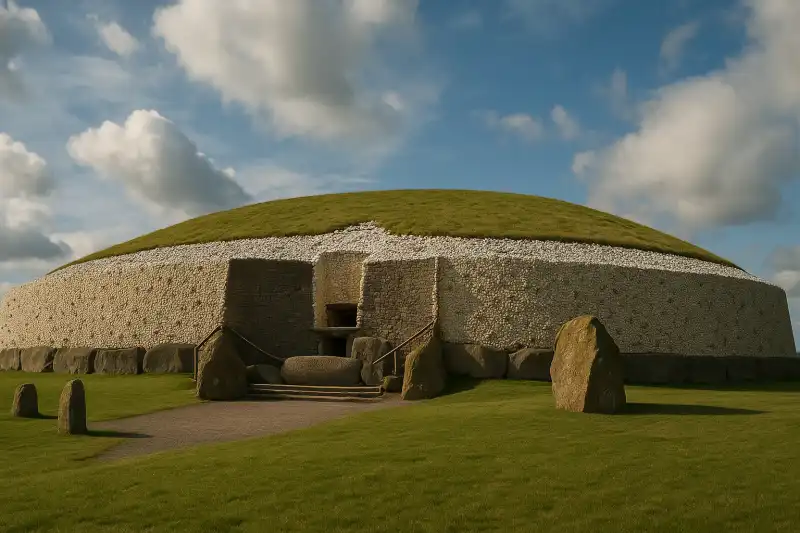
Leave Dublin early for the Boyne Valley Passage Tombs. The main goal today is not to see as many mounds as possible. It is to give Newgrange and Knowth enough time to feel like a landscape rather than a pair of famous stops.
Newgrange is the headline because of its winter solstice alignment, when sunrise light reaches into the passage and chamber. Built around 3200 BCE, it is older than Stonehenge and the Giza pyramids, but the more interesting fact is how carefully the tomb manages approach, darkness, stone, and light. The architecture is doing ritual work.
Knowth deserves real attention too. It has one of the richest collections of megalithic art in western Europe, with carved kerbstones that turn the mound into something like a long stone text nobody can fully translate. Spirals, lozenges, arcs, and cup marks show up again and again. The stones are quiet now, but the visual ambition was not small.
A Boyne Valley day tour from Dublin can work well if you are not moving hotels. For this 5-day route, though, the smoother option is to continue to Trim or another Meath base after the visit. You will thank yourself tomorrow morning.
Day 4: Dowth, the Hill of Tara, and Trim Castle
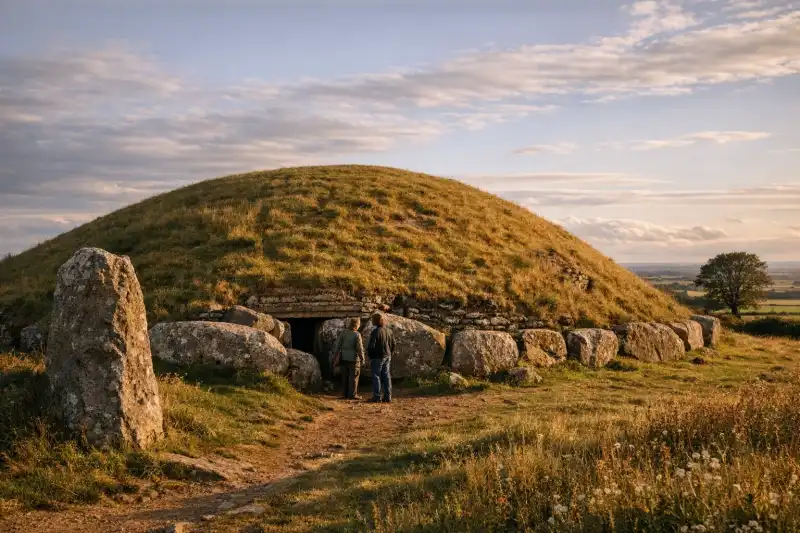
Today is the reason to sleep in Meath. Start with Dowth if conditions and access suit your route. It is less managed as a visitor experience than Newgrange or Knowth, but that is part of its value. Dowth is another great passage tomb in the same Boyne Valley world, with winter light associations and carved stones, yet it feels quieter and less staged.
Then continue to the Hill of Tara. Tara is not a site that explains itself with a single monument. Its power is in earthworks, sightlines, names, and accumulated memory. The Mound of the Hostages, an early passage tomb later folded into a royal landscape, is a good reminder that Irish sacred places often kept being reused rather than replaced.
Finish with Trim Castle, a very different kind of power statement. The great Anglo-Norman fortress on the River Boyne belongs to the late 12th and early 13th centuries, with Hugh de Lacy and his successors reshaping Meath through stone, walls, and military control. After the tombs and Tara, Trim feels blunt on purpose.
This day is awkward by public transport. Drive, use a private driver, or simplify the plan. If weather is poor, cut Dowth or shorten Tara rather than rushing the castle tour. Meath’s ancient landscapes are better with patience and dry socks.
Day 5: Glendalough and the Wicklow Mountains
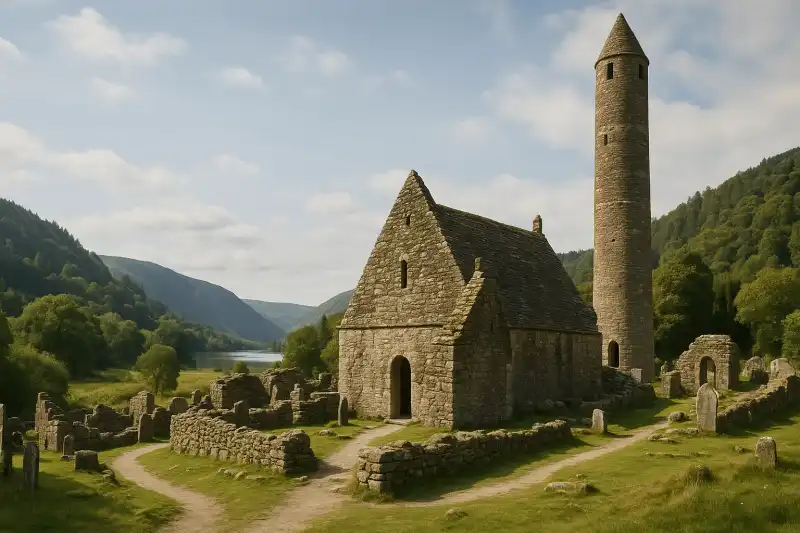
Return toward Dublin by way of Glendalough if you are driving, or make it a separate day trip from Dublin if that is easier. Either way, leave early. The monastic site and the lakes can get busy, and Wicklow weather has its own schedule.
Glendalough grew around the monastery associated with St. Kevin, traditionally dated to the 6th century. The surviving round tower, stone churches, crosses, and grave markers belong to a long medieval life rather than one tidy founding moment. The round tower is the image most people remember, but give time to the whole valley. The setting explains why a monastic community could feel both remote and connected.
Walk the monastic core first, then decide how much lake time you have. If energy is low, stay with the lower valley and do not turn the day into a hiking challenge. If you are fresh, the route toward the Upper Lake adds the landscape that makes Glendalough linger in the mind.
A Glendalough and Wicklow day tour from Dublin is a sensible choice if you returned the rental car after Meath or never wanted one. Just check how much time the tour gives at the monastic site itself. Some Wicklow tours spend more time on scenery stops than on the ruins.
The historical thread: tombs, kingship, conquest, and retreat
This route works because it does not treat ancient Ireland as one period. The Boyne Valley brings you into a Neolithic world of passage tombs, carved stones, and solar alignments. Tara shows how older sacred ground could be pulled into later ideas of kingship. Trim Castle makes the Norman arrival visible in stone. Glendalough shifts the story toward monastic communities, learning, pilgrimage, and survival in a mountain valley.
Dublin adds the later pressure of administration, imprisonment, rebellion, and state memory. That may sound like a wide span for five days, but the geography keeps it coherent. Much of the route circles the eastern side of Ireland, where ritual landscapes, political centers, castles, monasteries, and modern institutions sit close enough to compare.
The useful lesson is continuity without neatness. Ireland’s past was not a clean sequence where one era politely left before the next arrived. Old tombs stayed meaningful. Royal landscapes absorbed older monuments. Medieval builders reused powerful places. Modern politics argued with all of it.
Transportation notes
Do not rely on public transport for the full route. Dublin is easy without a car, but Meath and Wicklow are different. For Days 1 and 2, walk, use trams, buses, taxis, or rideshares. For Days 3 and 4, rent a car, hire a driver, or book a tour that actually matches the sites you want.
If you rent a car, avoid using it inside central Dublin. Pick it up when you are ready to leave for Meath, and return it before or after Glendalough depending on your comfort. Irish rural roads can be narrow, and rain can slow everything down. Build slack into the day rather than pretending map times are promises.
Trim is a practical overnight base for the Boyne Valley because it gives you easier access to Tara, Dowth, and Trim Castle. Staying in Dublin all five nights is possible, but it makes the middle of the itinerary more repetitive.
Glendalough can be done by car or tour. Driving gives more control, especially if you want to arrive early or stay longer. A tour is easier if you are tired of logistics by Day 5.
Optional add-ons and swaps
If you want more Neolithic Meath, add Loughcrew Cairns and remove Kilmainham Gaol or Trim Castle. Loughcrew is more rural and weather-exposed, but it deepens the passage tomb story beyond the Boyne Valley core.
For early medieval sculpture, add the High Crosses of Kells and cut Dowth or shorten the Tara day. Kells works best for travelers who want carved Christian monuments and manuscript-era context rather than another tomb landscape.
Monasterboice is another strong swap for high crosses and a round tower. Add it to Day 3 only if your Brú na Bóinne timing leaves room, otherwise it becomes a rushed checklist stop.
If you want a larger monastic site farther west, add Clonmacnoise by extending the trip one day. Do not force it into this 5-day route. It is too far from the eastern circuit to add casually.
Shorter and longer itinerary options
For a shorter version, make this a 3-day Boyne Valley and Dublin route: one day in Dublin, one day at Newgrange and Knowth, and one day for Tara, Trim, and either Dowth or Kells. It loses Glendalough, but the geography becomes tighter.
For a 7-day ancient Ireland route, continue west after Meath toward Sligo and the Burren, adding Carrowmore Megalithic Cemetery, Carrowkeel Megalithic Cemetery, and Poulnabrone Dolmen. That becomes a different trip, with more driving and a stronger megalithic focus.
For a 10-day version, add the west and southwest: Dún Aonghasa, Skellig Michael, Kerry stone forts, and early Christian sites on the Dingle Peninsula. It is tempting, but it needs rest days and weather buffers.
Related ancient sites
- Boyne Valley Passage Tombs
- Newgrange
- Knowth
- Dowth
- Hill of Tara
- Trim Castle
- Dublin Castle
- Kilmainham Gaol
- Glendalough
- Loughcrew Cairns
- High Crosses of Kells
- Monasterboice
FAQ
The most common planning questions for this route are answered below.