Quick route summary
This 3-day route uses Amman as a single base and focuses on the ancient sites you can reach without committing to Petra or a long southbound road trip. You start with the Amman Citadel and the Roman Theater in Amman, then head north to Jerash, Umm Qais, and Pella. The final day turns east into the steppe for Qasr Amra, Qasr Kharana, and Qasr al-Azraq.
The pace is active, but it stays honest. Amman does the work as your base, and the route avoids the common mistake of trying to bolt Petra onto a three-day northern Jordan trip.
Who this itinerary is for
This itinerary is for travelers who want Roman cities, early Islamic desert architecture, and layered Amman history without moving hotels every night. It works especially well if you are flying in and out of Amman, or if you already plan to visit Petra on a separate part of the trip.
It is not ideal if you want a slow cafe-heavy Amman stay, a beach break, or a complete Jordan route. Petra, Wadi Rum, Kerak, Madaba, and the Dead Sea all deserve time, but they are not sensible add-ons to this compact ancient Jordan plan.
Route at a glance
- Day 1: Overnight in Amman. Visit the Citadel, the Roman Theater, and downtown Amman by taxi, rideshare, or on foot where practical.
- Day 2: Overnight in Amman. Drive north for Jerash, then continue toward Umm Qais and Pella if you have the stamina for a long Decapolis day.
- Day 3: Overnight in Amman. Drive east to the Desert Castles, linking Qasr Kharana, Qasr Amra, and Qasr al-Azraq in one steppe loop.
Practical logistics before you go
Stay in Amman for all three nights. Jabal Amman, Weibdeh, Abdali, and parts of central Amman all work, depending on whether you prefer restaurants, hotels, or easier road access. Changing bases would waste more time than it saves.
Day 1 is the only day that works well with taxis and short hops. For Day 2 and Day 3, a private driver or guided tour is much easier. Jerash alone can be done by public bus or taxi, but adding Umm Qais and Pella turns the day into a route, not a simple out-and-back.
Heat and road fatigue matter. Northern Jordan looks compact on a map, but the roads fold through hills and valleys. The eastern Desert Castles are different: long, exposed drives across open country, with less shade and fewer casual stops. Start early, keep water in the car, and do not stack a major dinner plan after the northern day.
A guided tour makes the most sense on Day 2 or Day 3. The value is not just commentary. It is having someone handle timing, site order, and return logistics while you pay attention to the stones.
Day 1: Amman Citadel and the Roman Theater
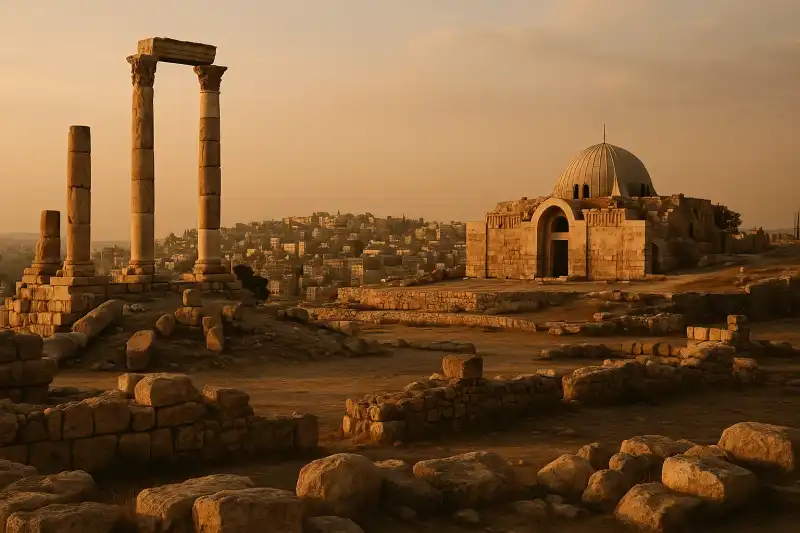
Start at the Amman Citadel before the day gets hot. The hill has carried several identities: Iron Age Rabbath Ammon, Hellenistic and Roman Philadelphia, Byzantine settlement, and an Umayyad palace complex. That layering is the point. Amman is not a city with one ancient moment. It is a city that kept being useful.
The Temple of Hercules is the obvious landmark, but give time to the Umayyad Palace area too. The domed audience hall and surrounding remains point to a period when early Islamic rulers were shaping older urban high places into new administrative and ceremonial spaces. The stones are quiet now, but the political message was not shy.
From the Citadel, continue down to the Roman Theater in Amman. It was built into the hillside in the 2nd century CE, when the city was known as Philadelphia and belonged to the Roman province of Arabia. The seating bowl still makes the scale of Roman urban life easy to read, especially with modern Amman pressing around it.
Keep this day local. Use taxis or rideshare between hills, and walk only where it feels reasonable. Amman is steep, traffic can be tiring, and the ancient sites are better when you are not treating the city like a fitness test.
If you have extra energy, add a short downtown wander after the theater. If not, stop early. The next two days ask more from you.
Day 2: Jerash, Umm Qais, and Pella
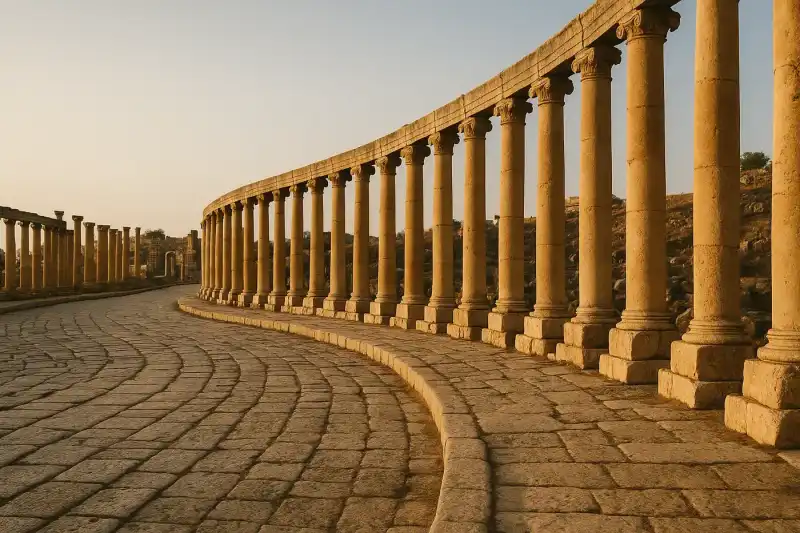
Leave Amman early for Jerash. Ancient Gerasa is the most complete Roman city experience on this route, with colonnaded streets, theaters, temples, gates, and an oval plaza that still feels theatrical even when it is empty. The city flourished under Rome, but it was not simply a Roman implant. It sat in a Decapolis network where Greek civic traditions, local elites, imperial money, and regional trade all mixed.
Give Jerash real time. Two hours is the bare minimum, and three is better if you care about the details. Walk the Cardo, look for the ruts and paving, and notice how the sanctuary spaces sit above the streets. This is a good day for people who like their ruins urban.
From Jerash, the route gets more demanding. Continue to Umm Qais, ancient Gadara, if you want the grand northern view. The black basalt ruins look out toward the Sea of Galilee, the Golan Heights, and the Jordan Valley. The setting explains why this city mattered: it watched routes, water, borders, and farmland all at once. If the theater is a priority, include the Gadara Theater while you are there.
Pella is the quieter stop, and that is part of its appeal. The site has Bronze Age roots, then later Hellenistic, Roman, Byzantine, and early Islamic layers. It does not deliver Jerash-style colonnade drama. Instead, it gives you a more archaeological kind of pleasure: mounds, church remains, fragments, and the sense that cities in this valley kept being rebuilt because the place itself was useful.
This is the longest day of the itinerary. A private Amman to Jerash, Umm Qais, and Pella day trip is sensible if you want all three sites without negotiating transport as you go.
If you need to cut something, keep Jerash and choose either Umm Qais or Pella. Trying to see all three with a late start is how a good history day turns into a car day.
Day 3: The eastern Desert Castles
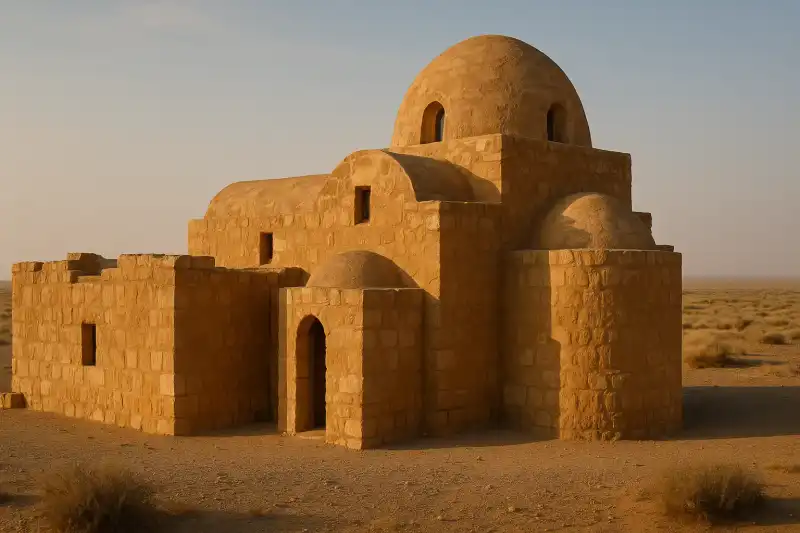
The Desert Castles day is less about castles in the medieval European sense and more about Umayyad power on the edge of the steppe. Leave Amman early with a driver or tour. This is not a public transport day.
Start with Qasr Kharana, a compact, almost severe building that rises from flat desert like a stage prop that turned out to be real. Its purpose is still debated: caravan stop, meeting place, elite retreat, or some combination of functions. The architecture is the draw. Small rooms, heavy walls, and an enclosed plan make it feel inward-facing, as if the building was designed to create its own world.
Continue to Qasr Amra, the site you should not rush. This UNESCO-listed bathhouse preserves 8th-century frescoes with hunting scenes, rulers, musicians, bathing figures, and an astronomical ceiling. The art is startling because it complicates lazy assumptions about early Islamic visual culture. Out here in the desert, an Umayyad elite space could be playful, learned, political, and bodily all at once.
Finish with Qasr al-Azraq, built in dark basalt and tied to several periods of frontier use. The site is often linked in modern memory with T.E. Lawrence, but its deeper story reaches back through Roman and later desert control. The black stone gives it a different mood from the paler desert buildings earlier in the day.
A guided Amman Desert Castles day tour solves the main problem: the sites are spread out, and the value of the day comes from linking them without wasting energy on navigation.
Do not add every castle east of Amman just because the names look close on a list. The desert road is tiring, and Qasr Amra deserves more than a ten-minute stop.
The historical thread: cities, frontiers, and desert power
This route works because it shows Jordan as a corridor, not a backdrop. Amman’s Citadel sits on a reused high place. Jerash and Umm Qais show how Roman urban culture took root in northern Jordan, where cities were tied to roads, water, and regional competition. Pella gives the same story a longer archaeological memory, with settlement layers stretching far earlier and later than Rome.
The Desert Castles shift the frame eastward. By the Umayyad period, power was not only expressed in city streets and theaters. It also appeared in bathhouses, hunting lodges, road stations, and fortified compounds on the edge of the steppe. The route moves from civic stone to desert architecture, and that contrast is what makes three days from Amman feel larger than the mileage suggests.
Transportation notes
Use Amman as your only base. Moving to Irbid for one night can make the north slightly easier, but it adds hotel friction and does not help the Desert Castles day.
For Day 1, taxis and rideshare are enough. For Day 2, hire a driver if you want Jerash, Umm Qais, and Pella together. Jerash alone is the easy version. All three sites make sense only with an early start and a clear route.
For Day 3, do not rely on public transport. The Desert Castles are spread along open roads east of Amman, and waiting around between sites would drain the day. Self-driving is possible for confident drivers, but a local driver is often better because you can focus on the sites rather than road timing, fuel stops, and navigation.
Do not compress Day 2 and Day 3 into one mega-day. They point in different directions from Amman, and combining them would turn the itinerary into a windshield tour.
Optional add-ons and swaps
If you want more prehistory near Amman, add Ain Ghazal as a short thematic extension. The Neolithic plaster statues from the site are among Jordan’s great ancient surprises, but the visit itself needs planning because the archaeological experience is not as straightforward as Jerash or the Citadel. Add it by trimming downtown Amman time on Day 1.
For a greener valley day, swap part of Day 1 or a spare half-day for Iraq al-Amir and Qasr al-Abd. Qasr al-Abd is Hellenistic rather than Roman or Umayyad, with huge stone blocks and animal carvings that feel wonderfully out of place in the quiet valley. Add it if you like odd political architecture. Remove Pella or shorten Amman to make room.
If you want a longer Desert Castles circuit, consider Qasr al-Hallabat and Qasr Hammam As Sarah. They fit the Umayyad steppe theme, but adding them makes Day 3 longer. Remove Azraq if you prefer mosaics, bath architecture, and quieter ruins over the basalt fort.
Shorter and longer itinerary options
For a shorter version, use two days from Amman: Day 1 for the Citadel and Jerash, Day 2 for either Umm Qais and Pella or the Desert Castles. Do not try to keep everything. The route only works if you accept a real cut.
For a longer Jordan trip, the natural next step is a 5-day route adding Madaba, Mount Nebo, and Petra. A 7-day version can connect the Decapolis, biblical sites, Petra, and Wadi Rum. A 10-day version has room for the Desert Castles, Kerak, Shobak, Little Petra, and a less rushed northern Jordan day.
Related ancient sites
- Amman Citadel
- Roman Theater in Amman
- Jerash
- Umm Qais
- Gadara Theater at Umm Qais
- Pella
- Qasr Amra
- Qasr Kharana
- Qasr al-Azraq
- Qasr al-Hallabat
- Qasr al-Abd
- Ain Ghazal
FAQ
The most common planning questions for this route are answered below.