Quick route summary
This 5-day Chiapas Maya ruins route starts and ends in Palenque, with one overnight shift to Ocosingo so Toniná does not become a miserable out-and-back. The main ancient sites are Palenque, Yaxchilán, Bonampak, and Toniná.
The route style is jungle-and-road travel, not a neat museum-city loop. Palenque is the easy base. Yaxchilán needs a boat on the Usumacinta River. Bonampak needs patience with rainforest access. Toniná needs a separate road move toward Ocosingo. The payoff is real, but so is the fatigue.
Use this plan if you want Maya sites that feel politically alive: royal tombs, carved lintels, painted battle scenes, riverfront power, and a hill city that seems to argue with the valley below it.
Who this itinerary is for
This itinerary is for travelers who want Chiapas through its ancient sites and are comfortable with early starts, long drives, and uneven rural logistics. It works best for people who can handle hot, humid days and who would rather spend money on a driver or guided day than lose time stitching together fragile transport links.
It is not ideal if you want a relaxed single-base trip, nightlife-heavy evenings, or easy public transport between every stop. It is also not a good route to overpack. Palenque alone can fill a satisfying trip. Yaxchilán, Bonampak, and Toniná add depth, but they also add road time.
Route at a glance
- Day 1: Overnight in Palenque. Arrive, settle in, and make a light first contact with the jungle edge.
- Day 2: Overnight in Palenque. Visit Palenque early, with time for the Palace, Temple of the Inscriptions, and forest paths.
- Day 3: Overnight in Palenque. Long guided day to Yaxchilán by river and Bonampak for the murals.
- Day 4: Overnight in Ocosingo. Transfer from Palenque toward Toniná and visit the terraced acropolis.
- Day 5: Overnight in Palenque or continue onward. Use the morning for Toniná if needed, then return by road or continue to San Cristóbal de las Casas.
Practical logistics before you go
Palenque town is the practical base for the first three nights. It has the easiest access to the Palenque archaeological zone and the best pool of drivers, tours, restaurants, and onward buses. Stay near town if you want services. Stay closer to the road toward the ruins if you want a quieter jungle feel.
For Yaxchilán and Bonampak, do not trust the map distance too much. The day involves an early departure, road travel through the Lacandon rainforest, a boat ride to Yaxchilán, site time, another road leg, and Bonampak access. A guided trip or private driver is not a luxury here. It solves the hardest part of the day.
Toniná is the awkward piece. It is near Ocosingo, not Palenque, and it deserves more than a rushed photo stop. If your route continues to San Cristóbal de las Casas, Toniná fits naturally as a road break. If you must return to Palenque, accept that Day 5 includes backtracking.
Heat, humidity, and stairs matter. Start early, carry water, bring insect repellent, and leave space between major site visits. Chiapas sites are not polished theme-park ruins. That is part of their appeal, but it also means logistics can feel rough around the edges.
Day 1: Arrive in Palenque and settle into the jungle edge
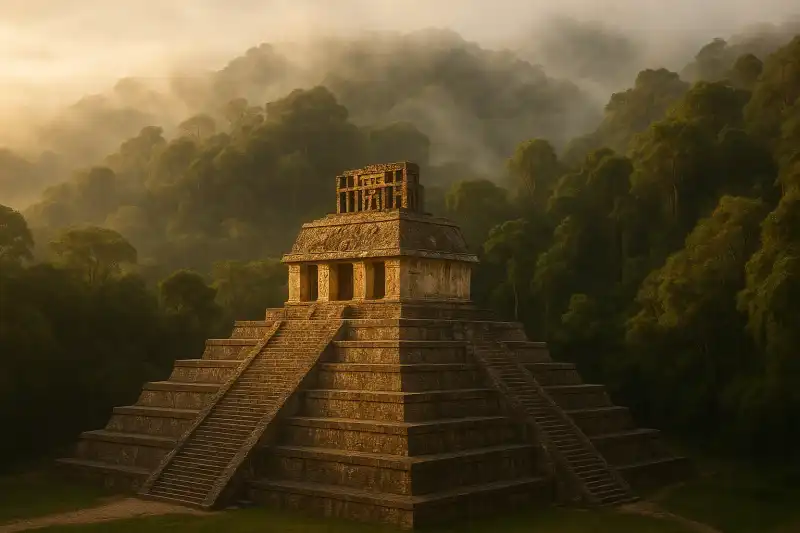
Arrive in Palenque and keep the day deliberately modest. If you are coming from Villahermosa, San Cristóbal de las Casas, or elsewhere in Chiapas, the transfer can already be enough for one day. Check into your hotel, confirm transport for the next two mornings, and resist the temptation to squeeze in too much.
If you arrive early and have energy, make a short first visit to Palenque or save the full ruins visit for Day 2. Palenque was one of the great Classic Maya cities, especially under K’inich Janaab’ Pakal in the 7th century CE. His tomb beneath the Temple of the Inscriptions is one of the reasons the site feels so personal: this is not only architecture, but dynastic memory carved into stone and sealed under a pyramid.
Use the afternoon for practical setup. Ask your hotel or driver about current road conditions for the Yaxchilán and Bonampak day. Confirm what time the Palenque archaeological zone opens. Buy water and snacks. This is not glamorous advice, but it is the difference between a strong 5-day route and one that starts fraying by Day 3.
If you want a gentle history warm-up, read a little about Palenque’s inscriptions before visiting. The site rewards context. Its buildings are beautiful, but the real charge comes from names, dates, royal claims, and the way rulers used architecture to make family history public.
Day 2: Palenque ruins and the temples of the royal city
Start early for Palenque. The ruins sit close to town, so this is the easiest major day of the itinerary, but do not treat it as a quick stop. Give the site more time than the map suggests. The central group, palace complex, temples, inscriptions, and forest setting are best understood slowly.
Begin with the Temple of the Inscriptions and the area around the Palace. Pakal’s burial, discovered in the 20th century, changed how scholars understood Maya royal tombs. The sarcophagus lid is famous for its imagery, but the more interesting point for travelers is how carefully death, ancestry, and kingship were staged. Palenque’s rulers were not hiding power. They were narrating it.
The Palace is worth lingering over. Its tower is unusual in the Maya world, and the courtyards make the city feel administrative as well as ceremonial. This is a good site for people who like their ruins political. Palenque’s stone panels and hieroglyphic texts recorded accessions, captures, ancestors, and ritual obligations. The architecture had a job to do.
Plan transport simply: taxi, colectivo, rental car, or guided visit from Palenque town. If you go independently, arrange your return before you are tired. Humidity builds through the day, and the shaded paths can still wear you down. Keep the afternoon flexible for the museum if open, a waterfall side trip, or rest before the long Day 3 departure.
Day 3: Yaxchilán by river and Bonampak murals
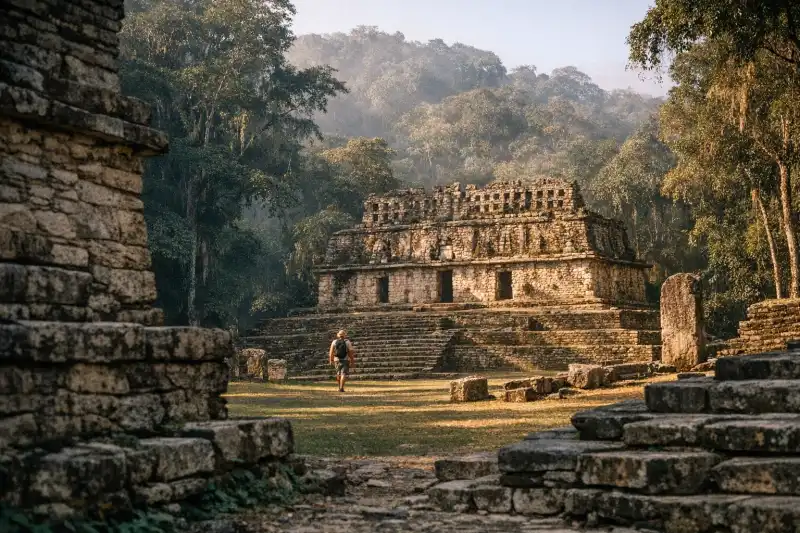
This is the hardest and most memorable day of the route. Leave before dawn or very early with a guided trip or private driver. The usual pattern is road travel from Palenque toward Frontera Corozal, then a boat ride on the Usumacinta River to Yaxchilán. The river is not scenery pasted onto the history. It was part of the city’s power.
Yaxchilán’s carved lintels are the reason to pay attention. They show rulers and royal women in ritual scenes, including bloodletting and accession imagery. Shield Jaguar and Bird Jaguar are not just names in a guidebook here. Their political claims were carved above doorways, where people moved through buildings and under royal messages.
The site can feel quiet in a way that is almost misleading. Jungle has softened the edges, but Yaxchilán was a serious river city, tied into trade, warfare, and alliances along the Usumacinta. Listen for howler monkeys if they are active, but do not let the wildlife steal the whole day. The stones are doing plenty of talking.
Continue to Bonampak if access and timing allow. The murals are the reason you came: court ceremony, musicians, captives, and battle scenes painted with a directness that can surprise people who expect Maya art to feel distant. The paintings date to the late 8th century CE and give the day a jolt of color after Yaxchilán’s carved stone.
This is where a Palenque, Yaxchilán, and Bonampak guided route makes sense. The tour is not just about commentary. It coordinates road timing, river transport, site access, and the return to Palenque after a long day. Do not plan a serious dinner reservation afterward. You will probably want food, a shower, and sleep.
Day 4: Transfer to Ocosingo and visit Toniná
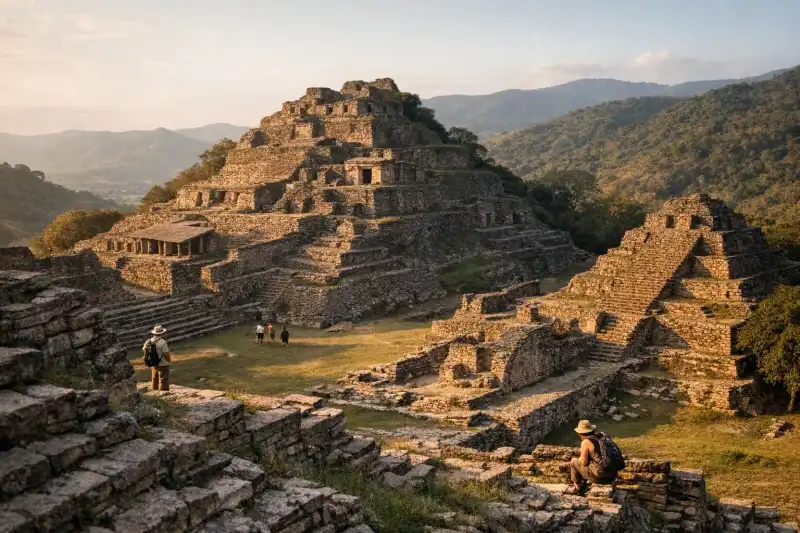
Leave Palenque after breakfast and head toward Ocosingo for Toniná. This is the day when the route changes mood. Palenque and Yaxchilán are jungle lowland cities. Toniná rises in terraces above a highland valley, and the site feels steeper, harder-edged, and more confrontational.
Toniná was a Classic Maya city with a long rivalry against Palenque. That tension gives the visit bite. Inscriptions record conflict, captives, and royal ambition, and the vertical layout makes the site feel almost theatrical. You climb through plazas and platforms rather than wandering a flat ceremonial core.
Do not rush straight to the top. The sequence matters. Lower levels, stairways, temples, and carved monuments build the sense that the city was designed to pull movement upward. The climb can be hot and exposed, so pace it. Bring water and take breaks without apology.
Logistically, this day is much smoother with a rental car or arranged driver. Public transport can work for experienced travelers, but it adds friction and can make the ruins visit feel squeezed. Overnight in Ocosingo if possible. That one decision turns Toniná from a box-checking detour into a proper day.
Day 5: Second look at Toniná or return toward Palenque
Use the final day as a pressure valve. If Day 4 ran late, return to Toniná in the morning instead of pretending you saw enough. The site is large, and the best views come after you have worked through the terraces. A second, shorter visit can make the carvings, plazas, and defensive feeling of the place easier to read.
If you finished Toniná properly on Day 4, use the morning to leave Ocosingo without rushing. You can return by road to Palenque, continue toward San Cristóbal de las Casas, or connect to a broader Chiapas route. This itinerary ends in Palenque because it keeps the ancient-sites loop tidy, but many travelers will sensibly continue onward instead of backtracking.
Historically, let Toniná sit in contrast with Palenque. Palenque often wins the beauty contest: elegant architecture, forest, inscriptions, and Pakal’s tomb. Toniná is less polished and more muscular. Its political story feels sharp because it was not simply another Maya city in the forest. It was a rival power with its own claims, victories, and monumental language.
Keep the day light if you are returning to Palenque. The road takes energy, and Chiapas rewards travelers who leave slack in the plan. If your next move is a long bus or flight connection, do not add another site unless you have a driver and a forgiving schedule.
The historical thread: jungle kingdoms, river power, and painted politics
This route works because the sites do not repeat each other. Palenque gives you dynastic memory, royal tomb architecture, and a city where inscriptions make family history visible. Yaxchilán shifts the story to river power, carved lintels, and rulers using doorways as political stages. Bonampak adds painted rooms where court life, music, warfare, and captives appear with startling directness. Toniná closes the loop with height, rivalry, and a more aggressive architectural mood.
The Chiapas Maya world was not a single peaceful jungle civilization. It was a network of courts, kings, alliances, rituals, wars, and local ambitions. Rivers mattered. Captives mattered. Ancestors mattered. Buildings were not just places to look impressive. They organized memory, movement, and authority.
That is why the road fatigue is worth considering, but not dismissing. Seeing these sites together keeps the Maya past from flattening into one image of temples in rainforest. The differences are the point.
Transportation notes
Palenque is the best base for the first part of the route. It has practical access to the Palenque ruins and the strongest setup for Yaxchilán and Bonampak day trips. Use taxis, colectivos, or a local driver for Palenque itself.
For Yaxchilán and Bonampak, book a guided tour or private driver unless you are very comfortable with rural Chiapas logistics. Yaxchilán requires a boat from Frontera Corozal. Bonampak access may involve local transport arrangements and rules that change by area. This is not the day to improvise casually.
For Toniná, overnight in Ocosingo if your schedule allows. Palenque to Toniná and back in one day can be done, but it is a lot of road time wrapped around a site with stairs, exposure, and enough history to deserve attention. If continuing to San Cristóbal de las Casas, Toniná works better as a route stop than as a round trip.
Self-driving gives flexibility, but check current road and safety conditions before committing. If you do not want that mental load, hire a driver for the transfer days. Do not compress Yaxchilán, Bonampak, and Toniná into one heroic push. That is how good ruins become a blur.
Optional add-ons and swaps
If you have one extra day and are continuing across Chiapas, add Chiapa de Corzo near the Grijalva River. Remove the return to Palenque on Day 5 and continue toward San Cristóbal or Tuxtla instead. This shifts the trip from a compact Maya route to a wider Chiapas ancient-sites plan.
If you want a deeper Maya forest route after Chiapas, continue later toward Calakmul in Campeche. Do not bolt it onto these 5 days unless you enjoy punishing road schedules. Add at least two more nights and remove the Toniná return leg.
If you need to shorten the route, keep Palenque and the Yaxchilán-Bonampak day. Toniná is the logical cut because it sits in the opposite direction from the Lacandon rainforest route. Painful, but practical.
If the Day 3 logistics feel too hard, choose either Yaxchilán or Bonampak rather than forcing both. Yaxchilán gives you the river and carved lintels. Bonampak gives you the murals. The better choice depends on whether you care more about setting or painting.
Shorter and longer itinerary options
For a shorter Chiapas ancient-sites trip, spend three days in Palenque: one day for Palenque itself, one long guided day for Yaxchilán and Bonampak, and one recovery day for the museum, waterfalls, or a second Palenque visit.
For a broader Mexico route, pair Chiapas with a future Yucatán itinerary such as 5 Days in the Yucatán: Chichén Itzá, Uxmal, Mayapán, and Ek Balam or a longer Maya lowlands route. The contrast is useful: Chiapas gives you jungle courts and river politics, while the Yucatán and Puuc areas bring different architecture, drier landscapes, and later urban stories.
For a deeper ancient Mexico trip, connect this route with 10 Days in Ancient Mexico: Teotihuacan, Oaxaca, and the Maya Lowlands when that route is available. Do not try to build that whole sweep into five days. Mexico’s ancient sites are too spread out, and the travel days would eat the history.
Related ancient sites
FAQ
The most common planning questions for this Chiapas Maya ruins route are answered below.