Quick route summary
This 5-day route starts in Mérida and ends in Valladolid, using two bases instead of forcing every site into long round trips. Mérida handles the Puuc and central Yucatán days: Uxmal, Kabah, Labná, Sayil, and Mayapán. Valladolid handles the eastern finish, with Chichén Itzá and Ek Balam.
The pace is full, but sensible. You are not trying to see every Maya site in the peninsula. This route gives you a strong Yucatán arc: Puuc architecture, smaller regional cities, a late Maya capital, a heavily visited ceremonial and political center, and a quieter eastern site with remarkable sculpture.
Who this itinerary is for
This itinerary is for travelers who want Yucatán Maya sites beyond a single Chichén Itzá day trip. It works best if you can start early, tolerate heat, and use a rental car, private driver, or guided tours where public transport becomes awkward.
It is not the best plan if you want beach time, a Cancun-based vacation, or a slow Mérida stay built around food and museums. Those are good trips, but this one is about ruins, roads, limestone, rain gods, political centers, and the practical rhythm of visiting sites before the sun takes over.
Route at a glance
- Day 1: Overnight in Mérida. Visit Uxmal and Kabah with a rental car, driver, or guided Puuc route.
- Day 2: Overnight in Mérida. Drive or hire a driver for Labná, Sayil, and optional Xlapak on the quieter Puuc Route.
- Day 3: Overnight in Mérida. Visit Mayapán southeast of the city, then keep the afternoon lighter.
- Day 4: Overnight in Valladolid. Leave Mérida early for Chichén Itzá, then continue east instead of backtracking.
- Day 5: Overnight in Valladolid. Visit Ek Balam as a focused half-day or slower final ruins day.
Practical logistics before you go
Use Mérida for the first three nights and Valladolid for the final two. Mérida is the stronger base for the western and central sites. Valladolid saves time for Chichén Itzá and Ek Balam, and it gives you a calmer finish than returning to Mérida after every excursion.
A rental car is the cleanest option for the full route. The major roads are manageable for many travelers, but drive in daylight, expect speed bumps near towns, and do not assume every smaller site has the same services as Chichén Itzá. If you do not want to drive, mix guided tours with private drivers, especially for the Puuc Route.
Heat is the main enemy. Start early every day, carry water, use sun protection, and avoid pretending midday is prime ruin-walking time. Chichén Itzá also brings crowd pressure, so timing matters there more than anywhere else on the route.
Guided tours are most useful at Uxmal, Chichén Itzá, and Mayapán. Smaller Puuc sites can be deeply enjoyable on your own if you already have basic context, but a good guide can help the stone masks, arches, and palace facades stop looking like decorative repetition and start reading like political language.
Day 1: Uxmal and Kabah
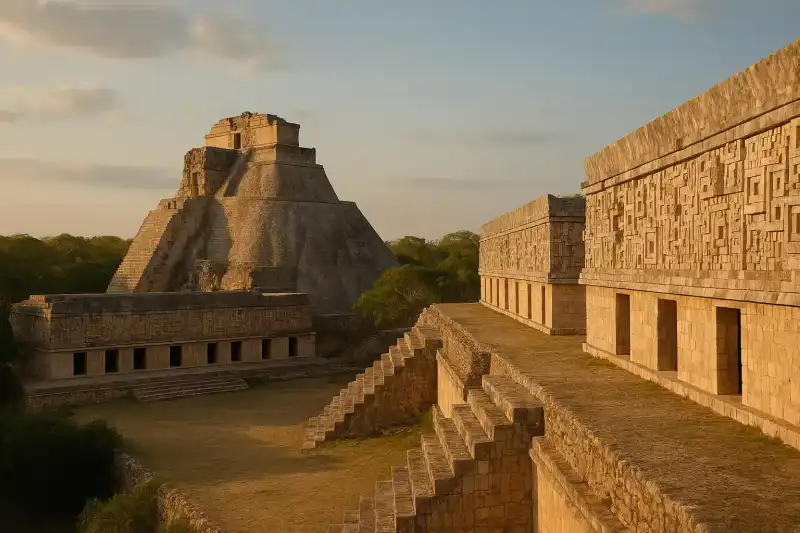
Start with Uxmal early from Mérida. The site is one of the best places to understand Puuc architecture without needing to imagine too much. Smooth lower walls, decorated upper facades, geometric stone mosaics, and repeated Chaac masks all work together with unusual clarity.
Give the Pyramid of the Magician time, but do not rush past the Nunnery Quadrangle and Governor’s Palace. Uxmal is less about one famous structure than about how buildings frame movement and attention. The site feels controlled in a way that is easy to miss if you are only chasing the biggest pyramid.
A Uxmal and Kabah day trip from Mérida is useful if you want transport and explanation handled together. It also avoids the common problem of underestimating how much energy a hot Puuc day takes.
Continue to Kabah in the afternoon if timing and heat allow. Kabah is quieter, but the Codz Poop, often called the Palace of the Masks, is a terrific lesson in repetition. The many Chaac masks are not filler decoration. In a landscape where rainfall shaped survival, rain imagery could carry political weight.
Return to Mérida for the night. Keep dinner easy and do not add another site. Day 1 already gives you plenty to absorb.
Day 2: Labná, Sayil, and the Puuc Route
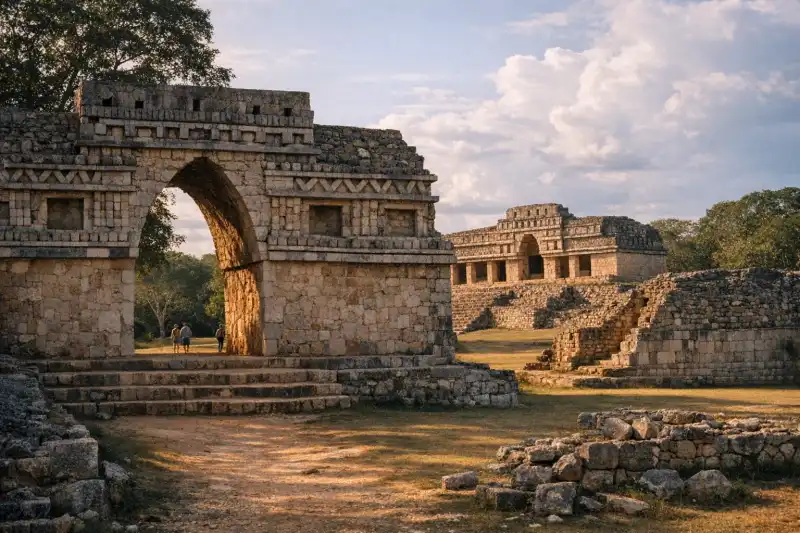
Use Day 2 for the smaller Puuc sites south of Mérida. This day needs a car, driver, or carefully arranged tour. Public transport is the wrong tool here, and trying to improvise between scattered ruins will eat the best hours.
Start with Labná, which is famous for its arch and palace remains. The arch is graceful, but the better visit is slower than the standard photo stop. Look at how the architecture uses thresholds, lines, and decorated surfaces to create a sense of controlled passage. The Maya did not need a huge pyramid at every site to make space feel ceremonial.
Continue to Sayil, where the palace facade rewards patience. Sayil is quieter than Uxmal and usually easier to experience without crowds, which helps you notice the stonework and building scale. The site makes a good argument for spending more time in the Puuc hills instead of treating the whole region as an Uxmal add-on.
If the day is going smoothly, add Xlapak as a small stop. It is not a blockbuster site, and that is part of the appeal. Smaller ruins can make the ancient landscape feel inhabited rather than curated.
Return to Mérida before the day gets too long. This is the kind of route where restraint helps. Three Puuc sites are plenty if you want to remember them separately.
Day 3: Mayapán and central Yucatán
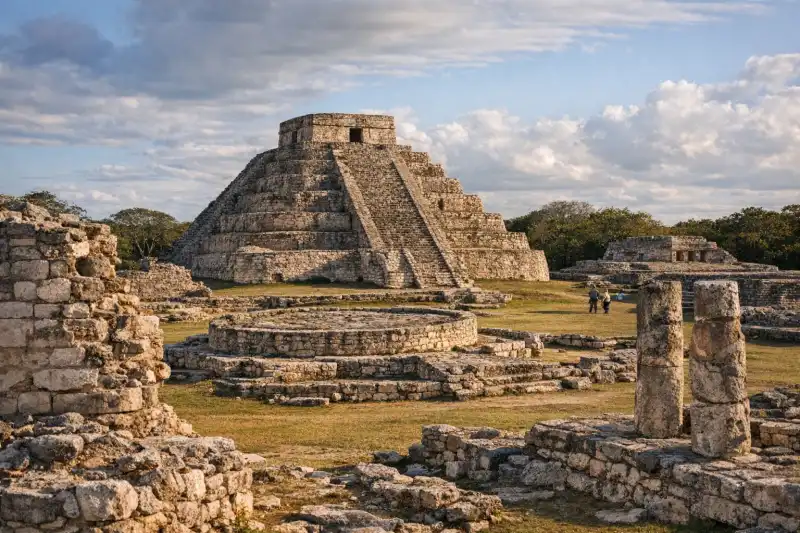
Head southeast from Mérida to Mayapán. The site is often described as the last great Maya capital in Yucatán, and that late chronology is the reason to include it. It pushes against the lazy idea that Maya history belongs only to the Classic period.
Mayapán is compact enough to read in a few hours, but it deserves more respect than a quick stop. The walled city, temples, painted remains, and dense settlement pattern give the site a different feeling from Uxmal. This is a political place, not just an architectural one.
A guide can be especially useful here because Mayapán does not always announce its importance through scale. The history is in the late timing, the city wall, the concentration of structures, and the way the site echoes and revises earlier Yucatán centers.
Keep the afternoon flexible. You can pair Mayapán with a cenote, a village meal, or a quiet return to Mérida, but do not stack another major ruin unless you started early and know your heat tolerance. Tomorrow is Chichén Itzá, and that day deserves a clear head.
Day 4: Chichén Itzá and Valladolid
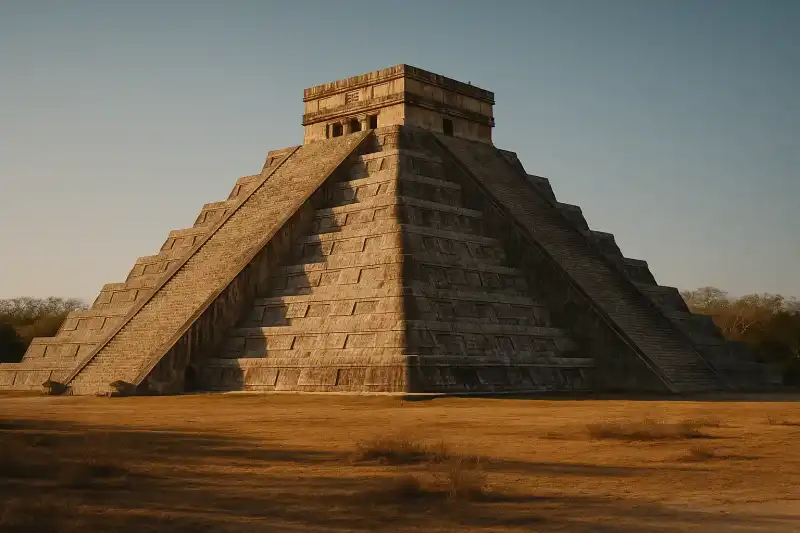
Leave Mérida early for Chichén Itzá. This is the most crowded site on the route, and timing changes everything. Arrive as early as possible, or consider a Chichén Itzá early access tour from Mérida or Valladolid if you want guide support and cleaner logistics.
Chichén Itzá can feel overfamiliar before you arrive, but do not let the postcard version flatten it. El Castillo is only the start. The Great Ball Court, Temple of the Warriors, Sacred Cenote, platforms, columns, and carved imagery all point to a city concerned with ritual, display, warfare, astronomy, and regional power.
The site also feels different from Uxmal and Mayapán. That contrast is the point of placing it late in the route. After seeing Puuc facades and Mayapán’s walled density, Chichén Itzá reads less like an isolated wonder and more like one powerful node in a complicated Yucatán network.
After the visit, continue to Valladolid instead of returning to Mérida. This saves time for Day 5 and gives the route a better eastward finish. Keep the evening relaxed. Chichén Itzá is hot, crowded, and mentally busy.
Day 5: Ek Balam and the quieter eastern Yucatán
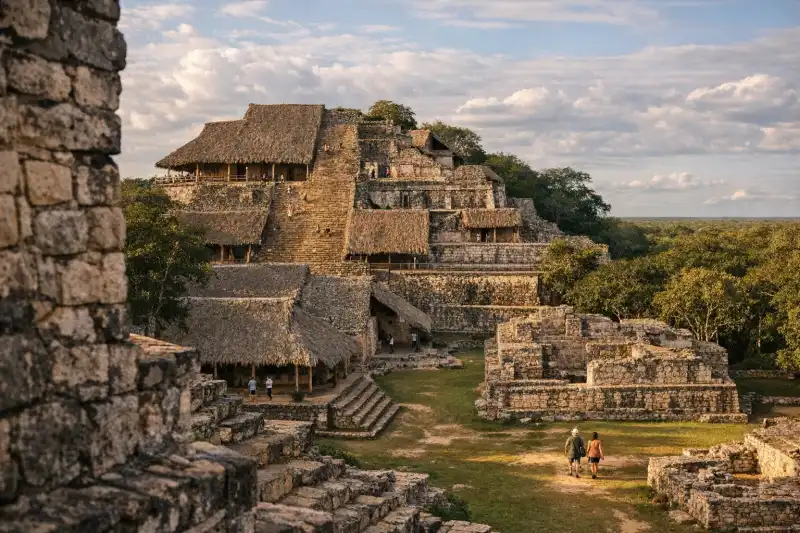
Use Valladolid as your base for Ek Balam. Go in the morning by taxi, rental car, driver, or organized half-day trip. A Ek Balam day trip from Valladolid can be useful if you want easy transport and enough time on site.
Ek Balam is often quieter than Chichén Itzá, and that makes it a satisfying final day. The acropolis, carved stucco, and preserved decorative work give the site a more intimate feeling than the vast plazas of Day 4. It is a good place to slow down and actually look.
The name is often translated as Black Jaguar, though ancient place-name readings can be more complicated than travel shorthand suggests. What matters for the visitor is that Ek Balam preserves a strong sense of elite display. Its sculptural details show how power could be staged through architecture, imagery, and the careful control of access.
Return to Valladolid for a slower afternoon. If you are flying out or returning to Cancun, build in enough road buffer. If you are continuing through Mexico, this is the natural point to decide whether your next route goes toward Quintana Roo, Campeche, or back to Mérida.
The historical thread: rain, roads, and rival Maya cities
This route works because the sites argue with each other in useful ways. Uxmal, Kabah, Labná, and Sayil show the Puuc region’s architectural language, where stone mosaics, masks, arches, and palaces turn limestone into display. Mayapán brings the story later, into a Postclassic capital whose walls and dense buildings speak to a different political moment. Chichén Itzá shows a broader ceremonial and regional center with ball courts, cenotes, temples, and highly managed public space. Ek Balam closes the route with a more intimate look at elite sculpture and city identity.
Water sits underneath the whole itinerary. Northern Yucatán has no big surface rivers, so cenotes, rainfall, and water management mattered. Roads and sightlines mattered too. These cities were not random ruins in the scrub. They were built into a limestone world where power depended on movement, ritual, farming, water, and the ability to make architecture speak.
Transportation notes
Use Mérida for the first three nights and Valladolid for the final two. This is the simplest way to avoid backtracking. Mérida is better for Uxmal, Kabah, the Puuc Route, and Mayapán. Valladolid is better for Chichén Itzá and Ek Balam.
A rental car gives the best rhythm, especially for Labná, Sayil, Xlapak, and the Mérida to Valladolid transfer through Chichén Itzá. If you do not want to drive, use guided tours for Days 1 and 4, then hire a driver for Day 2 or replace it with an easier site day.
Public transport can work for selected routes, but it does not fit the full itinerary well. The smaller Puuc sites are the problem. You will spend too much time solving transfers and not enough time with the ruins.
Do not compress this into three days by combining Uxmal, Kabah, Mayapán, Chichén Itzá, and Ek Balam. It looks possible on a map. In real heat, with entry times, meals, drives, and fatigue, it becomes a blur.
Optional add-ons and swaps
If you want an easier Mérida day, add Dzibilchaltún and remove the Labná, Sayil, and Xlapak day. This makes the route simpler and keeps you closer to the city, but you lose the best smaller Puuc sequence.
If you want a town-and-ruins day, add Izamal after Mayapán or as a replacement for Day 2. It gives you Maya platforms inside a later colonial town, which changes the texture of the route.
If you want to continue east, add Coba after Valladolid and remove one Puuc day if you must keep the trip to five days. Coba belongs more naturally to a Quintana Roo continuation than to a Mérida-based ruins route.
If you want a deeper Campeche route, extend the trip for Edzná and Calakmul. Do not treat Calakmul as a casual add-on. It needs time, distance planning, and a different base strategy.
Shorter and longer itinerary options
For a shorter route, use the 3 Days in the Yucatán Maya Sites from Mérida itinerary. It keeps Mérida as the single base and focuses on Uxmal, Kabah, Mayapán, and Dzibilchaltún.
For a slower 5-day version, cut the smaller Puuc day and give yourself one rest afternoon in Mérida or Valladolid. This is the better choice in the hottest months.
For a longer route, build toward a 7-day Maya World itinerary by adding Campeche or Quintana Roo. Edzná, Calakmul, Coba, and Tulum all make more sense when they are part of a wider route instead of being forced into this Yucatán core.
Related ancient sites
- Chichén Itzá
- Uxmal
- Kabah
- Labná
- Sayil
- Xlapak
- Mayapán
- Ek Balam
- Dzibilchaltún
- Izamal
- Coba
- Edzná
- Calakmul
FAQ
The most common planning questions for this route are answered below.