Quick route summary
This 3-day route uses Mérida as a single base and focuses on Maya sites that make sense from the city without turning every day into a long highway slog. Start with Uxmal and Kabah for Puuc architecture, spend the second day at Mayapán, then finish with Dzibilchaltún close to Mérida.
The pace is busy, but not silly. You are not trying to see every Yucatán ruin in three days. The route gives you a strong mix: one major UNESCO site, a quieter Puuc companion, a late Maya capital, and a nearby city with sacbe roads, a temple, and a cenote.
Who this itinerary is for
This itinerary is for travelers based in Mérida who want Maya sites with real variety, not just one famous day trip. It works well if you can start early, handle heat, and use a rental car, driver, or organized tours when public transport gets awkward.
It is not the best plan if Chichén Itzá is non-negotiable, if you want beach time every afternoon, or if you prefer one short museum visit and long lunches in town. Mérida is excellent for that slower trip too, but this route is built around ruins, roads, masks, temples, and the logistics of doing them without overpacking the days.
Route at a glance
- Day 1: Overnight in Mérida. Visit Uxmal and Kabah by rental car, driver, or guided Puuc route, starting early to avoid the worst heat.
- Day 2: Overnight in Mérida. Head southeast to Mayapán, then keep the afternoon flexible rather than stacking another major site.
- Day 3: Overnight in Mérida. Visit Dzibilchaltún as a half-day trip, then return to Mérida for museums, food, or a slower final evening.
Practical logistics before you go
Mérida is the right base for all three nights. Moving hotels would waste time. Stay somewhere with easy road access if you are driving, or somewhere central if you plan to use guided day trips and taxis.
A rental car gives the most flexibility, especially for pairing Uxmal with Kabah. A driver is a good middle option if you want to avoid navigating rural roads. Tours are easiest for Uxmal and sometimes Mayapán, but check the actual itinerary carefully. Some tours spend too little time at the ruins and too much time at add-on stops.
Heat is the main planning problem. Start early, carry water, wear sun protection, and avoid treating midday as your best ruin-walking window. Uxmal has more infrastructure than Kabah or Mayapán, but shade is still limited across much of the route.
Guides are most useful at Uxmal and Mayapán. Uxmal’s stone mosaics and building layout reward explanation. Mayapán can look simple at first glance, but its late political history is exactly why it matters.
Day 1: Uxmal and Kabah
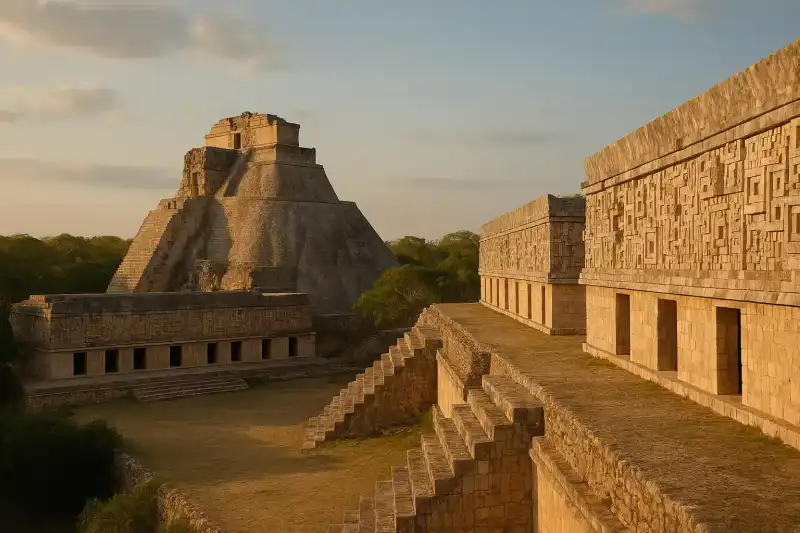
Start early from Mérida and make Uxmal the main event of the day. The drive is manageable, but the site deserves more than a quick loop. Uxmal is one of the clearest places to see Puuc architecture: smooth lower walls, decorated upper facades, geometric stonework, and masks associated with Chaac, the rain god.
Give the Pyramid of the Magician time, but do not let it swallow the whole visit. The Nunnery Quadrangle and Governor’s Palace are where Uxmal gets wonderfully exacting. The decoration is dense without feeling random, and the buildings make the site feel designed for processions, courtly display, and carefully managed views.
A Uxmal and Kabah day trip from Mérida makes sense if you want transport and context together. It is especially useful if you do not want to rent a car for one Puuc route day.
Continue to Kabah if you still have energy and the timing works. Kabah is quieter, but not lesser. The Codz Poop, often called the Palace of the Masks, is covered with repeated Chaac masks in a way that makes rain, stone, and political performance feel tightly linked. The repetition is the point. This is a good site for people who like detail more than spectacle.
Return to Mérida for the night. Do not add Labná, Sayil, and Xlapak unless you are deliberately turning this into a full Puuc Route day and cutting something later. For a 3-day itinerary, Uxmal and Kabah are enough.
Day 2: Mayapán and the late Maya capital
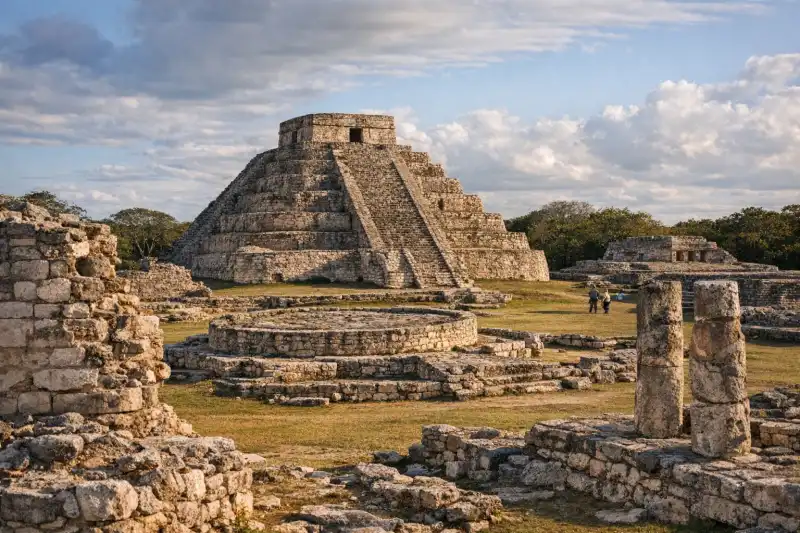
Head southeast from Mérida to Mayapán. It is often described as the last great Maya capital in Yucatán, and that late date matters. After the Classic-period cities and after Chichén Itzá’s height, Mayapán became a major political center in the Postclassic period. The site helps correct the lazy idea that Maya history simply ended before Europeans arrived.
Mayapán is more compact than Uxmal, which makes it easier to read in a few hours. You can see the walled city idea, temples, civic spaces, painted remains, and architecture that echoes other Yucatán centers without copying them neatly. The site feels less polished than Uxmal, but that is part of its value.
A Mayapán day trip from Mérida can be useful if it gives you enough time at the ruins and does not bury the archaeology under unrelated stops. Read the schedule before booking.
Keep the afternoon flexible. Many travelers pair Mayapán with a cenote or a village stop, which can work well, but do not add another major ruin unless you started very early and know your own heat tolerance. This is a good day to return to Mérida with enough energy for dinner.
Day 3: Dzibilchaltún and an easier Mérida finish
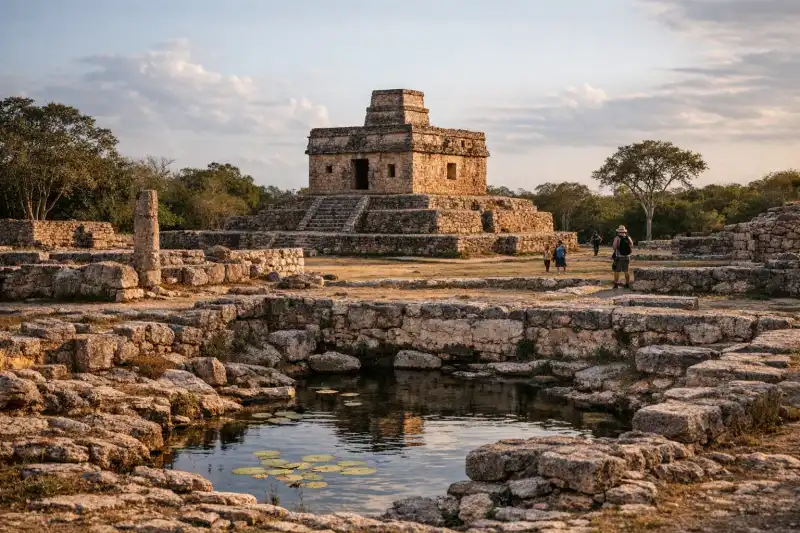
Finish with Dzibilchaltún, close enough to Mérida that the day does not need to become a logistical production. Go in the morning by taxi, rental car, or driver, and treat it as a focused half-day visit rather than filler.
The Temple of the Seven Dolls is the site’s best-known structure, named for small figurines found there. Dzibilchaltún is also known for sacbe roads and the Cenote Xlacah, which helps make the ancient city feel tied to movement and water rather than only buildings. In northern Yucatán, water access was never a background detail.
The site is a useful final stop because it brings the route back toward Mérida. After the scale and polish of Uxmal, and the political story of Mayapán, Dzibilchaltún gives you a closer, more local way to think about Maya settlement near the modern city.
Return to Mérida and keep the rest of the day open. If you want more ancient context, use the afternoon for a museum or a walk through the historic center with the ruins in mind. If the heat has done its work, stop. Three days of stone, sun, and roads is plenty.
The historical thread: Puuc stone, late capitals, and water in northern Yucatán
This route works because the sites do not repeat the same lesson. Uxmal and Kabah show the Puuc region’s architectural confidence, with stone mosaics, Chaac masks, and formal buildings that turn decoration into political language. Mayapán shifts the story later, into a walled Postclassic capital where Maya power was still active, adaptive, and contested. Dzibilchaltún brings the route back toward Mérida, with roads, a temple, and a cenote that ground the city in local water and movement.
Together, the three days make northern Yucatán feel less like a checklist of ruins and more like a lived landscape. Architecture mattered. Rain mattered. Roads mattered. So did timing, power, memory, and the ability to build cities in a limestone world where surface water was scarce.
Transportation notes
Use Mérida as your only base. It is the practical hub for Uxmal, Kabah, Mayapán, and Dzibilchaltún, and it saves you from repacking between short drives.
A rental car is the simplest way to run the route on your own schedule. Roads to the major sites are manageable for many travelers, but drive in daylight, watch for speed bumps and village crossings, and do not assume the last miles will move quickly.
Guided tours work best for Day 1 and sometimes Day 2. For Dzibilchaltún, a taxi or half-day driver is usually enough. Public transport may be possible for some legs, but it can cost you the flexibility that makes a 3-day route comfortable.
Do not compress Uxmal, Kabah, Mayapán, and Dzibilchaltún into two days unless you are comfortable with heat and early starts. It works on paper, but the sites are better when your brain is not cooked by noon.
Optional add-ons and swaps
If Chichén Itzá is your top priority, add Chichén Itzá by replacing Mayapán or Dzibilchaltún. It is famous for good reasons, but it brings bigger crowds and a longer day from Mérida.
If you want another strong Maya city with a quieter feel, add Ek Balam as a longer day trip. Remove Dzibilchaltún if you need to keep the route at three days. Ek Balam is rewarding, but it sits far enough east that it changes the rhythm.
If you want a town-and-ruins day, add Izamal instead of Mayapán. This makes the itinerary more urban and atmospheric, with Maya platforms under a later colonial town, but it gives you less of the late-capital story.
If Puuc architecture is the main draw, extend Day 1 or add a fourth day for Labná, Sayil, and Xlapak. Do not casually bolt all three onto Uxmal and Kabah unless you want a very long, ruin-heavy day.
Shorter and longer itinerary options
For a shorter route, use a two-day Mérida plan: Day 1 at Uxmal and Kabah, Day 2 at Mayapán or Dzibilchaltún. Choose Mayapán for history, Dzibilchaltún for easier logistics.
For a longer route, build toward a 5-day Yucatán itinerary with Chichén Itzá, Ek Balam, Izamal, and more Puuc sites. That is the better format if you want both the famous eastern sites and the Mérida-based western route.
For a 7-day Maya route, continue into Campeche or Quintana Roo with sites like Edzná, Calakmul, Coba, or Tulum. Those deserve their own pacing and should not be squeezed into this compact Mérida plan.
Related ancient sites
FAQ
The most common planning questions for this route are answered below.