Quick route summary
This 7-day route starts in Amman and ends near Aqaba, using Amman, Madaba, Wadi Musa, and Wadi Rum as practical bases. It links the Amman Citadel, Jerash, Umm Qais, Madaba, Mount Nebo, Petra, and the Wadi Rum Ancient Inscriptions.
The route is busy, but it has a clean historical line. You move from Roman and Decapolis cities in the north to biblical and Byzantine landscapes in central Jordan, then follow the old southbound roads toward Nabataean Petra and the desert inscriptions of Wadi Rum. Do not add every desert castle, every Dead Sea stop, and a long Dana hike to the same seven days. Jordan rewards focus.
Who this itinerary is for
This itinerary is for travelers who want Jordan through ancient sites rather than only Petra and a desert camp. It works best if you are willing to use a rental car, private driver, or organized day trips for the northern and central legs. The distances are not huge, but the best sites are spread across hills, valleys, and desert roads.
It is not ideal if you want a slow resort trip, a hiking-first Dana itinerary, or a no-driving plan built entirely around public buses. You can adapt parts of it without a car, but the full route needs transport planning.
Route at a glance
- Day 1: Overnight in Amman. Visit the Amman Citadel and Roman Theater, using taxis or rideshare between the hilltop and downtown.
- Day 2: Overnight in Amman. Make a day trip to Jerash for one of the clearest Roman city walks in the region.
- Day 3: Overnight in Amman. Drive north to Umm Qais, with Gadara Theater and an optional Pella stop if you leave early.
- Day 4: Overnight in Madaba. Move to Madaba, visit Mount Nebo and nearby highland sites, and keep the day lighter.
- Day 5: Overnight in Wadi Musa. Travel south on the King’s Highway with Kerak and Shobak before arriving near Petra.
- Day 6: Overnight in Wadi Musa. Spend a full day at Petra, with Little Petra only if timing and energy allow.
- Day 7: Overnight in Wadi Rum. Transfer to Wadi Rum for desert inscriptions, rock art, and a final night in the south.
Practical logistics before you go
Use four bases: Amman for the capital and northern day trips, Madaba for the biblical and mosaic landscape, Wadi Musa for Petra, and Wadi Rum for the desert finish. You can reduce this to three bases by sleeping in Amman instead of Madaba, but Madaba saves time and gives the route a softer middle.
A rental car is useful, especially from Day 3 onward. If you do not want to drive in Jordan, hire private drivers for Umm Qais, Madaba and Mount Nebo, the King’s Highway, and the Wadi Rum transfer. Public buses can help on some major routes, but they do not handle the site clusters well.
Guided tours make the most sense at Jerash, Petra, and the northern or King’s Highway days. The ruins are readable on your own, but the layers are easier with someone who can explain Decapolis city planning, Nabataean water control, Byzantine mosaics, and why certain roads mattered.
Heat and walking shape the trip. Jerash and Petra both involve long exposed routes. Wadi Rum depends on local drivers and camp timing. Carry water, start early, and do not schedule a heavy night after Petra. That day has a way of finding every muscle you forgot you had.
Day 1: Amman Citadel and Roman Theater
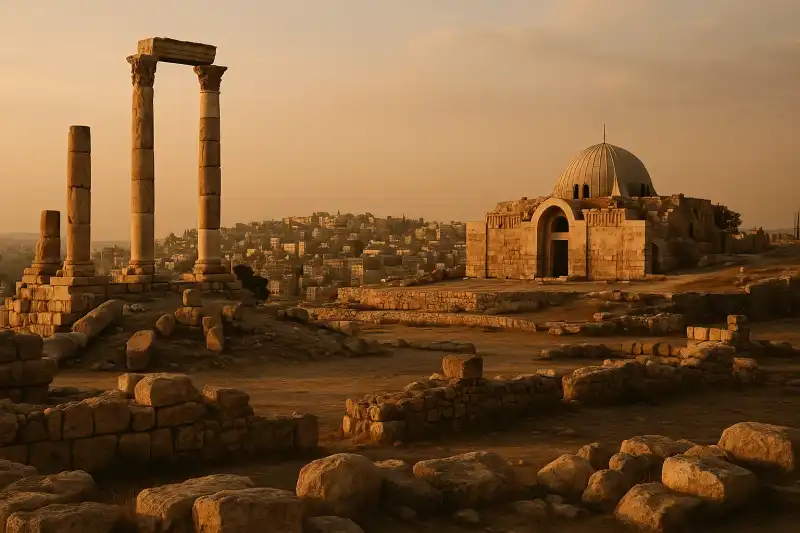
Start at the Amman Citadel, the hilltop that makes Amman’s layers unusually visible. Ancient Rabbath Ammon, Hellenistic Philadelphia, Roman rule, Byzantine building, and Umayyad architecture all overlap on this ridge. The Temple of Hercules gets much of the attention, but the real pleasure is seeing how a strategic hill kept being reused.
Give the small archaeological museum time if it is open during your visit. It helps ground the route before you start driving around the country. Amman can feel modern and sprawling at street level, but the Citadel reminds you that this was never just a gateway city.
After the Citadel, take a taxi or walk downhill if conditions are comfortable to the Roman Theater in Amman. The theater dates to the Roman city of Philadelphia and still sits right inside the modern urban fabric. It is a good first-day lesson: Jordan’s ancient sites are often not remote ruins. They are woven into towns, roads, markets, and neighborhoods.
Keep the rest of the day light. Amman traffic can be tiring, and tomorrow is a full Roman-city day. If you have extra time, add a downtown meal rather than another distant site.
Day 2: Jerash and the Decapolis
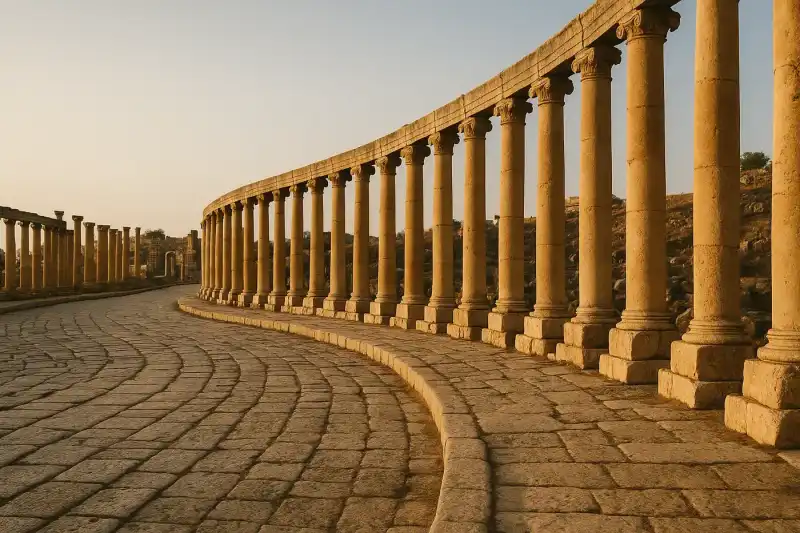
Drive, hire a driver, or take a guided day trip north to Jerash. A Jerash day trip from Amman is useful if you want transport and context bundled together without navigating the northern roads yourself.
Jerash, ancient Gerasa, is one of the easiest places in Jordan to understand Roman provincial city life on foot. You move through gates, a hippodrome area, the oval plaza, colonnaded streets, temples, theaters, and bath remains. The city was part of the Decapolis network, a group of cities with Greek and Roman civic traditions under changing regional powers.
Do not rush straight to the most photogenic colonnade and leave. The oval plaza is worth slowing down for because it is not a standard rectangular forum. The way it mediates between the main street and sanctuary approach gives Jerash its own architectural personality.
The site is exposed, so start early in warm months. Bring water, wear real shoes, and leave room for lunch afterward. Return to Amman for the night rather than pushing north again after dark.
Day 3: Umm Qais and northern Jordan
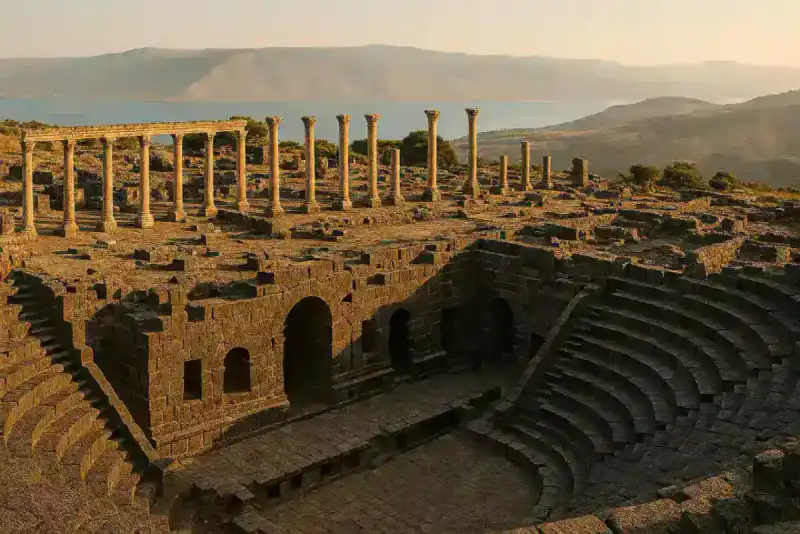
Leave early for Umm Qais, ancient Gadara. This is one of the best northern Jordan days, but it is not a public-transport-friendly one. Use a rental car or driver, and build in time for winding roads, village traffic, and viewpoints that are honestly hard not to stop for.
Umm Qais has a different mood from Jerash. Its black basalt ruins, hilltop setting, and views toward the Sea of Galilee and the Golan Heights give the site a borderland feeling. The Gadara Theater at Umm Qais is especially good for seeing how local stone changes the look of Roman architecture. The same Roman forms feel darker and sterner here.
If you leave Amman early and have a driver, consider adding Pella on the return. Pella has Bronze Age, Hellenistic, Roman, Byzantine, and early Islamic layers, but it is less tidy as a visitor experience than Jerash. That is not a flaw. It just means you need patience and realistic expectations.
If the day is running long, skip Pella and give Umm Qais more time. Return to Amman for a final night in the capital.
Day 4: Madaba, Mount Nebo, and the King’s Highway
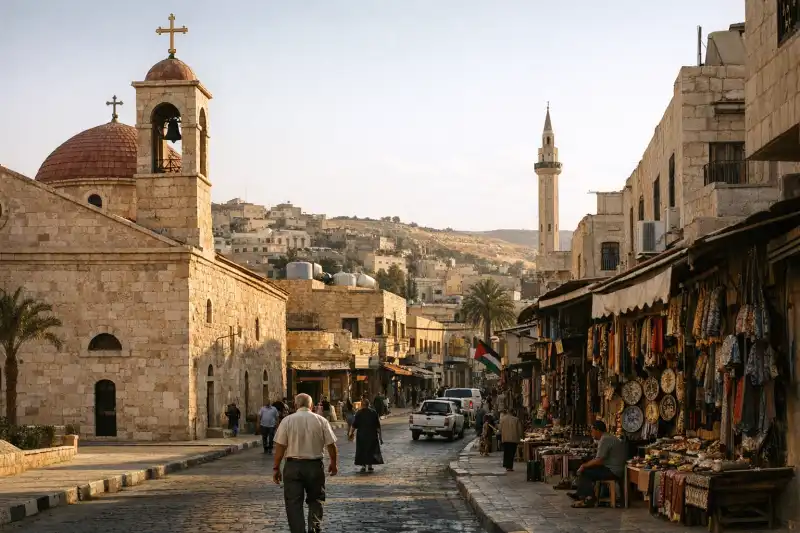
Move to Madaba in the morning. The town is famous for Byzantine mosaics, especially the map tradition connected with the church of St. George, but it also works as a practical base south of Amman. It is calmer than the capital and better placed for Mount Nebo, the airport, and the road toward Petra.
Continue to Mount Nebo. The site is famous for its biblical association with Moses looking toward the Promised Land, but the visit is also about later memory: pilgrimage, church building, mosaics, and the way a viewpoint becomes sacred through repeated use. On a clear day, the landscape does some of the explaining.
A Madaba, Mount Nebo, and King’s Highway private day trip can make sense if you are connecting central Jordan to Petra and do not want to manage stops yourself.
If you have extra time, add Tell Hesban or another nearby highland site, but do not overload the day. This is the hinge between northern Jordan and the long southbound leg, so a little slack is useful.
Day 5: Kerak, Shobak, and arrival in Petra
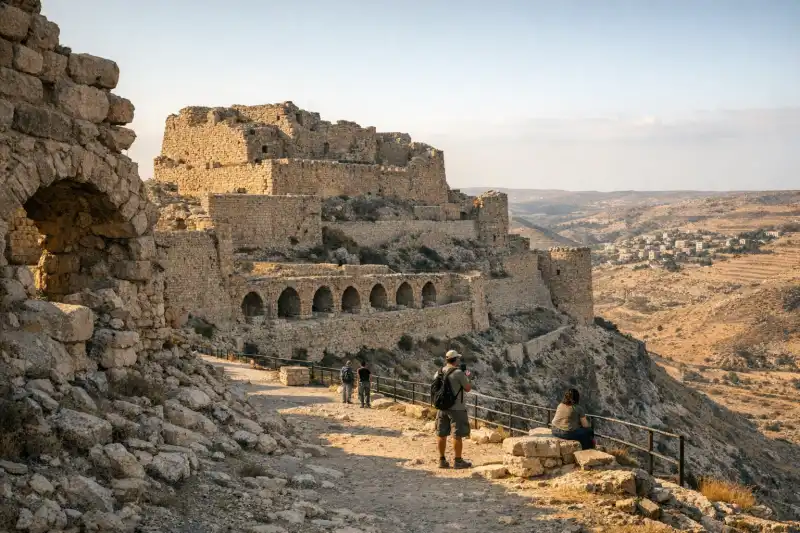
Leave Madaba early for the King’s Highway. This is a road day with real historical texture, not just a transfer. The route passes through highland towns, deep valleys, and fortress landscapes that help explain why control of roads mattered so much in Jordan.
Stop at Kerak Castle. The Crusader fortress dominates its hilltop, but the site also sits in a much longer landscape of Moabite, biblical, Islamic, and medieval conflict. Kerak is big, layered, and sometimes physically confusing inside, with tunnels, chambers, and viewpoints that reward slow wandering.
Continue south toward Shobak Castle if daylight and energy allow. Shobak is quieter than Kerak and has a starker highland setting. If you are running late, skip Shobak and go straight to Wadi Musa. Petra is not the place to arrive exhausted and disorganized.
You will see Petra tomorrow, but sleeping in Wadi Musa tonight matters. It lets you start early, before the heat and the day-trip crowds build.
Day 6: Petra’s Siq, Treasury, and Monastery
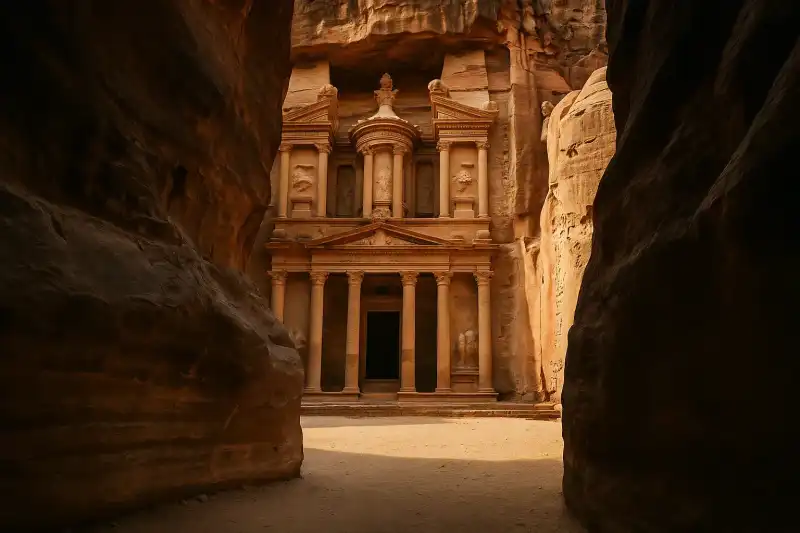
Start Petra as early as practical. The walk through the Siq to the Treasury is famous for good reason, but do not treat the Treasury as the finish line. Petra was a Nabataean city shaped by trade, water engineering, tomb architecture, ritual routes, and later Roman annexation. The carved facades are only one part of the story.
A Petra guided tour from Wadi Musa is useful on a first visit because the site is huge and easy to misunderstand. A good guide can explain the Nabataeans without turning the day into a list of photo stops.
Choose your route before you enter. A strong first visit covers the Siq, Treasury, Street of Facades, theater area, Royal Tombs, colonnaded street, and either the Monastery or a shorter high viewpoint depending on fitness and weather. The Monastery climb is worth it for many travelers, but it is not a casual add-on in midday heat.
If you still have energy late in the day, add Little Petra. It is smaller and quieter, with rock-cut spaces tied to Nabataean movement and hospitality outside the main city. If Petra has already emptied your legs, save Little Petra for another trip. There is no prize for limping through it.
Day 7: Wadi Rum inscriptions and desert finish
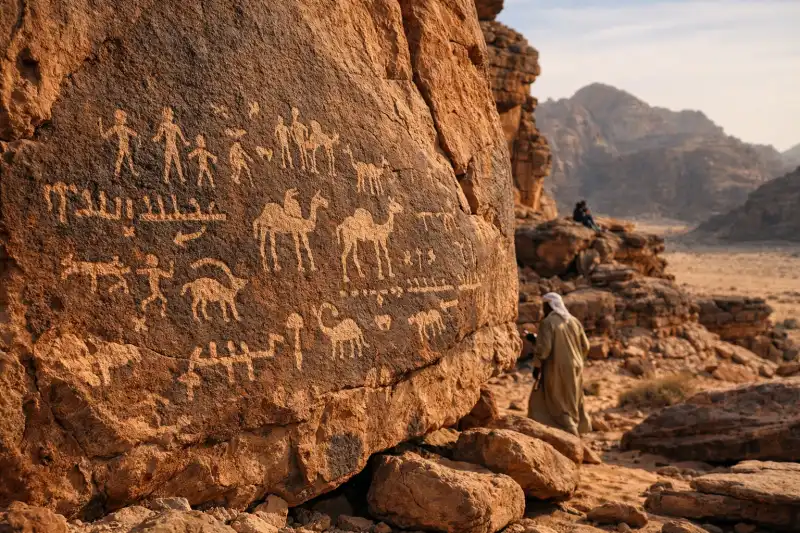
Transfer from Wadi Musa to Wadi Rum and arrange your desert route through a local camp or guide. The Wadi Rum Ancient Inscriptions are the point of this itinerary’s final day, not just the scenery. Rock art and inscriptions in the desert record movement, names, animals, scripts, and human presence across long periods.
Wadi Rum is often sold as a landscape experience, and it is certainly that. But for an ancient-history route, it is more interesting as a record of desert traffic. People crossed, marked, remembered, hunted, traded, and prayed here. The inscriptions make the desert feel inhabited rather than empty.
If your route allows and your driver knows the logistics, Humayma can be added as a southern Jordan archaeology stop before or after Wadi Rum. It links Nabataean, Roman, Byzantine, and early Islamic histories in a desert settlement setting. Do not add it if your Wadi Rum arrival would become rushed.
Sleep in Wadi Rum or continue to Aqaba if you need an easier departure. A desert overnight is worthwhile, but only if you have booked a reputable camp and understand what is included in transport, meals, and the jeep route.
The historical thread: cities, roads, sanctuaries, and desert memory
This route works because Jordan’s ancient history is not confined to one famous site. Amman and Jerash show Roman urban life in different forms. Umm Qais and Pella place northern Jordan inside the Decapolis and the Jordan Valley. Madaba and Mount Nebo shift the story toward biblical geography, Byzantine mosaics, and pilgrimage memory. Petra brings the Nabataeans into focus as builders, traders, and water managers. Wadi Rum closes the route with desert inscriptions that preserve movement rather than monuments.
The connective tissue is travel itself. Cities grew where roads, water, views, and power made sense. Sanctuaries and churches marked memory onto hills. Fortresses watched routes. Desert inscriptions caught passing lives in stone. The itinerary is a reminder that ancient Jordan is best understood by moving through it, carefully and not too fast.
Transportation notes
A rental car or private driver is the most practical way to run this 7-day route. Driving in Amman can be stressful, but outside the capital the flexibility is valuable. If you are nervous about driving, hire drivers for Days 3, 4, 5, and 7, then use taxis within Amman and Wadi Musa.
Do not rely on public transport for the full itinerary. It can connect some towns, but it does not handle site clusters well. Umm Qais, Pella, Mount Nebo, Kerak, Shobak, and Wadi Rum all become harder if you are trying to stitch the route together with buses alone.
The King’s Highway is slower than the Desert Highway but much better for ancient and medieval stops. Use it when you want Kerak, Shobak, Madaba, and highland scenery. Use the faster highway only if you are short on time and willing to cut sites.
Overnight bases save the route. Amman works for the north, Madaba works for the central highlands, Wadi Musa works for Petra, and Wadi Rum works for the desert. Trying to do all of this from Amman would waste the trip.
Optional add-ons and swaps
If you want the Desert Castles, add Qasr Amra, Qasr Kharana, and Qasr al-Azraq as a full extra day from Amman. Remove Pella and Shobak if you must keep the trip to seven days.
If biblical sites are the priority, add Bethany Beyond the Jordan and Umm ar-Rasas around the Madaba day. Cut Umm Qais or reduce the northern day to Jerash only.
If you want hiking and landscape, add Dana Village between Kerak and Petra. Remove the Wadi Rum overnight or extend the trip by one night. Dana deserves time and is not a quick roadside photo stop.
If Petra is your main reason for coming, give it two full days. Cut Pella, Shobak, and Little Petra as a rushed add-on, then use the extra time inside the main Petra site.
Shorter and longer itinerary options
For a shorter route, build a 5-day Jordan plan around Amman, Jerash, Madaba, Mount Nebo, and Petra. Skip Umm Qais, Pella, Shobak, and Wadi Rum unless one of those is a personal priority.
For a compact Amman-based route, a 3-day version can cover the Amman Citadel, Roman Theater, Jerash, and either Umm Qais or the Desert Castles. That version is easier logistically, but it misses Petra.
For a longer route, a 10-day ancient and biblical Jordan itinerary should add the Desert Castles, Bethany Beyond the Jordan, Umm ar-Rasas, Dana, Little Petra at a calmer pace, and more time in Petra. The longer version is the right place for slower site days instead of just more stops.
Related ancient sites
- Amman Citadel
- Roman Theater in Amman
- Jerash
- Umm Qais
- Gadara Theater at Umm Qais
- Pella
- Madaba
- Mount Nebo
- Tell Hesban
- Kerak Castle
- Shobak Castle
- Petra
- Little Petra
- Wadi Rum Ancient Inscriptions
- Humayma
FAQ
The most common planning questions for this route are answered below.