Quick route summary
This 7-day route starts in Mérida and ends in Tulum, using Mérida, Campeche, Xpujil, and Tulum as bases. It links the famous northern Yucatán sites with the deeper forest cities of Campeche and the east-coast ruins of Quintana Roo.
The main stops are Chichén Itzá, Uxmal, Edzná, Becán, Calakmul, Cobá, and Tulum. The route is best with a rental car or a private driver for the long sections. It is not a lazy beach week with ruins sprinkled on top. It is a Maya lowlands road trip, and the distances matter.
The pace is full but reasonable if you protect the Calakmul day and do not try to add every Puuc, coastal, and jungle site in the region. Give this route space to breathe. The ruins are spread across different landscapes, and that is part of the point.
Who this itinerary is for
This itinerary is for travelers who want a serious first route through the Maya world in Mexico and are comfortable changing bases. It works well for people who like early starts, old roads, forest sites, regional architecture, and the feeling of watching political centers shift across the peninsula.
It is not ideal if you want one resort base, minimal driving, or a relaxed week split between cenotes and beaches. You can still add a swim here and there, but the route is built around ancient cities, not vacation filler. It also asks for patience. Calakmul and the Campeche interior reward effort, but they do not reward overpacked planning.
Route at a glance
- Day 1: Overnight in Mérida. Visit Chichén Itzá early from Mérida or Valladolid, with a practical arrival day buffer.
- Day 2: Overnight in Mérida. Drive south to Uxmal and Kabah, then return to Mérida for a second night.
- Day 3: Overnight in Campeche. Transfer from Mérida to Campeche with a stop at Edzná.
- Day 4: Overnight in Xpujil. Drive south through Campeche and visit Becán near Xpujil.
- Day 5: Overnight in Xpujil. Start very early for Calakmul and spend the day in the forest reserve.
- Day 6: Overnight in Tulum. Cross east toward Quintana Roo and visit Cobá if timing works.
- Day 7: Overnight in Tulum. Visit Tulum ruins early, then keep the afternoon light.
Practical logistics before you go
The best bases are Mérida for Chichén Itzá and Uxmal, Campeche for Edzná, Xpujil for Becán and Calakmul, and Tulum for Cobá and the coast. Valladolid can replace Mérida for Day 1 if you want to be closer to Chichén Itzá, but Mérida is better for Uxmal and has stronger evening options.
A rental car is the cleanest way to do the full itinerary. You can use guided tours from Mérida for Chichén Itzá, Uxmal, and Kabah, but Calakmul is the day that decides the route. The access road is long, the forest setting is remote, and you do not want to be solving transport details late in the day.
Start early almost every day. Heat builds quickly at exposed sites such as Chichén Itzá and Tulum, while forest sites like Calakmul and Becán feel easier but still take time. Carry water, snacks, sun protection, and cash for smaller stops. Some ruins have limited services, and opening hours or access rules can shift.
Guided tours make the most sense at Chichén Itzá and Uxmal, where architecture, inscriptions, and astronomical alignments are easy to flatten into photo stops without context. A Chichén Itzá day tour from Mérida can solve the first-day logistics if you do not want to drive immediately after arrival.
Day 1: Mérida arrival and Chichén Itzá
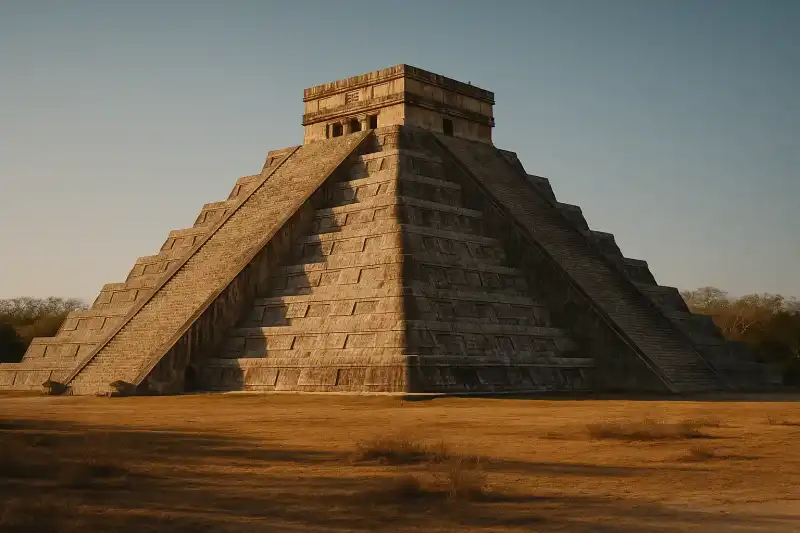
Start with Chichén Itzá if your arrival timing allows, but do it early or do it the next morning. The site is popular for a reason, and the central monuments fill quickly. If you are landing late or picking up a rental car after a long travel day, sleep first. A tired visit to Chichén Itzá is a poor trade.
El Castillo gets the attention, but do not treat it as the whole site. The Great Ball Court is enormous, and its carved panels show players, ritual scenes, and the political weight of the ballgame. The Sacred Cenote also matters. It was not just scenic water. Offerings and human remains found there point to pilgrimage, ritual deposit, and the city’s reach beyond ordinary urban life.
Chichén Itzá belongs to a later phase of Maya history than many visitors expect. Its architecture shows local Maya traditions alongside influences often discussed in relation to central Mexico. That mix is part of what makes the site so interesting and so argued over.
After the visit, continue to Mérida for the night unless you are already based there. Keep the evening simple. Mérida is an excellent base, but this route gets more demanding after Day 2.
Day 2: Uxmal and the Puuc hills
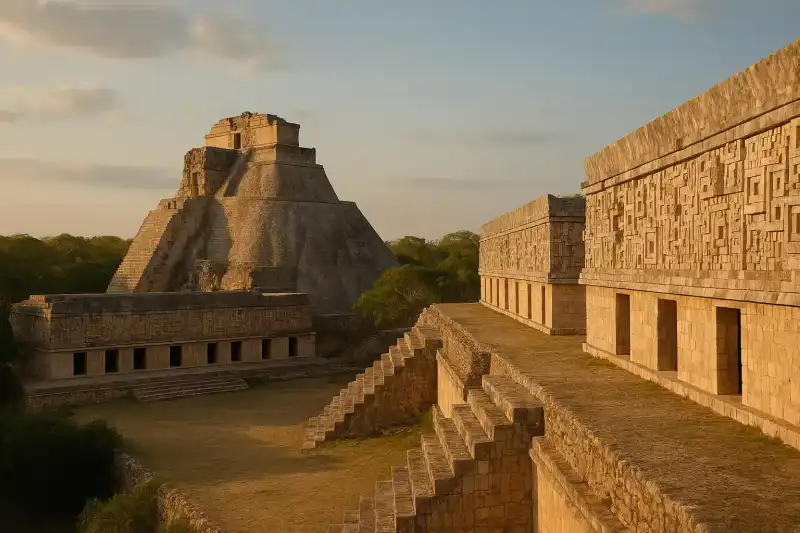
Drive south from Mérida to Uxmal and give it more time than the map suggests. Uxmal is the day when Maya architecture changes character. Instead of the broad ceremonial drama of Chichén Itzá, you get Puuc design: carefully cut stone, patterned facades, stacked masks, and buildings that reward slow looking.
The Pyramid of the Magician has an unusual rounded profile, and the Nunnery Quadrangle is one of the best places in the Yucatán to see how surface decoration could carry meaning. Look for the repeated masks of Chaac, the rain deity. In the Puuc hills, water management was not background infrastructure. It shaped settlement, ritual, and survival.
If energy allows, add Kabah. The Codz Poop facade, covered with Chaac masks, is wonderfully excessive in the best way. The site is quieter than Uxmal, and that helps. You can actually stand still and notice how the stone patterning changes across a wall.
This is a strong day for a guide or a driver from Mérida, especially if you do not want to manage rural roads and parking. A Uxmal and Kabah day tour from Mérida makes sense because the sites fit naturally together and the Puuc context is easy to miss without explanation.
Return to Mérida for a second night. Do not add Mayapán or cenotes unless you are cutting Kabah or starting unusually early.
Day 3: Campeche transfer with Edzná
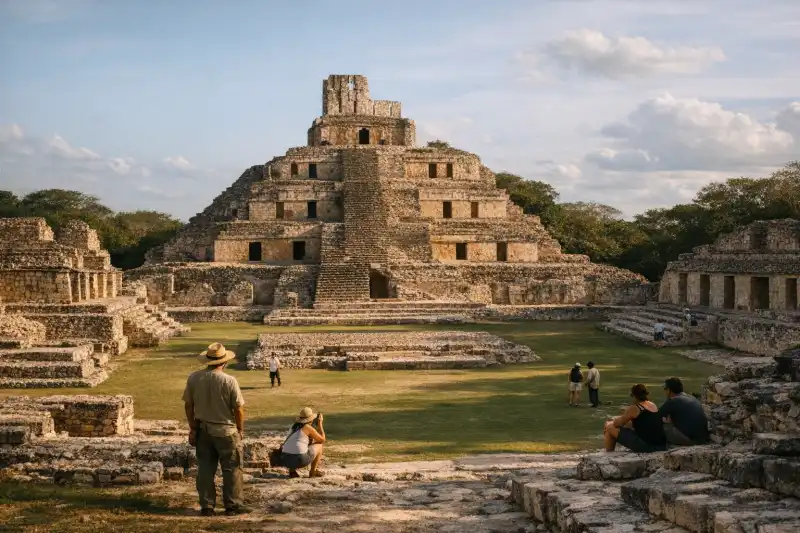
Leave Mérida and drive toward Campeche, using Edzná as the historical stop that turns the transfer into a real day. Edzná is not as famous as Uxmal or Chichén Itzá, but it is one of the best reminders that the western peninsula had its own urban rhythm.
The site is known for its plazas, raised platforms, and water-control systems. That last point matters. Maya cities did not simply sit in the jungle waiting to be found. They managed water, movement, visibility, and labor. At Edzná, the built landscape makes practical sense before it becomes decorative.
The Five-Story Building is the structure most travelers remember, but spend time looking across the plaza from different angles. The architecture feels staged, with sightlines pulling your eye toward height and ceremony. The stones are quiet now, but the political ambition was not subtle.
After Edzná, continue to Campeche and sleep inside or near the historic center if you can. This is a good evening to eat well, walk the walls, and stop early. The next two days push south into the more remote part of the route.
Day 4: South to Becán and Xpujil
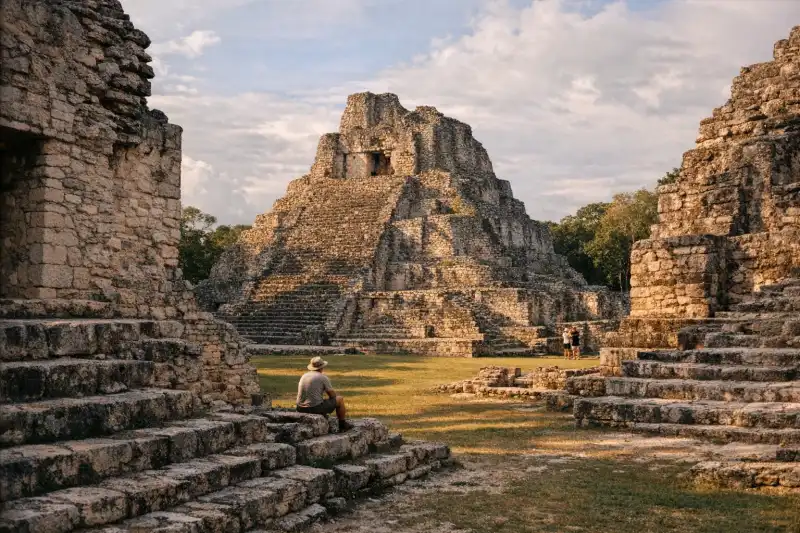
This is a transfer day with teeth. Drive from Campeche toward Xpujil, then visit Becán before or after checking in, depending on your start time. Do not underestimate the distance. Southern Campeche looks compact on a peninsula map, but the hours add up.
Becán is worth the stop because it feels defensive in a way many Maya sites do not. The city is known for its ditch and earthwork system, often described as a moat. That does not mean you should imagine a medieval castle, but it does show that movement into the city was controlled. Access, causeways, and enclosed space were part of the message.
The site also helps prepare you for Calakmul. You are now in the Río Bec region, where towers, temple-like facades, and forest settings create a different visual language from the Puuc cities near Mérida. This is a good day for people who like their ruins political and slightly brooding.
Overnight in Xpujil or nearby. Keep dinner and logistics practical: fuel the car, confirm the Calakmul route, buy water and snacks, and set an early alarm. Day 5 is the reason you came this far.
Day 5: Calakmul deep forest day
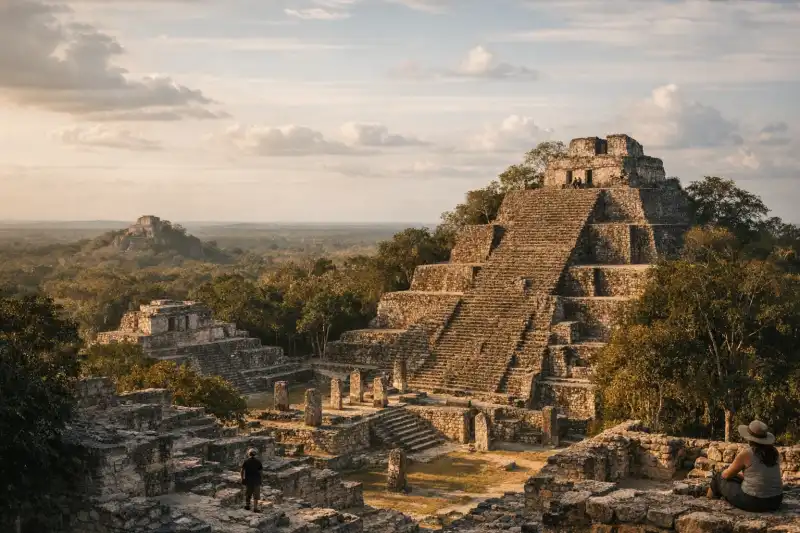
Start before dawn for Calakmul. This is the most demanding day of the itinerary and the one you should protect from extra plans. The access road through the reserve takes time, wildlife can slow the drive, and the site itself deserves hours rather than a quick look.
Calakmul was one of the great powers of the Classic Maya world and a major rival of Tikal. Its emblem glyph, often associated with the Kaanul or Snake kingdom, appears in a web of alliances and conflicts that shaped much of the southern lowlands. This was not a remote backwater. It was a capital with reach.
The site’s scale is part of the experience. Tall structures rise above the forest canopy, plazas sit at different levels, and stelae stand as weathered records of rulers who wanted their names fixed in stone. Many carvings are worn, which can frustrate travelers expecting crisp detail. The payoff is different here: size, setting, and the sense of a city built into a living forest.
Bring patience. Calakmul is hot, humid, and logistically awkward. It is also the day that gives the route its depth. Without it, this itinerary would be a strong Yucatán loop. With it, the trip reaches into the political heartland of Classic Maya rivalry.
Return to Xpujil for the night. Do not drive all the way to Tulum after Calakmul unless you enjoy turning good travel days into endurance tests.
Day 6: Cross to Quintana Roo and Cobá
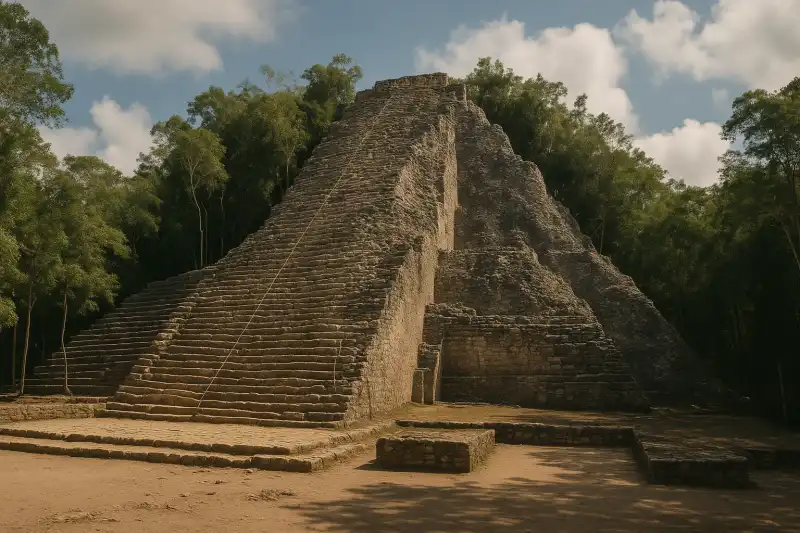
Leave Xpujil early and drive east toward Quintana Roo. If the road timing, daylight, and your energy line up, stop at Cobá before continuing to Tulum. If you are worn down after Calakmul, skip Cobá today and go straight to your hotel. This is the day where honest pacing matters.
Cobá is spread through forest, with sacbeob, or white roads, connecting parts of the ancient city. Those raised causeways are not just paths for visitors. They point to movement, administration, and ties across a wider landscape. The site once controlled routes through lakes, wetlands, and inland corridors, which helps explain why it mattered before coastal centers became more prominent.
Plan your visit around distance inside the site. Cobá is not a single plaza stop. You will walk, rent a bike where available, or use local transport options depending on current rules. Give yourself time to move between groups without turning it into a race.
Continue to Tulum for the night. After several inland days, the coast can feel like relief, but hotel zones and traffic can be annoying. Choose your base carefully: town is usually more practical for food and transport, while the beach is better if you are deliberately slowing down.
Day 7: Tulum ruins and a lighter Caribbean finish
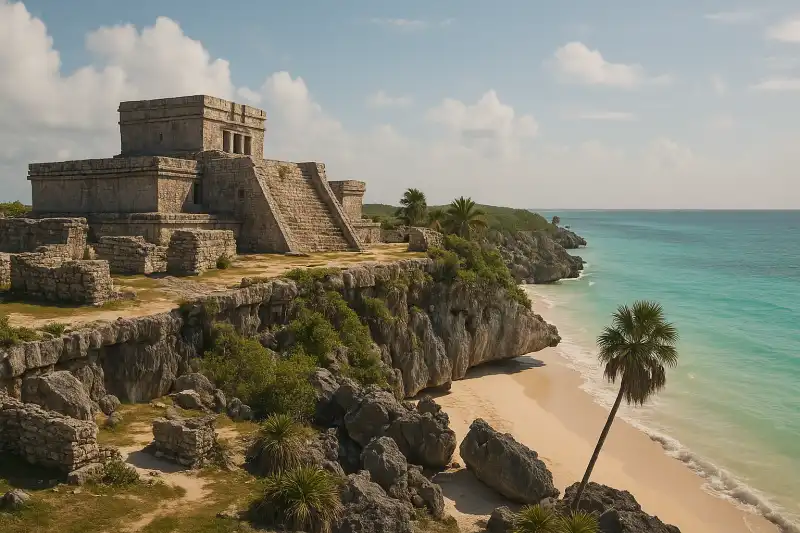
Visit Tulum at opening time if you can. The site is smaller than Chichén Itzá, Uxmal, or Calakmul, but it has a setting none of them can copy: walls, temples, and cliffs above the Caribbean. The view is famous, but the history is not just scenery.
Tulum was a Postclassic coastal site tied to trade along the Caribbean. Its walls, shrines, and sea-facing position make more sense when you think about movement by water, not just inland roads. After a week of Puuc hills, Campeche forests, and inland causeways, the coast changes the logic of the Maya world again.
Keep the visit focused. The site can get hot and crowded quickly, and there is not much shade. See the main structures, take time to understand the walls and coastal position, then leave before the day turns punishing.
Use the afternoon as a release valve. Swim, rest, return the car, or position yourself for departure. If you still want one more ruin, you are probably overpacking. Ending lightly is not wasted time. It helps the route land.
The historical thread: Maya cities across stone, forest, and coast
This route works because it does not treat the Maya world as one repeated ruin type. Chichén Itzá shows a powerful northern city with broad ceremonial spaces and later political complexity. Uxmal and Kabah shift the story into Puuc architecture, where stone facades and rain imagery speak to a region shaped by water scarcity. Edzná and Becán pull the route west and south, into cities that managed plazas, roads, access, and defense in different ways.
Calakmul is the deep center of gravity. Its rivalry with Tikal and its role in Classic Maya politics give the itinerary a larger frame than a simple Yucatán vacation. Cobá then shows inland routes and causeways in Quintana Roo, while Tulum finishes with coastal trade and Postclassic adaptation.
The historical arc is not a straight line from old to new. It is a set of regional answers to power, water, movement, and visibility. That is why the driving matters. The landscapes change, and the ancient cities change with them.
Transportation notes
Use a rental car if you are comfortable driving in Mexico. For this route, it saves time and makes the Campeche and Calakmul sections realistic. Avoid driving remote roads after dark, especially around the Calakmul and Xpujil portion. Start early, fuel up before long stretches, and keep offline maps available.
Public buses can connect major towns such as Mérida, Campeche, and Tulum, but they do not solve the ruin-to-ruin itinerary cleanly. You would lose too much time arranging taxis or local transfers for Edzná, Becán, and Calakmul. If you do not want to drive, consider booking private transfers for the southern section.
Guided tours are easy from Mérida for Chichén Itzá, Uxmal, and Kabah. They are less simple for the whole route because you are changing bases. Calakmul tours exist from Xpujil and nearby areas, and they can be worthwhile if you prefer not to handle the reserve road yourself.
Do not compress Days 4 and 5. Campeche to Xpujil, Becán, Calakmul, and then Tulum is too much if you squeeze it into one overnight. The second night in Xpujil is what keeps the route sane.
Optional add-ons and swaps
If you want another major Yucatán site, add Ek Balam before or after Chichén Itzá. Remove Kabah or shift the route to start in Valladolid instead of Mérida. Do not add it on top of a late arrival day.
For a Mérida-area swap, add Dzibilchaltún or Mayapán. Dzibilchaltún is easier as a short northern outing, while Mayapán is useful if you want a compact look at a later walled Maya capital. Remove Kabah or keep Day 2 shorter if you choose either one.
If you have more time in southern Quintana Roo, add Kohunlich or Chacchoben between Xpujil and the coast. Remove Cobá or add an extra night near Bacalar or Chetumal. Kohunlich is especially good if you want another forest site with a different architectural personality.
For a deeper Puuc day, add Labná, Sayil, or Xlapak after Uxmal and Kabah. Only do this if you are sleeping in the region or starting early with a driver. The Puuc sites are close enough to tempt you and numerous enough to tire you out.
Shorter and longer itinerary options
For a shorter trip, use the planned 3 Days in the Yucatán Maya Sites from Mérida route. Focus on Chichén Itzá, Uxmal, and one Mérida-area add-on instead of trying to reach Calakmul.
For a mid-length version, 5 Days in the Yucatán: Chichén Itzá, Uxmal, Mayapán, and Ek Balam is the better fit if you want less driving and more time around Mérida and Valladolid.
For a bigger country route, use the planned 10 Days in Ancient Mexico: Teotihuacan, Oaxaca, and the Maya Lowlands. That shifts the story beyond the Maya world into central Mexico and Oaxaca, so it is historically broader but logistically more ambitious.
Related ancient sites
FAQ
The most common planning questions for this route are answered below.